Interview Record of New Artists
A discovery of the pictorial art that Ndebele women traditionally practice in South Africa: painting the walls of their houses.
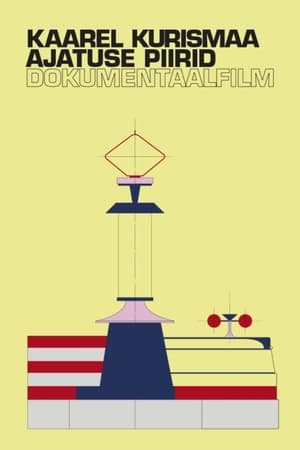
A documentary about the Estonian artist Kaarel Kurismaa shows the viewer an insight into the world of artists. Kaarel changed his creative direction several times; he explored different artistic styles. Kaarel Kurismaa laid the foundations for Estonian kinetic and sound art. He is a highly versatile artist whose creative energy is divided between painting, sound, installation, monumental art, and film. On the crest of the avant-garde wave of the 1970s, he created several important sound and kinetic objects in Estonian art history.
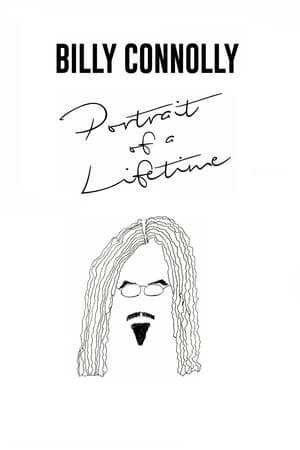
Celebrating Billy Connolly's 75th birthday and 50 years in the business, three Scottish artists - John Byrne, Jack Vettriano and Rachel MacLean - each create a new portrait of the Big Yin. As he sits with each artist, Billy talks about his remarkable life and career which has taken him from musician and pioneering stand-up to Hollywood star and national treasure.
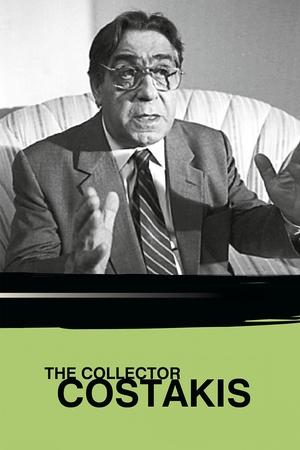
One public housing flat in Moscow stood out above all others: the home of George Costakis, the foremost collector of early 20th century Russian avant-garde art. Its walls were crowded with banned and forgotten works by artists such as Malevich, Tatlin, Kandinsky, Chagall, Lissitzky, Rodchenko, and Kliun; public figures such as Edward Kennedy, Stravinsky, and Alfred Barr visited. Barrie Gavin met the collector in 1982 at his home in Athens. Costakis, a Greek born in Russia, passionately shares his story and those of the great Russian avant-garde artists. Their works are his legacy – without him, they would not have survived the political upheavals in Russia.
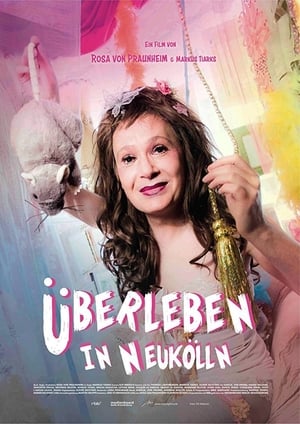
About Stefan Stricker, who calls himself Juwelia and has been running a gallery on Sanderstraße in Berlin Neukölln for many years. Every weekend he invites guests to shamelessly recount from his life and to sing poetic songs written with his friend from Hollywood Jose Promis. Juwelia has been poor and sexy all her life, has always struggled for recognition, but only partially.
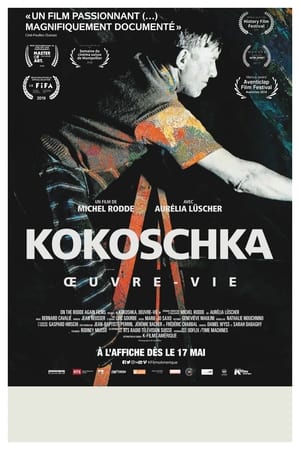
Painter, poet and playwright, teacher and freethinker, lover and traveler, Austrian artist Oskar Kokoschka (1886-1980) was a rare individual who remained lucid and passionate throughout his long life.
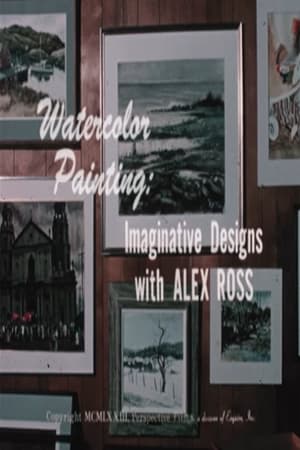
Presents Alex Ross demonstrating how he creates arresting patterns of vivid color and how he uses acrylic paint on a textured media board.
The Victorian era is often cited for its lack of sexuality, but as this documentary reveals, the period's artists created a strong tradition surrounding the classical nude figure, which spread from the fine arts to more common forms of expression. The film explains how 19th-century artists were inspired by ancient Greek and Roman works to highlight the naked form, and how that was reflected in the evolving cultural attitudes toward sex.
Jo; or The Act of Riding a Bike is Zefier's third film.
The decision to move to Holland doesn't sound like a wise idea. Why move to a country that could be flooded at any moment? For the last 25 years, the political climate has shifted. The public debate on migration has become harsher, more heated, and polarized. What would have been considered right-wing xenophobia back then, is now considered mainstream. Populists simplify complex realities into good and evil, victims and perpetrators: ‘us’ versus ‘them’. Their rhetoric often consists of dehumanizing words and metaphors. One of these is ‘water’. In reality, water is not an immediate threat to the average Dutch person; but it is a huge threat to the thousands trying to reach the Netherlands. People trying to survive the Mediterranean Sea in rubber boats. Trying to survive winter on the Aegean coast in primitive tents. To them, water really is deadly.
In subarctic Norway in a storm the sun projects shadows of clouds on a mountain forest.
‘Under the Weight of a Waking Dream’ is Zefier's debut swan song to the ending year. Comprised of poetry and endless enumerations is a diaristic film chronicling the lessons and contradictions found throughout the human experience.
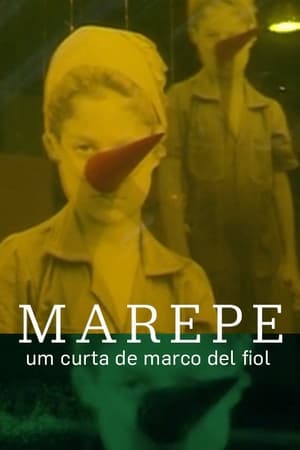
Marepe, an artist from Bahia, produces art with anything he comes across in the town he lives in, Santo Antônio de Jesus. Packs of cigarettes, coconut palms, walls, and memories taken from the streets, go into putting together a personal archeology for this young artist.
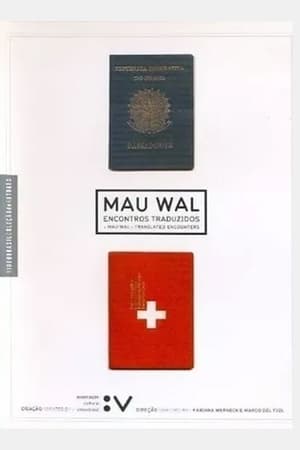
Maurício Dias & Walter Riedweg often say the streets are their studio. From the observation of them and of those who populate them there arise installations about encounters, identity and territoriality. The Brazilian-born Dias met the Swiss Riedweg in 1993. Together they learned that they could boost one another’s ideas. “This marriage became Mau Wal,” says Dias. In this documentary, they present their works and the many characters behind them: people who make day-to-day living in the big cities. Street vendors at a Northeast Brazilian fair in São Paulo, illegal immigrants in their quest for the European dream, street kids and their memories. In stories or in the role it plays, the human element is always a centerpiece to the duo’s work.
Pyhä
Documentary about belgian illustrator Félicien Rops (1833-1898) whose works combined eroticism and death in a very provocative way.
Ladislav Jurovatý - majster drôtu a železa
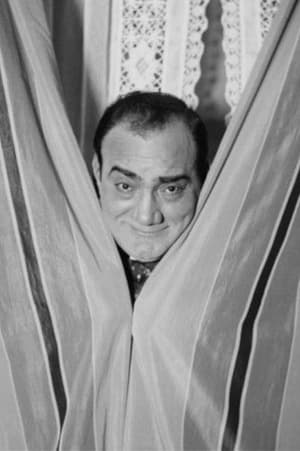
Born in 1873 in a poor neighbourhood in Naples, Enrico Caruso conquered the world with his singing voice. At the age of 27 he got a contract at the Scala in Milan, and his already considerable popularity skyrocketed thanks to the invention of the gramophone. He sold millions of records, and garnered international acclaim. In 1903 he moved to New York to perform at the prestigious Metropolitan Opera, in the role of Radames. But his riches and fame attracted the attention of the Mafia, who started blackmailing him. He felt trapped by his fame and died at just 48 years old. Biographer Francesco Canessa, the music critic Jürgen Kesting and the composer Micha Hamel explain the ups and downs of the man behind the timeless Italian voice.
Mistr Theodorik