A comedy about Yossi, a charismatic Kosher butcher who loses his job, cannot find work at other Kosher butchers, and decides to pretend to be Muslim in order to get work at a Halal butchers.
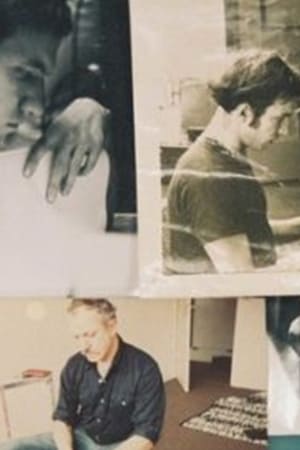
Electro-Pythagorus is an intimate and subjective portrait of the late Martin Bartlett, the Canadian electronic music pioneer who studied with Pauline Oliveros, David Tudor, John Cage, and Pandit Pran Nath. His contribution as an interdisciplinary composer, educator, and founding member of Western Front, though undoubtedly extensive, is in danger of being erased from cultural memory since his death from AIDS in 1993. Navigating an array of archival materials including letters, correspondences, notebooks, personal photos, and a huge body of unreleased music and field recordings held at the archives of Simon Fraser University, Electro-Pythagoras is a journey through the evolution of Bartlett’s musical time and space, softly guided by Luke Fowler’s insightful camera and montage—creating an experimental portrait that defies one-dimensionality.
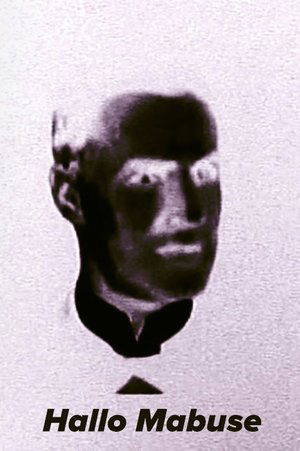
Hallo Mabuse captivates through its reduction, in which a conspiratorial narrative takes place, but even more so, the images themselves appear ambiguous, obscure, untrustworthy. A nod of the head, which seems treacherous in its mechanical repetition, meets the profile of a bearded man who does not appear to react at all in a suggested counter shot. The slight flickering of the image further intensifies the impression of an illicit agreement, of witnessing a crooked handshake. The ringing of the unseen telephone and the constant ticking of a clock lend the events a limited temporality. Something is running out, and in doing so, is also already reaching its end, a ghostly final act, which is anticipated by an explosion and breaks off with the sound of a falling guillotine.
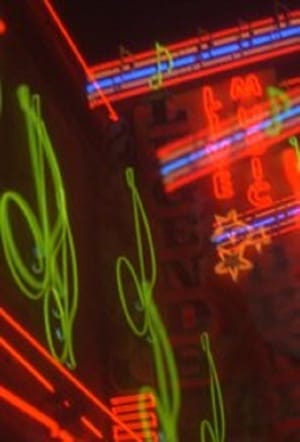
All images were shot on 16mm film in the shadow of the Ryman Auditorium on Lower Broadway, a section of Nashville that has for decades attracted country music fans to its honky tonk bars. The visual effects were composed in-camera, while shooting on the street. This film was supported in part by the Tennessee Art Commission.
A crazy journey into the night.
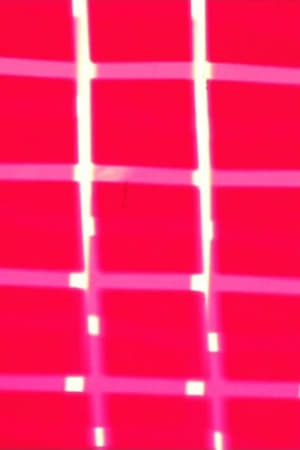
Using century old technology, PXXXL creates digital glitch from analog process. It was animated directly on the celluloid without a camera, in a darkroom, using lights, objects, and handmade lenses. There is no digital manipulation involved-- just light, celluloid, and processing.
People of different ages and corporalities live an approach with their body in search of the exploration of their sexuality, moving away from the constructions and social taboos.
Jérémie has a job recruiting subjects for testing. He'd rather recruit Rodrigue for something else entirely.
A corrupted computer system explains its reasoning for taking over control of the world.
It's the run up to prom night for Leila and her friends in the Garw Valley. With money tight, and the pressures of the cost of living weighing heavy on her shoulders, will it stop Leila's celebration?
Having recently moved to the village of Ynysybwl, 12-year-old Ricky Runnerbean is challenged by the territorial Bwl Boys gang, and his courage is put to the test.
In the first half, the film shows classroom situations in which pupils with learning difficulties encounter derogatory behavior from the rest of their classmates. The teacher, however, remains indifferent. In the second half, the teacher tries to address these school problems in a discussion with the class and to motivate the children to deal with the learning difficulties of their classmates so that mutual help becomes possible.
Using the basic nutrients protein, fat and carbohydrates as examples, the film provides an introduction to the complicated processes of digestion. Our digestive organs are presented schematically. It is shown that the interaction of the digestive organs prepares the food we eat and makes it absorbable. The absorbable food components enter the organism's metabolism and serve to build up the body and generate energy.
Bartholomew, an insecure, by-the-book perfectionist, is tasked with welcoming the recently deceased to heaven's waiting room. Peter, his first death, challenges him to face his fears, doubts and insecurities.
The film examines eight cases of children's misbehavior or accidents. Following the parents' descriptions and interpretations of the causes, the typical behavior is tested in comparable situations.
Great darkness and dominant light.
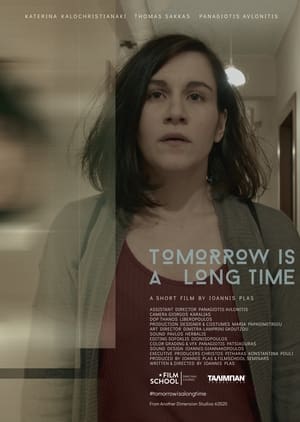
Inside a block of flats, a young woman decides to act about something concerning her for a long time.
Has feeling got a physical representation? This video is the story of a feeling represented by a warm vibration spreading all over the body.
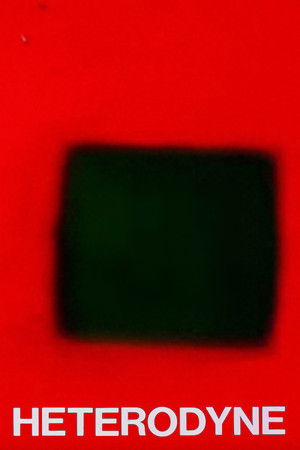
“Geometric animation made entirely by sculptural methods: cutting, punching, welding colored leader. HETERODYNE is related to some of my other work as RNA to a protein or polypeptide. It was made in abject (if blissful) ignorance of Paul Sharits’ early work.” –Hollis Frampton
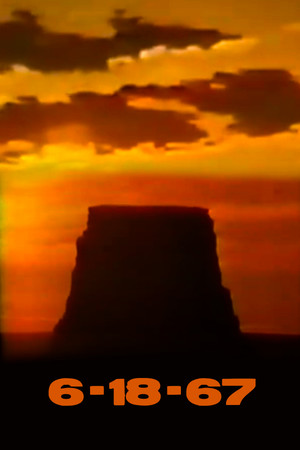
Filmed during the production of the Columbia Pictures western "Mackenna’s Gold," this short work presents a non-narrative visual study of the Arizona desert. Rather than documenting the film set itself, "6-18-67" assembles landscape images, time-lapse photography, and ambient sound into an abstract record of place and duration.