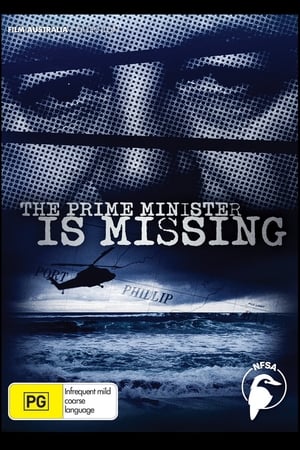
With Australia at war in Vietnam in 1967, suddenly Prime Minister Harold Holt disappeared without a trace—an event unparalleled in the history of western democracy. Four decades later, a coronial inquiry confirmed that Harold Holt had accidentally drowned. Some people may still believe that Holt was a spy and fled to China in a submarine. But most suspect there was more to his disappearance than has ever been revealed. Reconstructed from eyewitness accounts, this dramatised documentary tells the story of the Prime Minister's secret world in the months before he disappeared — a world of betrayal, blackmail, political treachery, a poisonous feud, mounting physical and mental strain, and near-death experiences. Featuring Normie Rowe as Harold Holt, Nicholas Hope as William McMahon and Tony Llewellyn-Jones as John McEwen, this film reveals explosive new aspects of the case.
On October 12th, 1978, New York Police discovered the lifeless body of a young woman, slumped under the bathroom sink in a hotel room. She was Nancy Spungen, an ex-prostitute, sometimes stripper, heroin addict, and girlfriend of Sex Pistols' bassist Sid Vicious.
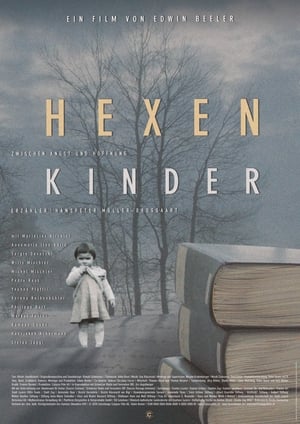
Ilze Burkovska, a little girl who is obsessed with stories of World War II and will be a filmmaker in a distant future, lives in Latvia under the totalitarian boot of the Soviets and the ominous shadow of the many menaces and horrors of the Cold War.
Amidst the 1971 Indo-Pak war, a company of 120 Indian soldiers stationed at the border region of Longewala in Rajasthan must defend their post through the night against two thousand Pakistani troops armed with tanks. Based on the true events of the Battle of Longewala.
Harvey Milk was an outspoken human rights activist and one of the first openly gay U.S. politicians elected to public office; even after his assassination in 1978, he continues to inspire disenfranchised people around the world.
Vietnam War, 1966. Australia and New Zealand send troops to support the United States and South Vietnamese in their fight against the communist North. Soldiers are very young men, recruits and volunteers who have never been involved in a combat. On August 18th, members of Delta Company will face the true horror of a ruthless battle among the trees of a rubber plantation called Long Tân. They are barely a hundred. The enemy is a human wave ready to destroy them.
Not For Sale: Feminism and Art in the USA during the 1970s
A drama that tells the story of the physician and politician MUDr. František Kriegel, the hero of the Prague Spring of 1968, who was arrested and kidnapped to Moscow on the night of August 21st together with five leaders of the party and the state (Dubček, Černík, Smrkovský, Špaček and Šimon). He was the only Czechoslovak politician who managed to stand up to Brezhnev in Moscow captivity, even under the threat of liquidation, and not to sign the Moscow Protovol which meant agreeing to the occupation of Czechoslovakia in 1968.
In 1971, John Lennon and Yoko Ono embark on a search for a girl named Kyoko. On April 23rd, they are arrested by the police at a hotel in Palma de Mallorca, Spain.
In the seventies, during the Richard Nixon administration, Documerica, a large-scale photographic project, led by the US Environmental Protection Agency, sought to document the country's environmental situation. The tens of thousands of photos, taken by hundreds of photographers, constitute a unique archive, showing a landscape ravaged by pollution and environmental degradation.
A dramatization of the 1968 strike at the Ford Dagenham car plant, where female workers walked out in protest against sexual discrimination.
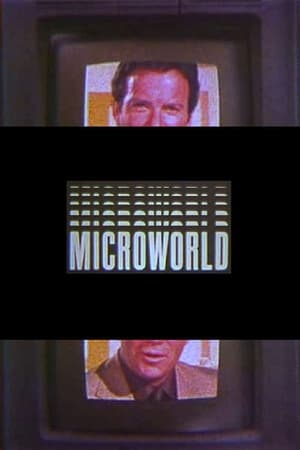
Back in 1976, microprocessors had a maximum of 8.5K transistors for 64bits of memory. The Queen of England sent her first email, and Steve Wozniak designed the Apple I. And a post-Star Trek but pre-TJ Hooker William Shatner made this film for AT&T about the future of microprocessors.
From Vitry-sur-Seine to the opening ceremony of the Paris 2024 Olympics, a look back at the career of Cerrone, a pioneer of dance and disco music.
Activist Bayard Rustin faces racism and homophobia as he helps change the course of Civil Rights history by orchestrating the 1963 March on Washington.
After rigorous testing in 1961, a small group of skilled female pilots are asked to step aside when only men are selected for spaceflight.
When hijackers seize a Japanese flight and demand to fly to Pyongyang, a mysterious mastermind hatches a zany scheme to reroute the plane to Seoul.
A biopic about the famous rock band. The still-untitled film is expected to chronicle the band’s formation in the Bay Area as the ’60s psychedelic counterculture movement started to take off.
A desktop documentary that focuses on the Golden Record that NASA sent into space in the late 1970s. The piece reflects on issues such as the power of scientific discourse to produce revisions of the world, the evolution of the concept of the archive and the resignification of borders in the rhetoric of space colonialism.
A chronicle of gay culture in New York during the post-Stonewall, pre-AIDs era. Thirteen men and one woman look back at gay life and sex in Manhattan and Fire Island - from Stonewall (June, 1969) to the first reporting on AIDS (June, 1981). They describe the rapid move from repression to celebration, from the removal of shame to joy, the on-going search for "someone," the freedom before AIDS, the friendships, and brotherhood.
Peter Whitehead’s disjointed Swinging London documentary, subtitled “A Pop Concerto,” comprises a number of different “movements,” each depicting a different theme underscored by music: A early version of Pink Floyd’s “Interstellar Overdrive” plays behind some arty nightclub scenes, while Chris Farlowe’s rendition of the Rolling Stones’ “Out of Time” accompanies a young woman’s description of London nightlife and the vacuousness of her own existence. In another segment, the Marquess of Kensington (Robert Wace) croons the nostalgic “Changing of the Guard” to shots of Buckingham Palace’s changing of the guard, and recording act Vashti are seen at work in the studio. Sandwiched between are clips of Mick Jagger (discussing revolution), Andrew Loog Oldham (discussing his future) – and Julie Christie, Michael Caine, Lee Marvin, and novelist Edna O’Brien (each discussing sex). The best part is footage of the riot that interrupted the Stones’ 1966 Royal Albert Hall concert.