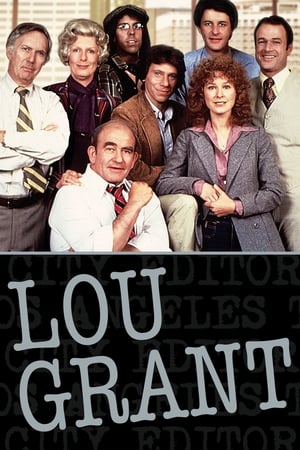
L.A. Law is an American television legal drama series that ran for eight seasons on NBC from September 15, 1986, to May 19, 1994. Created by Steven Bochco and Terry Louise Fisher, it contained many of Bochco's trademark features including a large number of parallel storylines, social drama and off-the-wall humor. It reflected the social and cultural ideologies of the 1980s and early 1990s, and many of the cases featured on the show dealt with hot-topic issues such as abortion, racism, gay rights, homophobia, sexual harassment, AIDS, and domestic violence. The series often also reflected social tensions between the wealthy senior lawyer protagonists and their less well-paid junior staff. The show was popular with audiences and critics, and won 15 Emmy Awards throughout its run, four of which were for Outstanding Drama Series.
Humorous series telling the sexual adventures and misadventures of three gay friends in Bangkok, including G, who lands straight from the province.
Nomades
Justice is an American legal drama produced by Jerry Bruckheimer that aired on Fox in the USA and CTV in Canada. The series also aired on Warner Channel in Latin America, Nine Network in Australia, and on TV2 In New Zealand. It first was broadcast on Wednesdays at 9:00 but, due to low ratings, it was rescheduled to Mondays at 9:00, in the hope viewers of the hit series Prison Break would stay tuned. On November 13, 2006, the show was put on hiatus, but two days later the network announced it was shifting it to Fridays at 8:00 to replace the canceled Vanished. Fourteen episodes of the series were ordered, of which 13 episodes were produced. Twelve of the episodes of Justice have aired in the United States with the final episode airing in Mexico, the UK and Germany.
Queer Duck is an animated series produced by Mondo that originally appeared on Icebox.com and later moved to the American cable television channel Showtime in 2002, where it aired as a follow-up feature of the American version of Queer as Folk. Although far from being the first gay cartoon character, Queer Duck was the first animated TV series to have homosexuality as its predominant theme. Like several later television cartoons, Queer Duck was animated in Macromedia Flash. The show was created, written and executive produced by Mike Reiss, executive producer of network cartoons The Simpsons and The Critic. The animation was directed and designed by Xeth Feinberg. The theme song for the cartoon was performed by the drag-queen celebrity, RuPaul. Despite the suggestive content, there is no graphic language or any sexual content, but the latter is heavily implied throughout the series and the movie.
Each episode of this series, set in contemporary Los Angeles, examines one crime from many different viewpoints - uniformed cops, detectives, witnesses, the media, the fire department and rescue squad, even the criminals themselves.
Ocean Like Me' is a healing food romance between Han Ba Da, a young entrepreneur who dreams of starting an udon restaurant with a beach in the background but finds serving customers difficult. Ba Da then meets Tommy, a failed musician who returns to his hometown after wandering and has a new dream. Together, both of them step towards their dreams
A mysterious person restarts the Mirror World's Rider Battle, thus making Shinji Kido and other war participants regain their memories and transforming abilities. With the appearance of Another Ryuki, Sougo Tokiwa and Geiz Myokoin investigate this event, becoming involved in the war themselves...
A New York City grad student moonlighting as a dominatrix enlists her gay BFF from high school to be her assistant.
What is the secret between them?
Three friends dive into the dark side of the sex industry to find a missing person, facing their own fears and desires along the way.
A single woman, Ellie Riggs, tries to navigate her way through the Los Angeles music scene and her own messy personal life.
Those Whiting Girls is an American sitcom that aired on CBS from July 4, 1955 to September 30, 1957. The series stars sisters Barbara and Margaret Whiting, playing themselves and living with their mother in Los Angeles.
14-year-old Thomas has just moved to Amager with his mother. Thomas draws a lot as a means to escape. In his new class, Thomas meets Mads and Emma, who are interested in him for different reasons.
Three people with different backgrounds go on the run from the mafia, finding love and connection amid danger and survival.
Lee-won, a university student majoring in acting, has a rivalry with Ji-oh, a directing major. Despite their constant bickering, they often have to work together. Unbeknownst to Lee-won, his younger sister is writing a web novel where he and Ji-oh are lovers. When he discovers her secret, he vows that if he secretly likes Ji-oh, the novel’s storyline should come true. As they spend more time together, Lee-won begins to question if his feelings for his enemy are becoming something more.
Cranky but likable L.A. PI Jim Rockford pulls no punches (but takes plenty of them). An ex-con sent to the slammer for a crime he didn't commit, Rockford takes on cases others don't want, aided by his tough old man, his lawyer girlfriend and some shady associates from his past.
United States is a short-lived half-hour comedy-drama that NBC added to its Tuesday primetime schedule in March 1980. Larry Gelbart, the show's executive producer and chief writer, said the name United States was not a reference to the country but rather to "the state of being united in a relationship". Gelbart envisioned a series that would be "a situation comedy based on the real things that happen in my marriage and in the marriages of my friends". Episodes tackled such topics as marital infidelity, household debt, friends who drink too much, death within the family, and sexual misunderstandings. United States focused on Richard and Libby Chapin, an upwardly mobile couple who lived in a Los Angeles suburb. Beau Bridges played Richard, and Helen Shaver played Libby. Gelbart reverted to black-and-white script for the show's titles. He said that was to convey the mood of "a sophisticated '30s film." Gelbart also avoided use of background music and a laugh track. Scripts featured dialogue such as, "Just for once I'd like to be treated like a friend instead of a husband," and "Maybe you and Bob can go out and get yourselves one redhead with two straws." United States premiered at 10:30 p.m. on March 11, 1980. NBC pulled it from the schedule within two months, after only six of 13 episodes had aired. The remaining episodes were not broadcast until 1986, when the A&E cable channel aired United States.
Two American kids who live on a U.S. military base in Italy explore friendship, first love, identity, and all the messy exhilaration and anguish of being a teenager.
"Never lose that strength or nobility, even when you grow up." When Utena was just a child and in the depths of sorrow, she found salvation in those words. They were the words of a prince, who bestowed upon her both a ring and the promise that it would lead her to him again. She never forgot the encounter. Now a teenager, Utena attends the prestigious Ohtori Academy; however, her strong sense of chivalry soon places her at odds with the student council and thrusts her into a series of mysterious and dangerous duels against its members.