Do humans have the right to judge and kill other humans? This program includes a history of capital punishment around the world through documentary footage and commentary. The electric chair, firing squad, hanging, poison gas, beating to death, slow execution, crotch-splitting, iron maiden, guillotine, execution by running, and beheading... It features a military execution in a South American country, obtained from a former prison officer. It also includes footage of the reality of life in Japanese prisons, death row inmates facing death, the parents of death row inmates, the families of their victims, and the gallows.
Today, you're more likely to go to prison in the United States than anywhere else in the world. So in the unfortunate case it should happen to you - this is the Survivors Guide to Prison.
The documentary, " Death and the Judge", revolves around Iran's most famous criminal judge, Azizmohammadi. He served as a criminal judge for 45 years and issued about 4500 death sentences; a record in not only Iran, but also the world. This documentary looks into his personal and professional life as he is followed within his home with his family, in the court of law, and in his retirement days. The ultimate purpose of the documentary is to deduce the role of death in the judge's life as he either takes life away from criminals or death comes to his loved ones. During his retirement, he is once again given the choice between the life and death of a person, despite no longer being a judge.
Preschool to Prison is a compelling examination of how the United States public school system is built and operated like prisons. Zero-tolerance policies are used to justify suspension and arrests that set up a pathway to send children of color and children with special needs from school to prison. Children are being suspended, restrained, dragged, physically manhandled, and subsequently arrested for minor offenses such as throwing candy on a school bus. These personal accounts from people affected by the school-to-prison pipeline give riveting tales about the generational impact on society.
“The Making of Justice” is a movie about seven prisoners working on the scenario for a crime film together with Sarah Vanhee. Like the main character in the film they are making up, they are all guilty of murder. To shape the story, they draw on their own experiences, ideas and desires. We, the viewers, can only guess whether they are using fiction as a means of confirming, transcending or transforming their present situation.
British documentarian Nick Broomfield creates a follow-up piece to his 1992 documentary of the serial killer Aileen Wuornos, a highway prostitute who was convicted of killing six men in Florida between 1989 and 1990. Interviewing an increasingly mentally unstable Wuornos, Broomfield captures the distorted mind of a murderer whom the state of Florida deems of sound mind -- and therefore fit to execute. Throughout the film, Broomfield includes footage of his testimony at Wuornos' trial.
The war on drugs has been going on for more than three decades. Today, nearly 500,000 Americans are imprisoned on drug charges. In 1980 the number was 50,000. Last year $40 billion in taxpayer dollars were spent in fighting the war on drugs. As a result of the incarceration obsession, the United States operates the largest prison system on the planet. Today, 89 percent of police departments have paramilitary units, and 46 percent have been trained by active duty armed forces. The most common use of paramilitary units is serving drug-related search warrants, which usually involve no-knock entries into private homes.
For the third time, HBO cameras go inside Trenton State Maximum Security Prison--and inside the mind of one of the most prolific killers in U.S. history--in this gripping documentary. Mafia hit man Richard Kuklinski freely admits to killing more than 100 people, but in this special, he speaks with top psychiatrist Dr. Park Dietz in an effort to face the truth about his condition. Filled with more never-before-revealed confessions, it's the most chillingly candid Iceman special yet as it combines often-confrontational interview footage between Kuklinski and Dietz with photos, crime reenactments and home movies that add new layers to this evolving and fascinating story.
Documentary on Sakine Cansız (Sara), the Kurdish revolutionary and PKK co-founder killed in Paris in January 2013 by Turkish agents.
In 2018, the Nicaraguan police brutally repressed anti-government protests organised by high school students. K., a 17-year-old girl who was arrested, recounts the horrors of her time in jail.
The documentary depicts the remarkable phenomenon of the national competition Kalina Krasnaya, organised with a flourish in which the convicts from all over Russia sing their way to victory with songs about longing, war, love and forgiveness.
A shocking new 2 hour film by B.A. Brooks. This 2010 release is a follow up to "The Decline And Fall Of America" which was released in 2008. "The American Matrix - Age Of Deception" details news items that all people should be aware of such as the economic collapse of The United States and the formation of the a New World Order. See what has really been going on in America today.
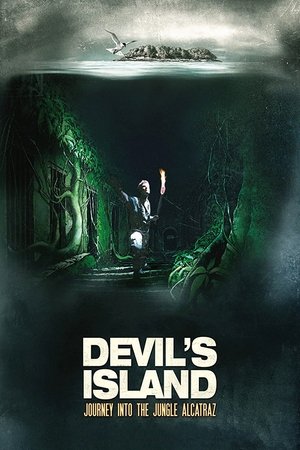
Imagine the prison of Alcatraz, only 10 times worse, built on tropical, hellish and deadly islands, lost to the rest of the world. Three tiny castaway islands rise away from the coast of French Guyana, in South America: The Devil's Islands. Now buried under an impenetrable jungle, lay the lost remains of what had been for a hundred years the most storied convict prison in history. There, while most of the prisoners faded into oblivion, a few became legends. Some because they were innocent, as in the scandalous Dreyfus Affair, some because they somehow escaped the islands of nightmare, as did the "butterfly", Henry Charrière, immortalized by Steve McQueen in Papillon. Now 50 years after the prison doors slammed shut for the last time, we explore what's left of the Devil's Islands' unbelievably dark and oppressive realm.
Botanical gardens in Bombay plus the highly decorative Jain Temple in Calcutta.
This documentary recounts the dysfunctional state of the death penalty in the state of California by revisiting the crimes, arrest, trials and appeals of Lawrence Bittaker, a convicted serial killer who has been on death row at San Quentin since 1981.
In the documentary Last To Know political prisoners, sent to jail for openly opposing the East German regime that existed until the German reunification in 1990, talk about their times of trial and their lives today. Neither they, nor their families have come to terms with what happened.
Documentary filmmaker Errol Morris investigates the case of a man who became an authority on capital punishment, but was discredited when he got involved on the wrong side of a court case. Leuchter, a meek man whose appearance belies his grim expertise, develops what he says is a more effective electric chair. Before long he's in demand from officials who want his opinions on other kinds of execution. But when called to aid the case of an accused Holocaust denier, Leuchter's problems begin.
For thousands of years, there has been a struggle between good and evil in the world; it also takes place within each person from birth to death. By getting to know and trying to understand prisoners – repeat offenders – the filmmakers encourage us to think about human nature, morality, and destiny, as well as the place of prisoners in society. The film was shot in Valmiera Prison, where inmates knit socks and mittens for children in orphanages, sing hymns and read the Bible, develop their artistic talents and train their muscles, but will all this help them to reintegrate into society after their imprisonment?
Three boys, they all committed murder. After discovering their haunting faces and disturbing stories in a banned prison documentary from 1984, the filmmaker goes out to find them and discovers untold secrets and a Hungary he has never known.
The Big One is an investigative documentary from director Michael Moore who goes around the country asking why big American corporations produce their product abroad where labor is cheaper while so many Americans are unemployed, losing their jobs, and would happily be hired by such companies as Nike.