Documentary about Brazilian actress Sandra Bréa.
The documentary Migliaccio - O Brasileiro em Cena follows the path of those who take risks for the art, either as directors, as writers, as scenographers and even as costume designers. The Oscarito trophy received by Flávio Migliaccio in 2014 Gramado Film Festival crowns a career enmeshed by many threads. Since Migliaccio has performed in different fields of art - from cinema and theater to literature and drawing -, the documentary creates varied visual interventions to enchain the narrative, in addition to the interviews and archive pictures, such as a shadow play to represent his humble childhood, and to the cartoons the artist drew to portray his existential questions in his ranch in Rio Bonito (State of Rio de Janeiro). Images and stories that aim to show a professional and personal life pervaded by possibilities and attitudes, both artistic and political.
Victorian Queens takes a deep dive into the weird, wonderful and utterly unique landscape of Melbourne's drag community.
The 3rd installment in James A. Burkhalter's QUEER ROOTS trilogy: After years of his mother begging him to do it, James decides to finally review and erase 10 years' worth of phone messages. It tells the story of James' "roaring twenties," constructed solely through the voices of friends, family, and lovers.
Brechó Brasil
For this behemoth, Bressane took his opera omnia and edited it in an order that first adheres to historical chronology but soon starts to move backwards and forward. The various pasts – the 60s, the 80s, the 2000s – comment on each other in a way that sheds light on Bressane’s themes and obsessions, which become increasingly apparent and finally, a whole idea of cinema reveals itself to the curious and patient viewer. Will Bressane, from now on, rework The Long Voyage of the Yellow Bus when he makes another film? Is this his latest beginning? Why not, for the eternally young master maverick seems to embark on a maiden voyage with each and every new film!
Hard to imagine, but true: According to current estimates, out of 500,000 active male football professionals worldwide, under ten (10) are openly homosexual. While homosexuality hardly plays a role in other areas of life today, the topic seems to be completely taboo in professional football. The feature-length documentary THE LAST TABOO lets those who broke exactly this taboo tell their very personal stories alongside Thomas Hitzlsperger. Like the British professional footballer Justin Fashanu (*1961 in London; † 1998 in London), who broke this taboo for the first time in 1990 and paid for it with his life. His niece Amal tells his story. Marcus Urban, on the other hand, was about to make the jump to the Bundesliga as a teenager and, by deciding to come out, he also went against his big dream. The stories of the US professional Collin Martin and the British player-coach Matt Morton, on the other hand, suggest that normality is not far away.
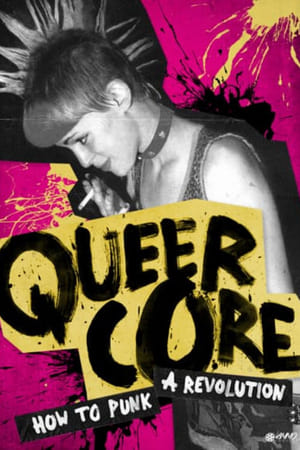
A documentary on Queercore, the cultural and social movement that began as an offshoot of punk and was distinguished by its discontent with society's disapproval of the gay, bisexual, lesbian and transgender communities.
Sometimes, finding your tribe requires a bit of magic. For attendees of a live action role-playing (LARP) camp in upstate New York, the deeply accepting environment has given neurodivergent, queer, and self-proclaimed "nerdy" teenagers the space and community for self-discovery that they have never found anywhere else. As the campers immerse themselves in this imaginative world, they discover inner strength, heal from past traumas, and emerge as the heroes they are meant to be, both in the fantasy realm and in real life.
Seventh art is unique addresses people's relationship with a movie theater or film. What feelings do they feel? What changes in you when you go to the movies? It also addresses Jair Bolsonaro's harsh criticism of culture and cinema in Brazil.
While non-binary representations are rare, Lou talks about their relationship to gender, clothes, and other markers.
We invite you to discover the artistic Queer Tunisian scene through generations.
A New York film and at the same time the study of a young man suffering from an obsessive-compulsive disorder (OCD). The Berlin filmmaker Oliver Sechting (37) and his co-director Max Taubert (23) travel to New York with the idea of documenting the art scene there. However, the project is quickly overshadowed by Oliver's OCD, and the two directors fall prey to a conflict that becomes the central theme of their film. Encounters with such artists as film directors Tom Tykwer (Cloud Atlas), Ira Sachs (Keep the Lights On), and Jonathan Caouette (Tarnation) or the transmedia artist Phoebe Legere seem more and more to resemble therapy sessions. At last, Andy Warhol-Superstar Ultra Violet succeeds in opening a new door for Oliver.
Using diary excerpts, photographs and memories from companions, the film paints the portrait of the artist Jürgen Baldiga who sensitively and authentically captured the West Berlin queer scene of the 1980s and early 1990s with his camera.
Since the 1970s, lesbians from around the world have been drawn to the island of Lesvos, the birthplace of the ancient Greek poet Sappho. When they find paradise in a local village and carve out their own queer lesbian community, tensions simmer with the local residents. With both groups claiming ownership of lesbian identity, filmmaker Tzeli Hadjidimitriou—a native and lesbian herself—is caught in the middle and chronicles 40+ years of love, community, conflict, and what it means to feel accepted.
In this rags to riches origin story, Lady Camden struggles to manage the demands of her freshly minted international fame, while Rex is forced to come to terms with the troubling childhood he left behind in Camden which drove him to so desperately seek joy, fantasy and escape through the performing arts.
In Saigon, family culture carries on as it has for centuries, even when blood ties are broken. Through a mosaic of intimate portraits, Má Sài Gòn explores humanity’s universal desire for love, acceptance, connection and belonging through an LGBTQ+ lens. The film is a love letter – a bittersweet ode to a comforting yet disturbing mother, to a city that is as liberating as it is oppressive.
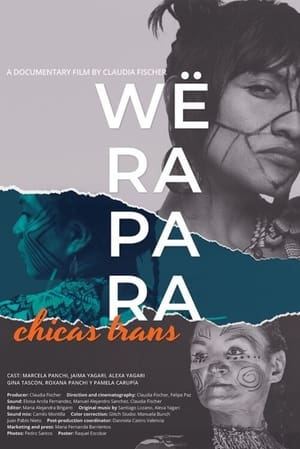
A documentary that is a deep exploration of gender identity within the context of Greek society, providing a multi-layered narrative that reflects the experiences of individuals navigating the complexities of gender in a culture where these topics are still emerging. Over four years, the filmmakers captured intimate stories of people confronting their gender identities, revealing how personal, societal, and familial expectations shape their journeys. The documentary aims to challenge the traditional norms of gender and to give voice to those whose experiences are often marginalized. It marks a significant step in Greece’s cinematic exploration of LGBTQ+ themes and is a pivotal contribution to the global conversation on gender identity.
Insustentável: a realidade do petróleo na Amazônia
An inside look into the effort to preserve Philadelphia's ballroom scene, a black LGBTQ safe-space that has endured for 30 years.