World War II was marked by its epic battles, which decided the fate of nations and changed the course of history. From Germany's Blitzkrieg attacks on Poland that launched the European campaign to the Allied invasion of Berlin that signaled its violent end, we bring these seminal conflicts to life through never-before-seen colorized combat footage. This six-part series puts you in the center of the action through rarely scene films from the frontline plus personal memoirs and oral histories from both sides of the battle lines.
Dwight D. Eisenhower, John F. Kennedy, Lyndon B. Johnson, Richard Nixon, Gerald Ford, Jimmy Carter, Ronald Reagan and George H.W. Bush. This is the story of how their war experiences change them, how they emerge from conflict as leaders and how the crucible of war shapes the decisions they make when they reach the White House.
US Youtube sensation Beau Ouimette, a river detectorist with over 30 years’ experience, and presenter and keen swimmer Rick Edwards search the UK’s waterways for archaeological finds. Using state-of-the-art technology, archive maps and contemporaneous accounts from the period, Beau and Rick perform the first underwater archaeological digs in some of the most exciting and iconic historical sites in Britain, often in dangerous and fast-flowing water.
Hugh Dennis and a team of expert archaeologists excavate back gardens around Britain, in an attempt to uncover the lost history buried beneath our lawns and flower beds
Submarines today are highly complex machines crammed with technology and weapons. As impressive as their construction is, as terrifying is their destructive power. Hardly any other weapon triggers as many emotions as the submarine. It strikes from ambush and can use nuclear missiles to drag the whole world into the abyss. Submarines originated from a completely non-military idea, namely to be able to view the world under water. But the interest in the military use of submarines soon prevailed.
Countdown zum Zweiten Weltkrieg
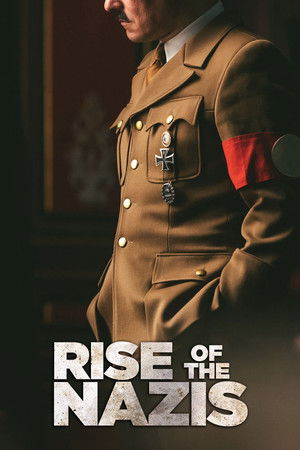
This ground-breaking series examines the lives of the leading Nazis, in an effort to answer the question, why did it happen? It explores and tries to understand the incredible transformation of educated men into Nazi criminals, by charting the lives of six people who over the course of 20 years descend into moral oblivion.
The epic television history of the Second World War’s Eastern Front giving an unprecedented Russian perspective on the war’s most decisive and bloody theater.
Jungle Warfare in the 20th century, from WW2, to Malaya and Indonesia, to Vietnam and Cuba.
Who were the Yugoslav Partisans? A docuseries about the founding and evolution of the largest armed resistance in Europe during World War II.
A documentary series that gives a historical account of the events of World War II, from its roots in the 1920s to the aftermath and the lives it profoundly influenced.
This three-part documentary military thriller provides unprecedented access to the British Ministry of Defence as it recounts the daring operation to evacuate Kabul. It’s an emotional, unflinching series that, for the first time, shows how Britain’s largest airlift since World War II actually played out, minute by minute.
Tony Robinson goes on a journey across Egypt where a series of incredible new tomb discoveries are being made.
The Valiant Years was a documentary produced by ABC based on the memoirs of Winston Churchill, directed by Anthony Bushell and John Schlesinger, narrated by Gary Merrill and with extracts from the memoirs voiced by Richard Burton. It ran in the United States from 1960 to 1961, in 27 30-minute episodes and was broadcast in the UK by the BBC from February to August 1961. Its incidental music was written by Richard Rodgers, who won an Emmy for it in 1962. Scriptwriters included Victor Wolfson a dramatist and writer, Quentin Reynolds, William L. Shirer an American journalist, war correspondent and historian, and Richard Tregaskis. One of the program's London-based producers was actor Patrick Macnee, just prior to his being cast as secret agent John Steed in the long-running cult TV series The Avengers.,
Hitler had proclaimed that Nazi conquered Europe was an impenetrable fortress. On the 6th of June 1944, the Allies launched the largest combined land, air and sea operation ever. This invasion, designed to begin the liberation of Europe, would forever be known as D-Day. The years leading up to 1944 had seen total domination of Europe by Nazi Germany. Despite the entry of America into WWII, strategic bombing, the invasions of North Africa and Italy, Germany remained in control and was able to strength its coastal defenses, The Atlantic Wall, in preparation for the inevitable Allied invasion. Operation Overlord was the Allied plan to defeat those defenses and open a Western Front. The hard lessons learned at Anzio, Dieppe and Salerno were about to be brought into focus with the greatest invasion the world had ever seen. But how had the Allies come to this point? Who were the personalities and what compromises were made to forge this great alliance?
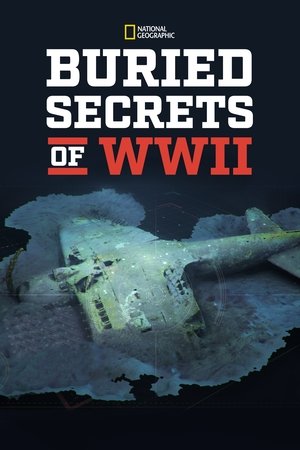
The presenter leads a six-strong team across Europe to track down lost relics from the Second World War. These men are real experts - and real friends - and have teamed up to discover the secrets of the conflict.
Britain at Low Tide explores remarkable stories that are revealed when the tide goes out
Using witness testimony, archive and archaeological evidence, this three-part series reveals the untold story of the preparations to defend World War Two Britain by the Home Guard.
WWII: The Lost Color Archives
A new Channel 4 series takes archaeology to the edge this summer as a team of experts tackles sites across the country that are beyond the reach of normal investigations. In Extreme Archaeology, an eight-part series starting on 20 June, a team of archaeologists with help from top climbers, cavers and divers investigates amazing and unique archaeological sites throughout the UK. Many archaeological locations are beyond the reach of your average archaeologist. They are found in inaccessible caves, on treacherous cliffs, deep under water, or in locations simply too remote or dangerous for normal investigation. Their remoteness often means that their secrets are unique, but they can also be under threat from erosion or other factors and this adds a rescue element to any investigation. Using some of the most advanced scientific equipment available, and high-tech miniature cameras and communication systems to record the action, Extreme Archaeology's experts are dropped into extreme and inaccessible environments under time and other pressures that test their personal and professional skills to the limit.