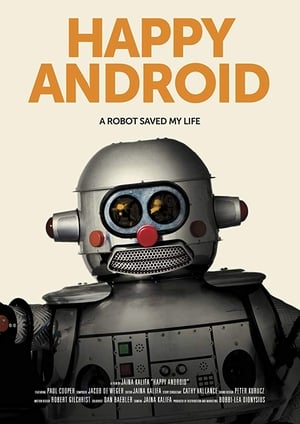
Street performer Paul Cooper has an unlikely ally in his ongoing battle with anxiety and depression - his robot, Tubby.
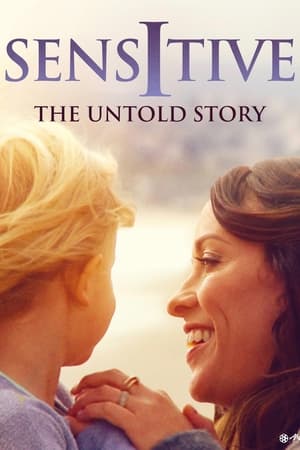
A groundbreaking documentary about the temperament trait of high sensitivity found in 20% of the population in both men and women. Based on the findings of bestselling author-psychologist Dr. Elaine Aron ("The Highly Sensitive Person").
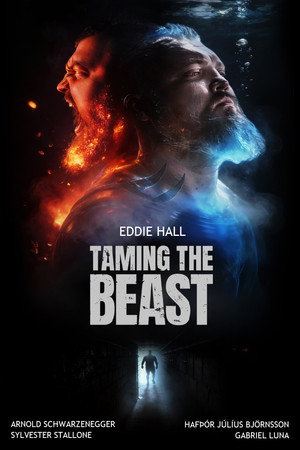
The world strongest man learns how to embrace his mental health challenges by confronting his inner demons and dealing with his biggest failure to date which ultimately changes his life.
After starting a painting business right before the housing crash, a filmmaker drives over 35,000 miles to track down the people who saw it coming and look ahead to the consequences of a decade of secret bank bailouts and 0% interest.
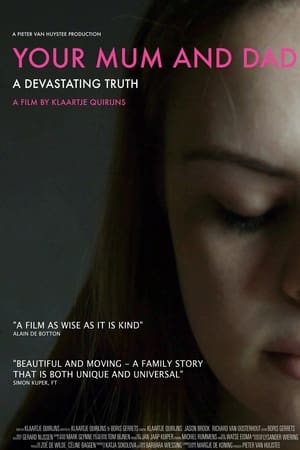
The film follows Michael Moskowitz’s work with a New York-based therapist named Kirkland Vaughns, one of the few African-American Freudian therapists in the United States, while the director reveals her own family’s devastating trauma.
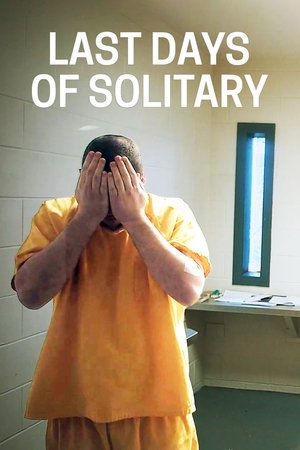
In 2011, Maine State Prison launched a pioneering reform program to scale back its use of solitary confinement. Bafta and Emmy-winning film-maker Dan Edge and his co-director Lauren Mucciolo were given unprecedented access to the solitary unit - and filmed there for more than three years. The result is an extraordinary and harrowing portrait of life in solitary - and a unique document of a radical and risky experiment to reform a prison. The US is the world leader in solitary confinement. More than 80,000 American prisoners live in isolation, some have been there for years, even decades. Solitary is proven to cause mental illness, it is expensive, and it is condemned by many as torture. And yet for decades, it has been one of the central planks of the American criminal justice system.
Somber tells the story of three depressed young people, all three in a different phase of the disease. What does depression do to a person? What does it actually mean? And above all, is there a way out?
This educational film from 1970 traces the inheritance of traits such as sex, eye color, height, and weight, showing the role of chromosomes and genes in determining their development.
Rob Grant and Mike Kovac receive a disturbing fan video inspired by their previous horror movie Mon Ami, motivating them to investigate the responsibility of filmmakers in portraying violence in movies. In their pursuit of the truth they are unwittingly introduced to the real world of violent criminals and their victims.
A dare from Swedishllama (UrolithicOak)
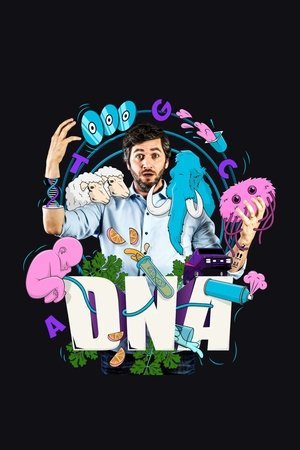
Human genetics is one of the most exciting fields in science at the moment. Not only does it advance exponentially fast, it is also a field of study that will very soon affect our daily lives. We will all have to deal with the possibilities and technologies that human genetics have to offer, today and in the coming years. Quite a few questions and dilemmas still have to be answered by us. Do I want to know everything that can be found out from my DNA? And who is allowed to use and read my genetic code? My doctor? The police? The chef of my favourite restaurant? Also, what genetic technologies do I want to use? Do I want to clone my dog, choose my children’s eye colour, or genetically modify them to give them extra talents? Do I want others in society to be allowed to do that? The current and future possibilities of human genetics are simply overwhelming. They are both promising and frightening, chilling and delightful.
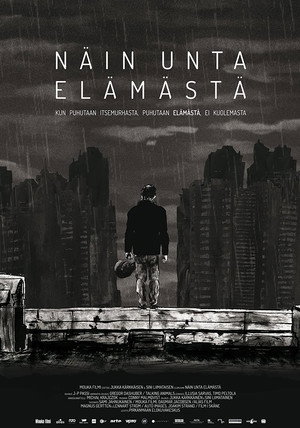
Every day in Finland alone, two people commit suicide. Thousands of people are affected by suicide yearly. Once I Dreamt of Life is a feature length documentary film about suicide. It’s an account about one’s personal relation to suicide, but also studies suicide as social phenomena: The motives, warning signs & consequences. The film follows the journey of a young man, an animated character based on a real person, on his path towards suicide. The journey is described by people who’ve had encounters with suicide – parents who lost their child, young adults who considered or even tried committing suicide. When linked together, these experiences offer a collage of our perception of suicide. They tell about how people cope with the past and find a reason to go on with their lives. The intention is not to romanticize suicide or judge. It encourages people to talk about painful and difficult experiences and reminds us how important it is to be heard.
An ambient representation of depression with a slowly fading score building towards an uncertain climax.
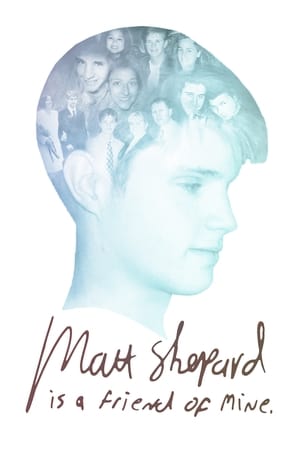
An intimate portrait of Matthew Shepard, the gay young man murdered in one of the most notorious hate crimes in U.S. history. Framed through a personal lens, it's the story of loss, love, and courage in the face of unspeakable tragedy.
A well-preserved mammoth carcass is found in the remote New Siberian Islands in the Arctic Ocean, opening up the possibility of a world-changing “Jurassic Park” moment in genetics.
Documentary about living with an addict and grappling with the genetic propensity of becoming one.
A look at past diary entries reveals a teenage girl's struggles with body image and depression
Travelling the length and breadth of Britain, the film explores the impact of teenage killings on families of different religion, race and class.
Somewhere in Myanmar is a forest rich in amber and controlled by the Kachin Independence Army (KIA). Most of its inhabitants work in a mine, digging the earth night and days in the hope of finding the precious ore that will get them out of poverty. But on top of the excruciating hardship of the work, they also have to fear an attack from the army.
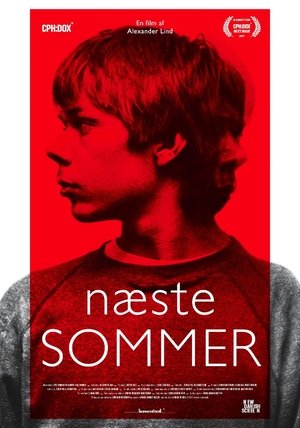
When Rasmus was 15, his mother and siblings moved from the island Bornholm and left Rasmus with his mentally ill father. Influenced by his father's insecurity, anger and failure, Rasmus chooses to move from Bornholm at the age of 18. Two years later, Rasmus is trying to see if a reunion is possible, but in order to forgive and create a new relationship, father and son must go on a common journey that requires extreme courage and determination to succeed.