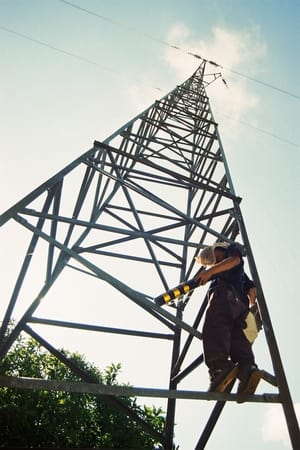
A punk scarecrow, endowed by life, annihilates its roots and revitalizes its territory.
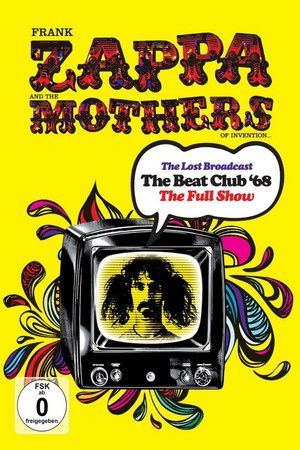
This DVD contains a filmed rehearsal of Frank Zappa and the Mothers of Invention at the legendary Beat Club in Bremen, Germany, on 6th October 1968. The music is largely one long improvisatory continuous performance rather than a run-through of their greatest hits, but is punctuated by Zappa directing the band to play the opening themes of some of his more well-known pieces.
Women, landscapes and manifestations of color meet experimentally with the possibilities of the artisanal copying technique on 16mm.
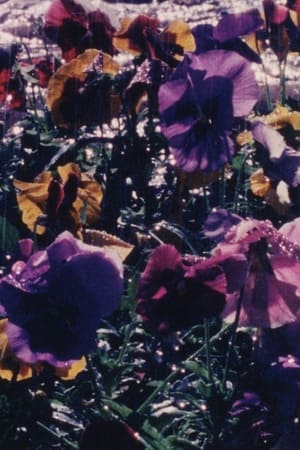
Starting from frame by frame in-camera editing, the film translates a nursery garden from Chillán into a filmic landscape, with a rhythm and structure coming from a personal relationship with color, light and occurrences that took place near the end of the summer at the Olaxis garden. This is the first part of a work which takes reference from Violeta Parra's poetry, created from flowers, plants and certain places of the Ñuble area.
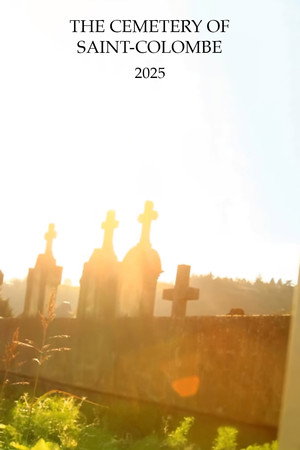
A small exploration in the cemetery from the township of Sainte-Colombe throught a focus into the light, graveyards, flaggings and funerary plaques.
A look back at the violent conflict between the two leading figures of musical modernity, Arnold Schönberg and Igor Stravinsky, in the first decades of the 20th century. Although Arnold Schönberg and Igor Stravinsky both had a decisive influence on the fourth art, their creations remained diametrically opposed. While the Austrian developed the dodecaphonic method, placing the twelve notes of the chromatic scale at the heart of the composition technique to the detriment of tonality, his Russian rival based his practice on stylistic eclecticism. Their supporters formed two opposing camps, and the two composers - one the father of the Second Viennese School, the other of Neoclassicism - became, in the wake of their successes, the figureheads of a conflict that marked the history of music by its duration and intensity.
The incredible tale of Mozart's Prague years.
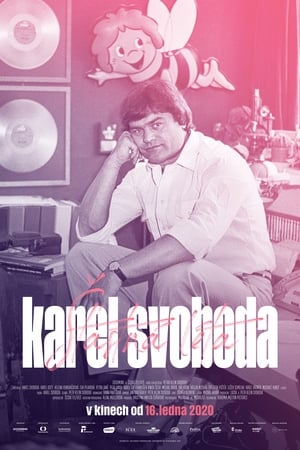
Karel Svoboda: Šťastná léta
"This film explores how freedom of speech — including dissent — is afforded to all Americans, and shows freedom of expression in art, music, dance, architecture, and science. The film also emphasizes the importance of the individual’s contribution to the whole of society and demonstrates how a productive and creative society is formed by the open and respectful exchange of ideas. The film was written, produced, and directed by William Greaves" (National Archives).
Lašská rapsodie
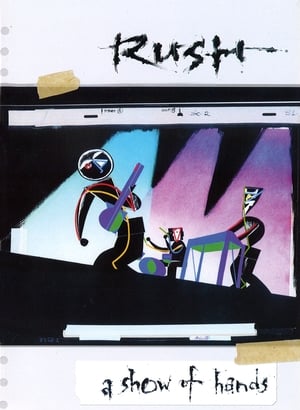
For a band with high standards, a perfect show is impossible, and an excellent show is rare. You hope that the norm is "good". To deliver a really exceptional, comfortable performance before a recording truck or film crew has been our unfulfilled dream of many years. Always it seemed that as soon as the machines started rolling, we forgot how to play and our equipment forgot how to work. But for these two nights, the gods smile. And the film becomes not just a concert, but a symbol - for the band a scrapbook, an autobiography, an era frozen in glacial clarity. For the audience, it can be an enduring souvenir, and if it can't quite capture what it was like to be there, it is a way of seeing through many pairs of eyes, of shifting one's vantage-point around and above the players in a way no mortal could. Hands perform, and hands respond. Hands gesture, and hands respond. A show of ears and eyes, a show of hearts and minds. A Show of Hands. - Neil Peart
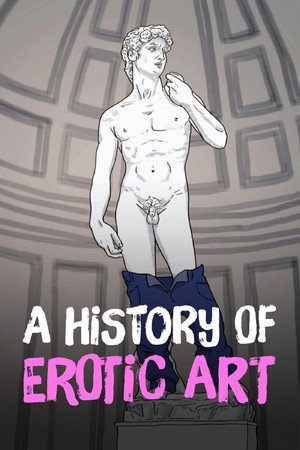
The people of Antiquity had little problem with nudity and would not find graphic depictions of sexual acts as morally suspect or obscene. But Christianity changed perspectives, bringing in notions of shame and the negation of the body. This documentary looks at the erotic in art over the last two thousand years.
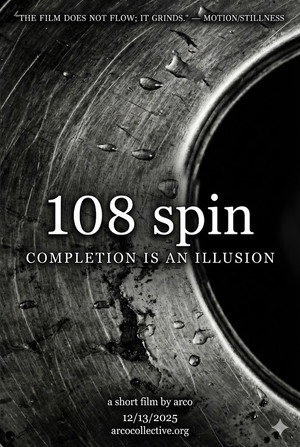
A kinetic prayer and structuralist intervention. Shot entirely on an iPhone 11 in a desolate Midwest laundromat, 108 spin documents the mechanics of impermanence. The film shifts from heavy turbulence to suspended repetition—not as a path to completion, but as a study of the loop itself. Featuring a layered soundscape, the work asks the viewer to stare into the rotation until the noise becomes a mantra.
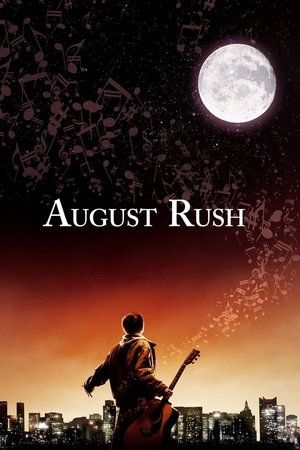
Evan, a musically gifted orphan, runs away from his orphanage and searches New York City for his birth parents. On his journey, he's taken under the wing of the Wizard, a homeless man who lives in an abandoned theater. After discovering his talent, the Wizard gives Evan the name "August Rush" and devises a plan to profit from his talent. Little does Evan know that his parents, Lyla and Louis, are searching for him too.
Experimental short film exploring New York City's multicultural history through the eyes of three chosen individuals.
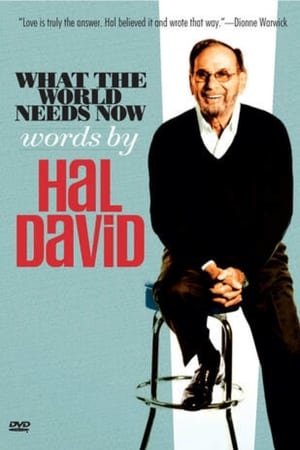
Hosted by Bette Midler, enjoy a musical tribute to the man who wrote some of the most enduring songs in American popular music. Lyricist Hal David and composer Burt Bacharach dominated the pop-music charts in the 1960s and early ’70s, crafting dozens of timeless Top 40 hits.
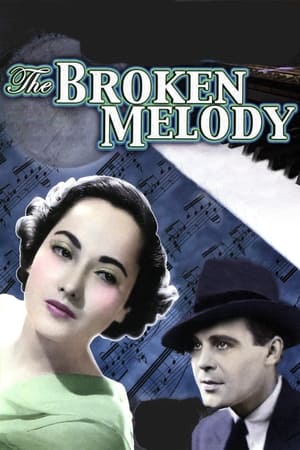
A composer goes to Devil's Island for killing his wife's lover, then writes an opera about it.
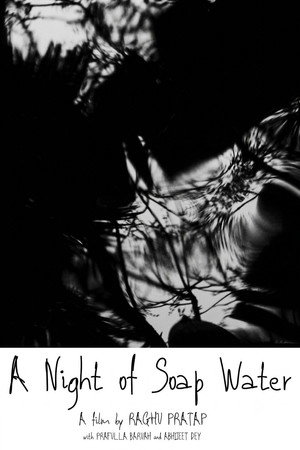
A watchman at an apartment complex in Assam, India, spends an ordinary evening. A surreal, expressionistic landscape unfolds.
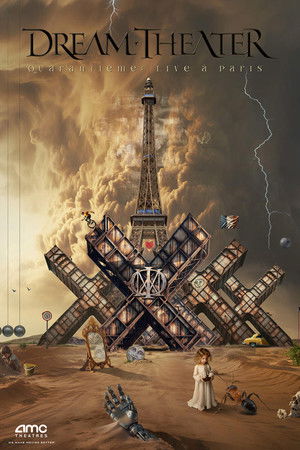
In 2024, GRAMMY®-winning, progressive music titans Dream Theater celebrated their 40th anniversary as a band, as well as the return of founding member Mike Portnoy, with a mammoth tour starting at London's legendary O2 Arena and continuing across the globe. 'Quarantième: Live à Paris' is a live presentation of that tour, filmed and recorded live in Paris in front of a huge audience at the Adidas Arena. Performing tracks from across the band's career, as well as material from their most recent acclaimed studio album, ‘Parasomnia’, this stunning audio/visual release documents a very special time in the band's history.
A day in the city of Berlin, which experienced an industrial boom in the 1920s, and still provides an insight into the living and working conditions at that time. Germany had just recovered a little from the worst consequences of the First World War, the great economic crisis was still a few years away and Hitler was not yet an issue at the time.