For one-night-only blood was spilled in the mud.
In the decades after Bacon's Rebellion, a nigerian man and an European woman - husband and wife - sing of their fate, their future as law by law, edict by edict, their family, their marriage, their love made illegal.
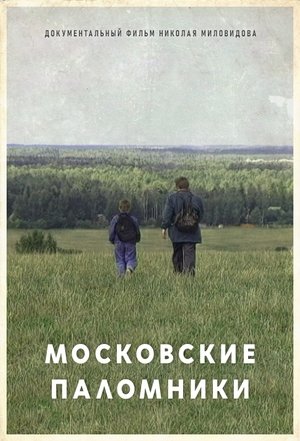
"The Moscow Pilgrims" is a film that takes you on a tour of Russia’s ancient capital. The film’s main characters – father and son – are doing the most intersting sights of old Moscow, including the Simonov Monastery, the New Spassky Cloister and the Krutitsky Church located on a picturesque bank of the Moskva River. The celibate priest Ilia, the dean of the church of the Holy Mother of God father Vladimir and other priests will help the pilgrims and visitors to see the world of Moscow’s ancient holy sites: the burial-vault of the noble Romanov family, the Cathedral of the Transfiguration of God recently cleared from security services, and the graves of the Kulikovo battle heroes, the monks Oslyabi and Peresvet.
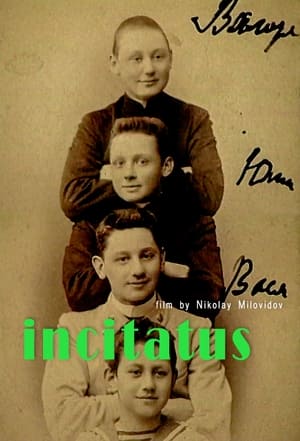
The film features the wonderful poet of the early 20th century, Count Vasily Komarovsky. The poets Nikolai Gumilyov, Anna Akhmatova and Osip Mandelstam, among other celebrities, were not only his acquaintances but he had a considerable influence on their work. The poet’s extraordinary life gave birth to legends, whose plausibility will also be dwelt upon. Komarovsky’s niece will share her recollections with the viewer. The film is based on unique documents previously unknown to Russian and foreign scholars.
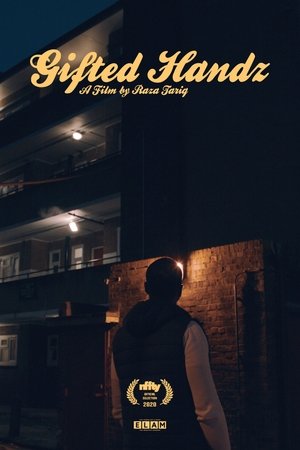
A documentary following a West London barber, as he reminisces on his entry into his profession and how it saved him from other fates.
Documentary about three outstanding internationally recognized and awarded young professionals: sculptor Levon Tockmadjian, violinist Rouben Aharonian, Chess International Grand Master Rafael Vahanian. The film discovers some aspects of creative process.
Armenian artist Hakob Hakobian repatriated from Egypt. There, far from his native land he was painting portraits trying to find in the faces of his models Armenian features. In Armenia he is painting also landscapes and even just the sky. Working in his studio he tells about his friends-repatriates. They by themselves, or their parents had survived during the genocide of Armenians in Turkey in 1915, and were dispersed all around the world. We see Hakobian's friends back in Armenia at their work: an old farmer with his big family, a driver, a gas-stove expert.
The story of a county-side doctor, extraordinary woman, to whom the villagers turn not only in case of medical help, but also to have a piece of good advice.
Extra, behind scenes from Hideaki Anno's film Ritual (also known as Shiki-Jitsu).
While a mother is in intensive care with little hope of survival, her son is on another continent without the possibility of seeing her. Combining subconscious memories of his mother in induced coma with images of his constant house moves all the while, the director composes an essay-letter on death, family and distance.
Raízes
An apocalyptic sound of roaring machines incessantly intrudes into the habitats of man and nature. Barren landscapes and deserted villages linger in hypnotic restlessness. A self-destructive system meets resistance.
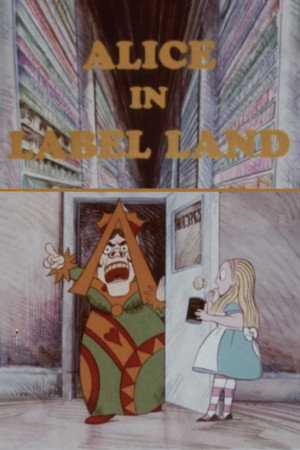
Lewis Carroll's 'Alice' stories are used to explain certain sections of the Labelling of Food Regulations 1970.
The film follows 10-year-old Oleg, whose life has been turned upside down by the ongoing war in East Ukraine. Oleg lives with his beloved grandmother Alexandra in a small house in a village on the frontline. Most people have left the village, but Oleg and Alexandra love their life together there and want to stay on and take care of each other. But life is becoming more and more difficult and the war does not seem to end.
A mutilated and grotesque woman’s body chases after a man. The combination of the photomontage and text represents women’s labor, expressed through uniforms and clothes, and women who were sexually objectified, conveying feminist discourses and disciplines. The chased man never understands the existence or content of the images and texts. The blunt presentation of women’s unheard voices and objectified bodies, and the excessively-visualized images, demand immediate introspection.
A film producer, an assassin, and a patriot. These aren’t three characters in this film but three ways of describing Wu Dun, a member of the United Bamboo Gang who murdered the Taiwanese-American writer Henry Liu and became a producer of wuxia films. Hsu Che-yu, who previously brought Single Copy (IFFR 2020) and Re-rupture (IFFR 2018) to Rotterdam, visits Wu’s abandoned studio to restage the events with forensic scanning techniques.
An european artist writes about his experience in portraying life in Brazil during the colonial period. Aporteiro – concierge and security guard in one – watches the surveillance cameras in a residential building, while reflecting on his profession and the relationship with his employers. Between the exotic idyll of front yards and deterrent technology, his task is to establish security and normality. Brazil’s troubled past and complicated present come together in this highly charged film.
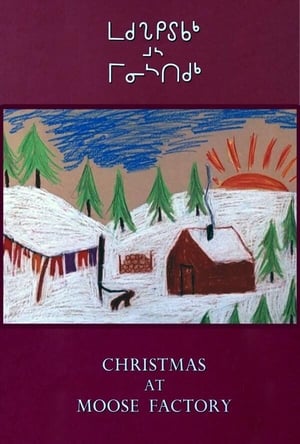
A study of life at Christmastime in Moose Factory, an old settlement mainly composed of Cree families on the shore of James Bay, composed entirely of children's crayon drawings and narrated by children.
Låten från båten
A stark documentary film about the economic and educational crises the mountain people of rural Appalachia faced at the tail end of the Dust Bowl period.