At Brandenburg Gate in Berlin, a man jumps over a barrier. Within seconds, five police officers catch him and push him to the ground. He laughs loudly. Evidently, this is exactly what he was aiming for. Dario is disappointed with current climate policies and sees only one solution: strike out and resist. His resistance has already led to several outstanding criminal proceedings against him in Germany. A request from Switzerland comes at just the right moment to prove himself further: the activist group “Klimastreik” is looking for someone who is willing to commit a “crime”.
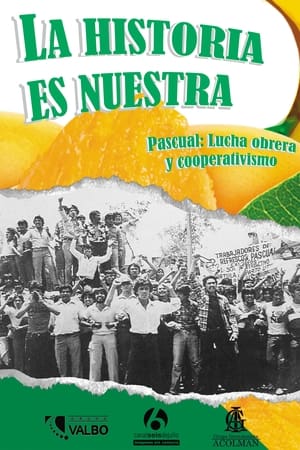
History is Ours narrates the struggle of the workers of the Refrescos Pascual soft-drink company against its owner, Rafael Jiménez, the official trade unionism of the CTM and the labor authorities of the governments of José López Portillo and Miguel de la Madrid, between 1982 and 1985. It documents the workers' difficult struggle to take over the company, when justice, which had been elusive, finally proved them right, and opened the possibility that these brave, tenacious workers would become collective owners of the company. Today, these soft-drink fighters resist a system that hits Mexican companies in favor of the monopolistic transnationals. The film is an account of one of the most brilliant episodes of the contemporary Mexican labor movement, an example of unity and class consciousness, embodied by men and women who make their struggle a tribute to comrades Concepción Jacobo García and Alvaro Hernández García, tragically fallen at the beginning of this historic event.
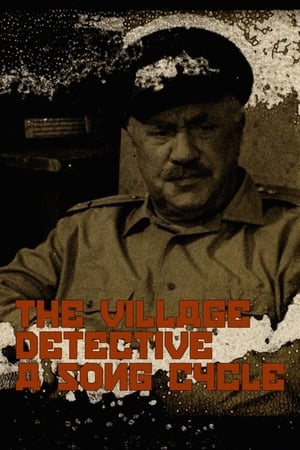
Atlantic Ocean, off the coast of Iceland, July 9, 2016. The surprising discovery of a canister —containing four reels of The Village Detective (Деревенский детектив), a 1969 Soviet film—, caught in the nets of an Icelandic trawler, is the first step in a fascinating journey through the artistic life of film and stage actor Mikhail Ivanovich Zharov (1899-1981), icon and star of an entire era of Russian cinema.
A young film crew searches for ways out of the climate crisis. In different cities they meet people who commit their lives to preserving our environment in different ways. In inspiring conversations they talk about their thoughts, motivation and hope and why we have to break out of our comfort zone. 8 protagonists try to reach out for solutions for climate justice in our future and open up perspectives of hope.
The female breast has been a motif for as long as there has been art. For centuries, people have been creating works that showcase this intimate and emotionally charged part of the body. Today, female artists are questioning traditional ideals of beauty and countering the male-dominated perspective of the breast with their own.
For decades, coral reefs have been seriously threatened. Rising ocean temperatures, diseases such as tissue loss, mass tourism, destructive fishing practices, and many other pressures have brought them to the brink of collapse. Thanks to her work, Elvira has become a source of inspiration, bringing together a multidisciplinary team of people and organizations committed to protecting marine life.
Documentary about one of Norway's most prolific film directors, Nils R. Müller (1921-2007). Müller was active in Norwegian film production from 1946 to 1975. He directed 21 feature films.
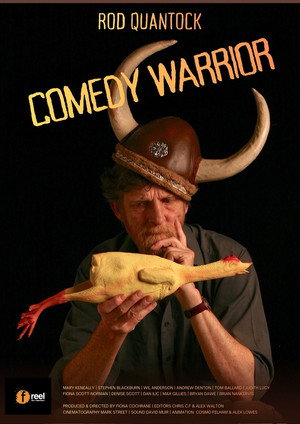
This feature documentary charts Rod Quantock’s five-decade career and his tireless efforts to communicate the perils of neoliberalism and the urgency of climate change through humour. His journey illustrates the building of the thriving comedy landscape we take for granted today, showcasing a man who has remained steadfast in his pursuit of truth in an hilarious fashion.
Geniale Frauen - Malerinnen von der Renaissance bis zum Klassizismus
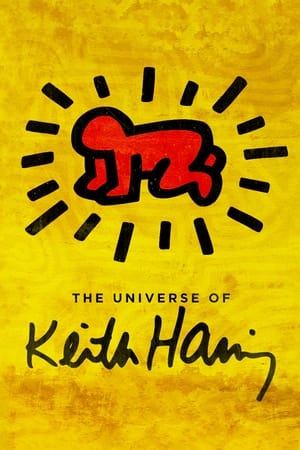
A portrait of New York artist Keith Haring. The film looks to Haring as an artistic role model for his preternatural talent, of course, but also for his infectious lust for life that had him as committed to social activism and teaching children as to his latest painting.
Ser Fronterizo: Crónicas de las Asimetrías Globales
Going Circular unlocks the secrets to an innovative concept called circularity -- an economic system that eliminates waste and saves the planet’s resources. The film tells the story of four visionaries from around the world - 102-year-old inventor Dr. James Lovelock, biomimicry biologist Janine Benyus, designer Arthur Huang, and financier John Fullerton - whose extraordinary experiences changed the way they think about humanity’s future. Each of their stories leads them to a fundamental reassessment of what our food, our cities, our financial system, even our fashion industry could look like if we create, produce, and distribute within Earth's natural boundaries.
Argentina, 1968. In the midst of the Cold War, the dictatorship of Juan Carlos Onganía (1966-70) organizes the 9th Mar del Plata Film Festival in order to show the world its friendly face, while exercising censorship and repressing dissidence.
"War is Sell" dissects the strategies of war propagandists -- soldiers armed not with guns, but with words, pictures and commercial advertising techniques in their battle to win hearts and minds. How do you sell a war?
Felber und die Schweren Jungs
One of the world’s greatest ancient enigmas, the Nazca lines are a dense network of criss-crossing lines, geometric shapes, and animal figures etched across 200 square miles of Peruvian desert. Who created them and why? Ever since they were discovered in the 1920s, scholars and enthusiasts have raised countless theories about their purpose. Now, archaeologists have discovered hundreds of long-hidden lines and figures as well as evidence of ancient rituals, offering new clues to the origins and motivations behind the giant desert symbols.
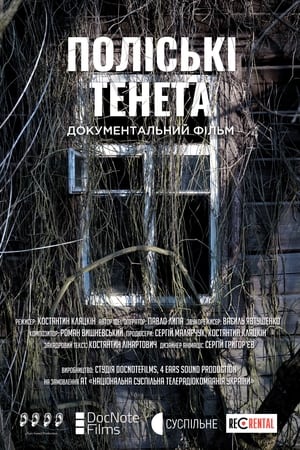
Poliske was contaminated with radioactive material after the 1986 Chornobyl disaster. Soviet authorities did everything they could to erase the ancient history of this town, and after Chornobyl, they destroyed its future.
Andy Warhol directs The Factory regular Louisa "Jackie" Foster for a screen test.
Damascus, Oregon, United States. Julie Keith finds a baffling message hidden in a pack of decorative items, a desperate plea for help, written by someone imprisoned in a Chinese labor camp called Masanjia…
Join Marlin Maddoux, host of the nationally syndicated radio news talk program Point of View, for an investigation into the multi-million dollar a year baby parts trafficking industry, which is one of the most lucrative businesses in operation today. Yet most Americans are unaware of its existence. Many have heard about the controversy surrounding fetal tissue research but have no idea how the tissue is obtained. Today, some are claiming that cures for a number of devastating diseases, including Alzheimer's, Parkinson's, diabetes and AIDS, are just around the cornerand that fetal tissue is desperately needed for research. But is it really?