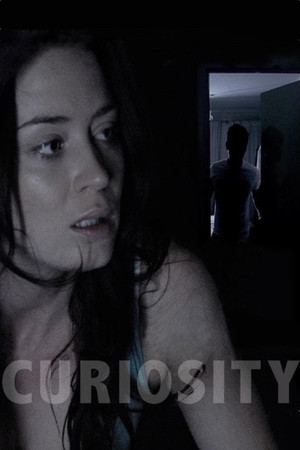
A man wakes up in a blue room. He's stuck and he can't escape. A window is his only connection to the outer world. It filters the reality in a very mysterious way.
My Aunt, My Cousin
From Richard Gale, mad maker of CRITICIZED, comes a film that will never have you looking at cutlery the same way again. Set-up as an epic-length trailer for an upcoming release, HORRIBLY SLOW... depicts a man's endless pursuit by what has got to be one of the most determined and patient murderers the screen has ever seen.
Rigadin and his rival use camera/projector systems to reach their objectives.
Aliens have come from the planet Uranus to steal Earth's resources. Its up to a group of Go-Go dancing Private eyes to stop them!
Dealing with life's troubles is never easy. Many people find comfort in the soothing words of their trusted therapist. Mr. Talbot does not. His therapist, has a tough love approach. Not convinced of Talbot's assertion that he's a werewolf, she invites him to her office the evening of the full moon. Talbot insists that he's really dangerous. As the doctor insists Talbot's delusional, suddenly he begins to change. Prepared, Dr. Steiner has no trouble curing her patient. For good.
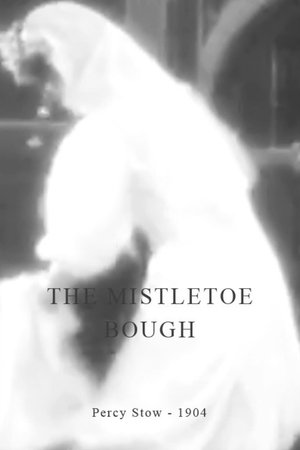
It's Christmas time, and a grandmother spends a quiet afternoon tending to the family chores. But the arrival of an unexpected visitor brings with her some deadly consequences.
A reel of the Noh drama Momiji-gari, in which Danjuro Ichikawa played opposite Onoe Kikugoro V as an ogress who has disguised herself as the Princess Sarashina. Filmed by Shibata Tsunekichi in the open air on a windy day in November 1899, Danjuro would allow only the one take, so that when his fan blew away in mid-performance the scene had to stay. The film re-emerged at the Kikikan theatre in 1907 where it was a great success and inspired a wave of fiction filmmaking based on traditional Japanese narratives.
Max Fleischer draws the upper and lower halves of the Clown's body, which dance around separately before coming together. Max interacts with his creation before ultimately washing the Clown off the page with water.
In this fragile yet frightening poetic fantasy set against a dark industrial landscape, a woman sits knitting on the porch of her home when a man appears and takes the knitting from her.
Mr. Snookie steals an umbrella and then, while trying to help a woman to cross a puddle, the Tramp appears and intervenes.
This early Chaplin film has him playing a character quite different from the Tramp for which he would become famous. He is a rich, upper-class gentleman whose romance is endangered when his girlfriend oversees him being embraced by a maid. Chaplin's romantic interest in this film, Minta Durfee, was the wife of fellow Keystone actor, Roscoe "Fatty" Arbuckle.
A tramp gets drunk in a hotel lobby and, upstairs, causes some misunderstandings between Mabel, two hotel guests across the hall from her room, and Mabel's visiting sweetheart.
Three men compete for the attentions of a pretty girl. One of them, a little tramp, plays dirty.
Charlie plays an actor who bungles several scenes and is kicked out. He returns convincingly dressed as a lady and charms the director, but Charlie never makes it into the film.
The hero, a janitor played by Chaplin, is fired from work for accidentally knocking his bucket of water out the window and onto his boss the chief banker (Tandy). Meanwhile, one of the junior managers (Dillon) is being threatened with exposure by his bookie for gambling debts unpaid. Thus the manager decides to steal from the company.
The Stooges are key witnesses at a murder trial. Their friend Gail Tempest, who dances at the Black Bottom cafe where the Stooges are musicians, is accused of killing Kirk Robin.
One of the two earliest horror films ever made. This film is presumed lost.
One of the two earliest horror films ever made. This film is presumed lost. In this black comedy scene, the bottom falls out of a coffin, the corpse tumble out, and is jolted back to life. Short sequences like this, as well as street scenes and dancing geisha girls were the main subjects of early Nippon cinema, pioneered by Shiro Asano and Shibata Tsunekichi from 1897 onwards. In creating dramatic, scenes, film-makers naturally chose the most striking or bizarre. Another undocumented film, recalled by cameraman Shiro Asano.
Newlyweds receive a build-it-yourself house as a wedding gift—and the house can, supposedly, be built in "one week". A rejected suitor secretly re-numbers packing crates, and the husband struggles to assemble the house according to this new 'arrangement' of its parts.