The captivating tales of the people and events behind one of humanity's greatest achievements in exploration: NASA's Voyager mission.
Never-before-heard audio tapes recorded with Neil Armstrong during the final years of his life reveal an intimate portrait of this iconic - and famously private - man. Illustrated through previously unseen personal photographs and archival footage, this documentary special takes viewers on an emotional journey into the thoughts and experiences of the first man on the Moon.
With unique access to Nasa, Brian Cox follows Perseverance rover’s search for life on Mars during a critical seven-day period as it undertakes an epic journey across the red planet.
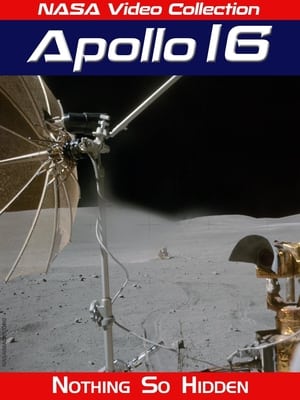
When Kennedy announced in 1961 that he wanted to take humans to the moon within a decade, Charles M. Duke was skeptical. Almost 11 years later, however, Charles M. Duke was standing on the moon himself. He gave Neil Armstrong the go-ahead for the landing on Apollo 11. Because he contracted rubella, the Apollo 13 crew had to be changed. In 1972, he landed with Apollo 16 and looked down on Earth from the moon himself.
A year through the distant eyes of meteorological satellite Himawari-8 – a hypnotic stream of Earth's beauty, fragility and disasters. Animation of satellite irradiation scan measurements, scientific data by meteorological satellite Himawari-8 courtesy of JMA/BoM/NCI
Explore the mysterious Amazon through the amazing IMAX experience. Amazon celebrates the beauty, vitality and wonder of the rapidly disappearing rain forest.
A real-time reconstruction of time-lapse photographs taken on board the International Space Station by NASA’s Earth Science & Remote Sensing Unit. The film is scored with musical selections from three albums by Phaeleh (producer Matt Preston): Lost Time, Illusion of the Tale, and Somnus. The music directly influenced the choice of material used in the film. The film's duration is approximately the length of time it takes ISS to orbit the Earth once: 92 minutes and 39 seconds. Meditate on the beauty of our planet.
Together to Mars?
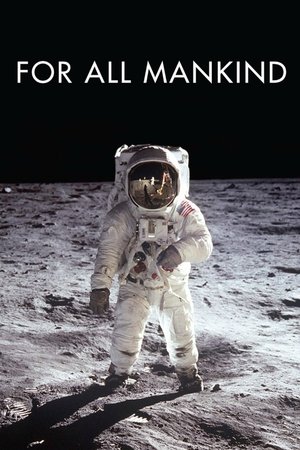
National Geographic's riveting effort recounts all 12 crewed missions using only archival footage, photos and audio.
On July 16, 1969, hundreds of thousands of spectators and an army of reporters gathered at Cape Kennedy to witness one of the great spectacles of the century: the launch of Apollo 11. Over the next few days, the world watched on with wonder and rapture as humankind prepared for its "one giant leap" onto the moon--and into history. Witness this incredible day, presented through stunning, remastered footage and interviews that takes you behind-the-scenes and inside the spacecraft, Mission Control, and the homes of the astronaut's families.
Laika, a stray dog, was the first living being to be sent into space and thus to a certain death. A legend says that she returned to Earth as a ghost and still roams the streets of Moscow alongside her free-drifting descendants. While shooting this film, the directors little by little realised that they knew the street dogs only as part of our human world; they have never looked at humans as a part of the dogs’ world.
A look at the state of the global environment including visionary and practical solutions for restoring the planet's ecosystems. Featuring ongoing dialogues of experts from all over the world, including former Soviet Prime Minister Mikhail Gorbachev, renowned scientist Stephen Hawking, former head of the CIA R. James Woolse
This extraordinary film features NASA film footage enhanced by AI-based software and other image processing. The clarity of the images gives viewers a whole new perspective on what it was like to step onto lunar soil and ramble about the alien landscapes. The film shows how teams of astronauts collected evidence that has revolutionized our understanding of the origin of both Earth and the moon.
Apollo 11 : Retour vers la lune
Can Homo sapiens evolve into Homo spatius? For over 50 years now, we have been testing our human nature in our effort to conquer outer space, and still 30 years away from a possible human exploration of Mars, a question remains: Can our body take such travels? Will it ever adapt? Combining human adventure and the exploration of the human body, this film offers unique insights into the physical and psychological effects of space travel on the Astronauts and measures the impact on medical sciences.
Isaac Newton - brilliant rational mathematician or master of the occult? This innovative biography reveals Newton as both a hermit and a tyrant, a heretic and an alchemist. Magical images mix with actors and experts to bring alive Britain's greatest scientific genius in his own words.
Archival material from the original NASA film footage – much of it seen for the first time – plus interviews with the surviving astronauts, including Jim Lovell, Dave Scott, John Young, Gene Cernan, Mike Collins, Buzz Aldrin, Alan Bean, Edgar Mitchell, Charlie Duke and Harrison Schmitt.
Travel alongside the astronauts as they deploy and repair the Hubble Space Telescope, soar above Venus and Mars, and find proof of new planets and the possibility of other life forming around distant stars.
This film shows how far we have come since the cold-war days of the 50s and 60s. Back then the Russians were our "enemies". And to them the Americans were their "enemies" who couldn't be trusted. Somewhere in all this a young girl in Oklahoma named Shannon set her sights on becoming one of those space explorers, even though she was told "girls can't do that." But she did.
Explores the $10 billion JWST's engineering and construction process, historic Dec. 25, 2021 launch, and the release of its first full-color, galaxy-sprinkled images on July 12, 2022 witnessed by the entire planet.