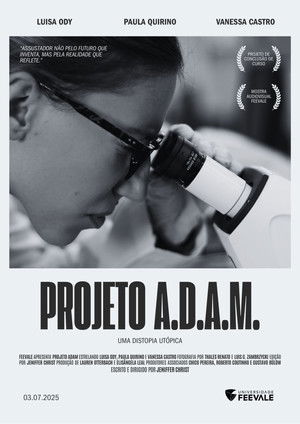
Presenting a short film I made during a 24-hour filmmaking challenge at my university. The theme was "Unchosen Dream," and we had a maximum duration of 5 minutes.
Marta, a single mother promised to an older farmer in the aftermath of WWII, forges an unlikely friendship with Lorenzo, the village's openly gay "wedding planner." In the conservative backdrop of rural Southern Italy, Lorenzo introduces her to a hidden community of gays, sparking Marta's journey to challenge societal prejudices. In the first year of women's suffrage in Italy, Marta navigates her evolving role as a woman, breaking barriers and finding her place in a changing world.
Mara is a young creative writing professor struggling with problems in her marriage to an experimental musician. One day, she runs into Matt, a charismatic, free-spirited author from her past, when he wanders onto her university campus. Bonded by their shared interests, the two gradually become closer. When Mara’s husband unexpectedly cancels plans to drive her to an out-of-town conference, Matt accompanies Mara on the trip instead. Along the way, the tension surrounding their undefined relationship slowly grows.
The road can be long when allowing yourself to love again. Shy and self-effacing Léo leads a solitary existence, but an encounter with the confident Thom turns his world upside down.
A group of college friends receive the surprise of their lives when they discover there is an actual killer on the scene of a local haunted trail.
Lettre à un amant is the final chapter of Paradis’ video trilogy. It deals with a couple's break-up. It is both a letter and a reflection, and it concerns giving of one's self, sharing and exchanging. It is also a response to the other person's flight, the absence, the void. The images attempt to replace the fear and silence. A need sublimated in the exacerbation of pleasure conveyed by images and sounds, Lettre à un amant is a masterful conclusion to the series. At the same time, it poses several questions about the dichotomous love-image paradox present in love. This work also refers to an earlier work by Marc Paradis, La Cage, because of its erotic homosexual content and its many electronic applications. Richard Anger's original score was composed to emphasize the dramatic aspect while several processes proper to the video medium serve to peg the images in an aesthetic approach.
Filip tries to reconcile himself with his new life after his long-term boyfriend broke up with him.
Meadow Bridge is a coming-of-age story that follows Darcy, a fourteen-year-old girl growing up in a small West Virginia town in the late 1990s. It's a story about growing up on the edge of poverty and possibility - about trying to reach out into the bigger world, while wrestling with where you're from.
Apollon is a teenager hung up by the social ideals of masculinity. He fantasizes about having the perfect body - complete with big beefy muscles and a big banana.
This 20th anniversary production of Jonathan Harvey's play about two working class teenage boys falling in love on a south east London council estate was captured by Digital Theatre live at the Arts Theatre in London's Leicester Square.
The life of 16-year-old Mot is thrown into disarray when his father leaves the family. In protest, Mot brings home a homeless woman and declares that he will live with her.
A short scene about a breakup between Lucy and Zelda, who's relationship has been put to the test recently.
Sr. Raposo is a staged documentary about the daily life of Acácio, who found out he was HIV+ in 1995.
Teenagers’ leisure at full swing: a group of friends spend their holidays at parties, having sex, boozing, and partaking in any adventure that brings them a boost of adrenaline. As they use violence for entertainment and to fulfill their authoritarian fantasies, their adventures will show the cracks and the collapse of the perfect world they live in.
Miguel and Johnny know each other since childhood. They are dedicated to skate and have fun. To earn easy money and continue skating, they sell their own blood to a clandestine contact in a hospital. The activity becomes business until a large transaction is not as they imagined.
Voyeuristically exploring a relationship between two young men, which falls into the gray area between the sexual experimentation of adolescence and the world of adult emotions, Between the Boys glimpses into one of the few remaining taboos of current times.
Ensconced in a solitary existence, Paweł believed that his feelings for the young man he once loved in Brussels had long since ebbed. That is, until one rainy afternoon, when he finds Clément waiting at his home in Poland.
Marcos and his family work as ranch hands. While his father and brother handle the heavier tasks, Marcos stays home, close to his mother. Each one has their future laid out before them, yet Marcos bides his time waiting for Carnival, the one moment where he can let his true self out to shine. The sudden death of his father leaves his family in a very vulnerable situation. The ranch owner hounds them to go away, while Marcos’s mother pressures him to take over the work in the fields. Nicknamed Marilyn by the other teenagers in town, Marcos is a target for desire and discrimination.
A young woman receives a diary as an inheritance from her father, in which he tells her that she must take a trip to Chiapas, a requirement for access to all his possessions.
Conrad Veidt plays a famous musician who is blackmailed for being gay. Eventually he stands trial and is convicted. At the end the film pleads for the abolition of §175 (the law that punishes homosexuality).