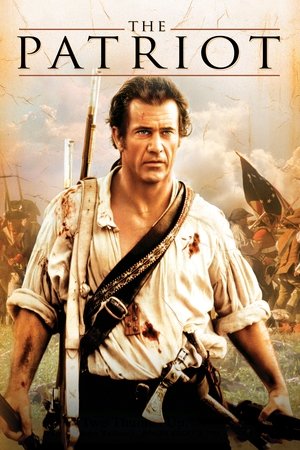
After proving himself on the field of battle in the French and Indian War, Benjamin Martin wants nothing more to do with such things, preferring the simple life of a farmer. But when his son Gabriel enlists in the army to defend their new nation, America, against the British, Benjamin reluctantly returns to his old life to protect his son.
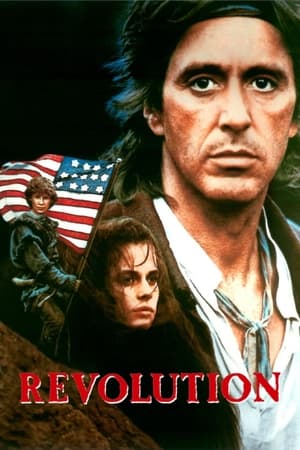
New York trapper Tom Dobb becomes an unwilling participant in the American Revolution after his son Ned is drafted into the Army by the villainous Sergeant Major Peasy. Tom attempts to find his son, and eventually becomes convinced that he must take a stand and fight for the freedom of the Colonies, alongside the aristocratic rebel Daisy McConnahay. As Tom undergoes his change of heart, the events of the war unfold in large-scale grandeur.
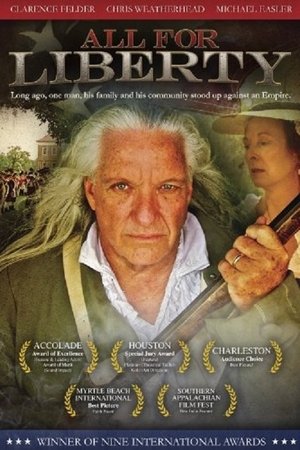
It is 1775. Henry Felder, a Swiss-German colonist, lives with his family in the British colony of South Carolina. After many years of struggling with corrupt British rulers, Felder is urged by the new patriot governor to write Articles of Separation from the English King. Felder's old Indian fighting comrade forms a Tory militia to assist the Crown as the fight heats up.
The story of the American Founding, the greatest political achievement in history. The American colonists had developed a unique way of life as they practiced self-government for 150 years. In the struggles between the colonies and the mother country that followed the French and Indian War, Britain declared that Americans had no right to rule themselves. This went against everything the Americans knew. In response, our ancestors risked their “lives, fortunes, and sacred honor” to fight the War for Independence. Against all odds, they won, and in victory formed a stable, lasting republic.
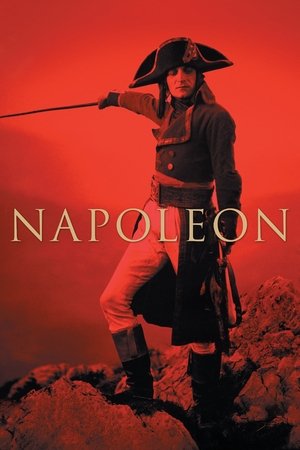
A biopic of former Emperor of France, Napoleon Bonaparte, tracing the Corsican's career from his schooldays (where a snowball fight is staged like a military campaign) to his flight from Corsica, through the French Revolution (where a real storm is intercut with a political storm) and the Terror, culminating in his triumphant 1797 invasion of Italy.
A British Revolutionary War drummer accidentally deserts from his regiment and is hunted down for execution.
Patriot Southern Command under General Nathaniel Greene organizes militias for a push against the British.
This film dramatizes the problems facing ordinary American soldiers during the Revolutionary War, explaining why most ultimately chose to stay and fight.
Presenting the tale of American founding father Alexander Hamilton, this filmed version of the original Broadway smash hit is the story of America then, told by America now.
A one-hour documentary about our first real moment of declaring independence 250 years ago, when New Yorkers toppled the statue of King George III at Bowling Green after a first public reading of the freshly inked document on July 9, 1776. In this film, we consider the rise and fall of empires, the toppling of statues, and the removal of monuments to Confederates and slave holders in the afterlife of George Floyd. We follow historian Abby Suckle on her trail to finally find the missing head of King George III, telling the story of how it all happened, along with reflections from Ivan Schwartz whose Studio EIS in Brooklyn has spent a half century sculpting statues of legends from American history in all its complexity: from Presidential libraries, to a re-creation of King George's statue.
An Important and relevant portrait of America's early years! Embark on an exciting, historical journey through the battles and victories surrounding America's pursuit for freedom. This poignant documentary series is comprehensively presented through narration, photographs and paintings to create a visual history of America's founding ideals of liberty and freedom. This ten-part documentary series examines the people and events that led up to our nation's battle for independence against the world's largest military power during the Revolutionary War through the presidencies of freedom fighters Thomas Jefferson and Abraham Lincoln who were forever dedicated to the proposition that all men are created equal.
The career of Revolutionary War naval hero John Paul Jones, from his youth in Scotland through his service to Catherine the Great of Russia.
Albany, New York, 1776. After marrying, Gil and Lana travel north to settle on a small farm in the Mohawk River Valley, but soon their growing prosperity and happiness are threatened by the sinister sound of drums that announce dark times of revolution and war.
This is the story of George Rogers Clark and his courageous frontiersmen who fought on the Kentucky and Illinois frontier during the American Revolution. To help end British-inspired Indian attacks on Kentucky settlements, these brave men defied tremendous odds to capture Ford Sackville from the British in 1779. This was the park film at George Rogers Clark National Historical Park in Vincennes, Indiana.
Produced in 1975 by the National Park Service for Guilford Courthouse National Military Park. The script and letters were written by Phillip Young and the watercolor artwork was provided by famed military history artist Don Troiani. It tells the story of the March 14, 1781 North Carolina Battle in a unique way.
Produced in 1974 to screen at the Minuteman National Historical Park in Concord, MA. Telling the story - through the eyes of one Patriot - the events of 1763 to 1775. An older National Park Service Museum film, and one of the most ambitious produced for the NPS at the time.
National Park Service Museum film made for the Ford Mansion which was General George Washington's Headquarters during the winter of 1779 - 1780 and is now part of the Morristown National Historical Park in New Jersey.
This National Park Service orientation film tells the story of Ninety Six. From its forming at the crossroads along trade routes linking the Cherokee territory to Charleston, SC. Ninety Six in the 1700s was a land of hope and opportunity, of conflict and revenge, and a land of frontier justice. Ninety Six played a significant role in the struggle for American independence from British rule. It was the site of the first southern land battle of the Revolutionary War in 1775, and the scene of the longest field siege in 1781.
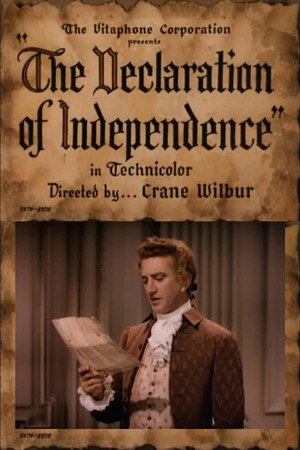
This historical featurette focuses on Caesar Rodney of Delaware who in the summer of 1776 cast the deciding vote, at the meeting of the Continental Congress in Philadelphia, so that the Declaration of Independence was adopted.
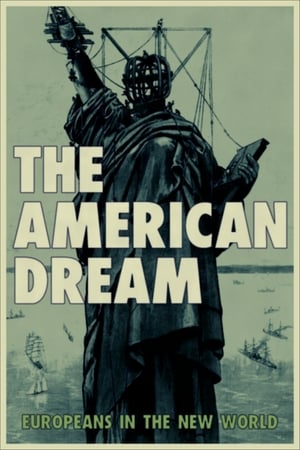
The history of Europeans in North America, from the arrival of Columbus in 1492 to the business success of German immigrants such as Heinz, Strauss or Friedrich Trumpf, Donald Trump's grandfather. During the 19th century, thirty million people — Germans, Irish, Scots, Russians, Hungarians, Italians and many others — left the old continent, fleeing poverty, racism or political repression, hoping to make a fortune and realize the American dream.