In an urban reality seen only in black and white, a boy from a conservatory works alone in the school's abandoned fine arts department. Until the boy is accused of schizophrenia by the institution, for gradually starting to see colors and act outside the norm, because he is an artist.
Karrer plods his way through life in quiet desperation. His environment is drab and rainy and muddy. Eaten up with solitude, his hopelessness would be incurable but for the existence of the Titanik Bar and its beautiful, haunting singer. But the lady is married and Karrer is determined to keep her husband away...
An aspiring painter meets various characters and learns valuable lessons while traveling across America.
Beat Takeshi lives the busy and sometimes surreal life of a showbiz celebrity. One day he meets his blond lookalike named Kitano, a shy convenience store cashier, who, still an unknown actor, is waiting for his big break. After their paths cross, Kitano seems to begin hallucinating about becoming Beat.
When a young journalist suspects the disappearance of a beautiful artist is connected to murders that took place 20 years earlier, she uncovers a reality she never could have imagined. Inspired by true events.
After consolidating itself as a tourist destination in the mid-1960s, this small coastal village has become the dormitory town for the workers of a Nuclear Power Plant. With the liberal promise of prosperity and socioeconomic wellfare, many workers left their homes to move to the small city and started working at the new Nuclear Power Plant. The collective unrest and the silence, cut off by the great gusts of wind, articulate the landscape of the village that is now under the aid of the Nuclear Power Plant.
a 32-minute color film by Gwen Brown, featuring precious footage of Living Theatre productions “Mysteries” and smaller pieces, “Paradise Now” and “Frankenstein.” “The fusion of Brown’s freewheeling direct cinema and the Living Theatre’s performance for revolutionary change (amidst the heydays of both) unite as a dynamic concoction of the era, yielding for the viewer a shifting terrain of both critical insight and ecstatic zeal, not as a vacant nostalgia for a pre-commodified radicality, but as tactical inspiration for future days.” – Andrew Wilson (Artist’s Access Television)
At Kichijōji Station, Tokyo, Taku Morisaki glimpses a familiar woman on the platform opposite boarding a train. Later, her photo falls from a shelf as he exits his apartment before flying to Kōchi Prefecture. Picking it up, he looks at it briefly before leaving. As the aeroplane takes off, he narrates the events that brought her into his life...
In 1950s rural Idaho, a young boy watches helplessly as his friends and brother fall under the spell of a mysterious widow living up the road and becomes convinced that she is a vampire.
Peixes Elétricos
He really likes Poughkeepsie Crispies. Maybe too much. A darkly funny, minimalist loop of repetition, ritual, and barely-hinged performance.
Desperate to escape his mind-numbing routine, uptown Manhattan office worker Paul Hackett ventures downtown for a hookup with a mystery woman.
In a waiting room in the space between the living and the beyond, an unlikely pair sits impatiently for their final reckoning.
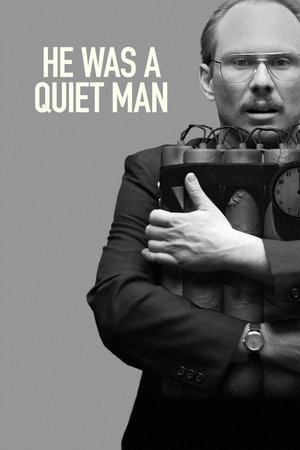
An unhinged office worker who planned to go on a shooting spree at his workplace struggles with his newfound status as a hero after he ends up stopping a shooting spree instead.
Two robots embark on a quest to become human.
Jordan White and Amy Blue, two troubled teens, pick up an adolescent drifter, Xavier Red. Together, the threesome embarks on a sex- and violence-filled journey through a United States of psychos and quickie marts.
Nómadas
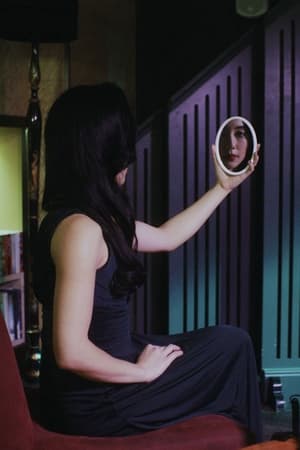
The life of a successful radiologist spirals out of control when she sees the spitting image of herself driving down a London street. While attempting to uncover who the imposter could be, she stumbles into a terrifying mystery that her family and closest friends are somehow involved in, leaving her with no one to trust.
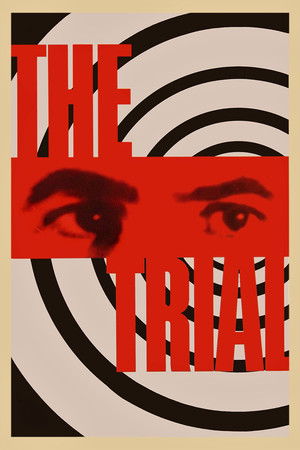
Arrested for an unnamed crime, Josef K. is trapped in a surreal bureaucratic maze where justice is unknowable and guilt is assumed.
A comic study of 20th-century history, reconstructing the life of writer, creator and professional prisoner Tulse Luper. Born in 1911 Newport and last heard of in 1989, Luper’s life is pieced together from the evidence found in 92 suitcases scattered across the globe. In the first of three parts, we follow Luper through three distinct episodes: as a child during the First World War; as an explorer in Mormon Utah; and as a writer in Belgium during the rise of fascism.