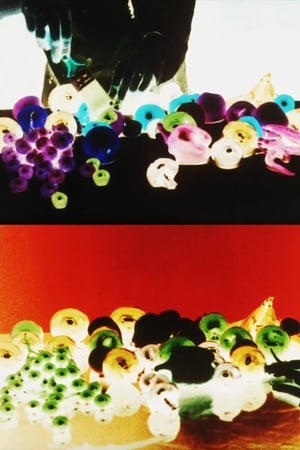
Art in glorious motion. Bright, colourful and often intensely dynamic, the 1970 'Kinetics' show at London's Hayward Gallery was a major international showcase of the new active sculptural art. Works by Jean Tinguely, Nam June Paik, Peter Logan, Takis, Jesus Raphael Soto and many others dazzled a wide-eyed public. This priceless film record of the show captures a kaleidoscope of neon lights, rotating metal, squirting water and stroboscopic projections. Director Lutz Becker, of the Slade School of Art Film Unit - who would go on to direct Double-Headed Eagle (1973), a documentary account of Hitler's rise to power - uses a variety of textural, electronic sounds (courtesy of Peter Sahla) to evoke the unusual experience. The show was enormously popular, with visitors filling out the gallery day after day.
Afatasi The Artist is a San Francisco based mixed-media conceptual artist and futurist. Her artwork—which includes textiles and fine art tapestry, small paintings and murals, metal work and clothing design—is a continuous exploration of the intersectionality of race, culture, gender, class, and geopolitics. “I like to create these things because there were so many who weren’t allowed to live this loudly,” Afatasi says, "and I know how much better the world would be if they had.”
Stan Hill Jr. is a Haudenosaunee artist living in Miawpukek First Nation Reserve, Conne River, Newfoundland. In “The Bear Inside a Whale,” he and his family discuss racism, identity, religion, creation and art, along with the cultural extinction of the Beothuk of Newfoundland. Throughout the film, we follow Stan carving a bear out of a whale vertebra. And we visit The Rooms (museum) in St. John’s, Newfoundland, where Stan talks about viewing and reclaiming Indigenous artefacts.
Much like Fred Rogers and Bob Ross in the United States, Claude Lafortune was a staple of French-Canadian television. The beloved children's television host inspired generations of children through his celebration of creativity, inclusivity and diversity. For over five decades, he dedicated his life to transforming mere paper into whimsical sculptures, creatures and film sets. "The Paper Man" reveals the depths of Claude Lafortune's work, as well as his continuing legacy.
Follows the behind-the-scenes work of Studio Ghibli, focusing on the notable figures Hayao Miyazaki, Isao Takahata, and Toshio Suzuki.
The genesis of To Open Eyes: A Film on Josef Albers developed from Arnold Bittleman's appreciation for Albers while Bittleman was a student at Yale University in the 1960s. Wanting to preserve Albers’s teaching method—learning by doing—Bittleman set out with filmmaker and editor Carl Howard to make a visual record of Albers teaching students how to see and use color as a visual grammar. The film includes archival footage of Josef Albers at home in conversation with Bittleman, as well as footage from Black Mountain College and Yale University.
Narrated by Sir Derek Jacobi - star of the landmark television series "I, Claudius" - this documentary explores art and culture around the Bay of Naples before Mount Vesuvius erupted in AD 79. The bay was then the most fashionable destination for vacationing Romans. Julius Caesar, emperors, and senators were among those who owned sumptuous villas along its shores. Artists flocked to the region to create frescoes, sculpture, and luxurious objects in gold, silver, and glass for villa owners as well as residents of Pompeii and other towns in the shadow of Vesuvius. The film concludes with the story of the discovery of Pompeii and Herculaneum from the 18th century onward.
Ashes and Snow, a film by Gregory Colbert, uses both still and movie cameras to explore extraordinary interactions between humans and animals. The 60-minute feature is a poetic narrative rather than a documentary. It aims to lift the natural and artificial barriers between humans and other species, dissolving the distance that exists between them.
Bas Jan Ader rides his bike into a canal in Amsterdam.
Gray Matters explores the long, fascinating life and complicated career of architect and designer Eileen Gray, whose uncompromising vision defined and defied the practice of modernism in decoration, design and architecture. Making a reputation with her traditional lacquer work in the first decade of the 20th century, she became a critically acclaimed and sought after designer and decorator in the next before reinventing herself as an architect, a field in which she laboured largely in obscurity. Apart from the accolades that greeted her first building –persistently and perversely credited to her mentor–her pioneering work was done quietly, privately and to her own specifications. But she lived long enough (98) to be re-discovered and acclaimed. Today, with her work commanding extraordinary prices and attention, her legacy, like its creator, remains elusive, contested and compelling.
From Brooklyn to the Bronx, Soho to Greenwich, Union Square to Wall Street... Join us and the friends, collaborators and gallery owners who supported Jean-Michel Basquiat throughout his life. The first ever recognized graffiti artist, who saw international success as a neo-expressionist painter in the 80s, Basquiat is a true contemporary hero who died at the peak of his career.
How the Costacos Brothers built a wall art empire.
“Christo: Works in Progress” takes us around the world on a showcase of the artist’s grand environmental installations. With both critique and praise from members of the communities that have hosted Christo and his works, the film takes a deep look into the process and outcome of pieces such as Wrapped Coast, Running Fence, and Wrapped Walkways. While discussing his inspirations and motives, Christo states, “The work of art is not the fabric, steel poles and cable, the work of art is the hills and the ocean, the sky, the gates, the rocks, the people, the light- this is the work of art.” (Christo Vladimirov Javacheff) Though his work may appear to be visually distracting from the landscapes he creates in, Christo’s aim is to bring attention to the land itself and encourage people to take note of their surroundings.
Exhibition on Screen's latest release celebrates the life and masterpieces of Hieronymus Bosch brought together from around the world to his hometown in the Netherlands as a one-off exhibition. With exclusive access to the gallery and the show, this stunning film explores this mysterious, curious, medieval painter who continues to inspire today's creative geniuses. Over 420,000 people flocked to the exhibition to marvel at Bosch's bizarre creations but now, audiences can enjoy a front row seat at Bosch's extraordinary homecoming from the comfort of their own home anywhere in the world. Expert insights from curators and leading cultural critics explore the inspiration behind Bosch's strange and unsettling works. Close-up views of the curiosities allow viewers to appreciate the detail of his paintings like never before. Bosch's legendary altarpieces, which have long been divided among museums, were brought back together for the exhibition and feature in the film.
Stuart Cooper's short about the work of Spanish artist Juan Genovés is an inspired introduction to the works of this extraordinary artist, exploring its minimalist aesthetic and storytelling qualities through a variety of cinematic techniques, including rostrum, animation, news footage and live action recreations.
Poème Électronique is an 8-minute piece of electronic music by composer Edgard Varèse, written for the Philips Pavilion at the 1958 Brussels World’s Fair. The Philips corporation commissioned Le Corbusier to design the pavilion, which was intended as a showcase of their engineering progress. The pavilion was shaped like a stomach, with a narrow entrance and exit on either side of a large central space. As the audience entered and exited the pavilion, the electronic composition Concret PH by Iannis Xenakis (who also acted as Le Corbusier's architectural assistant for the pavilion's design) was heard. Poème électronique was synchronized to a film of black and white photographs selected by Le Corbusier which touched on vague themes of human existence.
Leonardo da Vinci is acclaimed as the world’s favourite artist. Many TV shows and feature films have showcased this extraordinary genius but often not examined closely enough is the most crucial element of all: his art. Leonardo’s peerless paintings and drawings will be the focus of Leonardo: The Works, as EXHIBITION ON SCREEN presents every single attributed painting, in Ultra HD quality, never seen before on the big screen. Key works include The Mona Lisa, The Last Supper, Lady with an Ermine, Ginevra de’ Benci, Madonna Litta, Virgin of the Rocks, and more than a dozen others.
She was a prolific self-portraitist, using the canvas as a mirror through all stages of her turbulent and, at times, tragic life. This highly engaging film takes us on a journey through the life of one of the most prevalent female icons: Frida Kahlo. Displaying a treasure trove of colour and a feast of vibrancy on screen, this personal and intimate film offers privileged access to her works and highlights the source of her feverish creativity, her resilience and her unmatched lust for life, men, women, politics and her cultural heritage.
The 25-minute long documentary details the entirety of the artistic process from Ralph Ziman’s inspiration for the project and acquisition of the MiG-21, to the international collaboration to create the beadwork and assemble the art piece, leading up to the project’s unveiling at The Museum of Flight. Also covered in the film is background on the MiG-21, including details about the plane used (decommissioned tail number 8971) and how MiGs’ presence in the Angolan Civil War ultimately hastened the end of white rule in South Africa. See historical footage and personal interviews, including the Polish pilot who flew tail number 8971 in the 1980s, a South African Border War pilot and the team of artists and craftspeople in Southern Africa and the United States who took on the huge task of covering the aircraft in tens of millions of glass beads.
The tender and tragic love story of French painter Pierre Bonnard and his wife and lifelong model Marthe. The artist recorded their relationship on canvas and, 50 years after his death, these paintings have established him as one of the masters of colour and light.