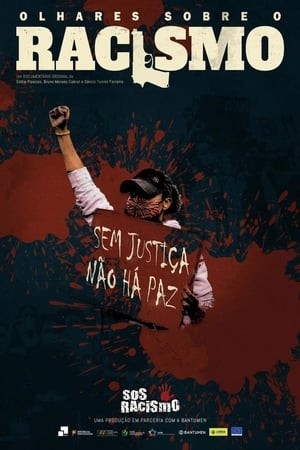
United States, September 1st, 2016. American football player Colin Kaepernick kneels during the national anthem, protesting police brutality against black people. Part of the population regards the gesture as an unacceptable affront to the flag. Later, he loses his place on his team. Today, however, he is considered by many as a true hero.
Keur Simbara is an intimate, lyrical short documentary that follows a group of women community organizers in a rural Senegalese village as they build and sustain systems of health, finance, agriculture, and domestic infrastructure. Amid water scarcity and environmental challenges, they articulate their hopes for the future and the legacy they wish to leave behind. Keur Simbara is a tribute to communal wisdom and the power of local organizing.
Exploring how punk influenced politics in late-1970s Britain, when a group of artists united to take on the National Front, armed only with a fanzine and a love of music.
This documentary will explore the Afro-Caribbean dance, ‘whining’ alongside the practice of twerking to analyze respectability politics, pressures to accommodate whiteness, and gendered criticism of sexual expression within the Black diaspora. Using archival footage of West African dance, expert opinion from dancing and gender studies professors, and the active participation of partygoers in a dance experiment, Watkins will paint the picture of the defiance, autonomy, and ancestral veneration intrinsic to these traditional movement styles.
In the film “The Wall fell on our heads”, five women of color from East and West Germany talk about their memories of the fall of the Berlin Wall.
Propaganda short film depicting the rise of Nazism in Germany and how political propaganda is similarly used in the United States. The film was made to make the case for the desegregation of the United States armed forces.
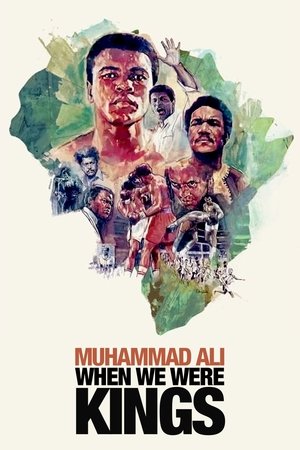
It's 1974. Muhammad Ali is 32 and thought by many to be past his prime. George Foreman is ten years younger and the heavyweight champion of the world. Promoter Don King wants to make a name for himself and offers both fighters five million dollars apiece to fight one another, and when they accept, King has only to come up with the money. He finds a willing backer in Mobutu Sese Suko, the dictator of Zaire, and the "Rumble in the Jungle" is set, including a musical festival featuring some of America's top black performers, like James Brown and B.B. King.
It is the evocation of a life as brief as it is dense. An encounter with a dazzling thought, that of Frantz Fanon, a psychiatrist of West Indian origin, who will reflect on the alienation of black people. It is the evocation of a man of reflection who refuses to close his eyes, of the man of action who devoted himself body and soul to the liberation struggle of the Algerian people and who will become, through his political commitment, his fight, and his writings, one of the figures of the anti-colonialist struggle. Before being killed at the age of 36 by leukemia, on December 6, 1961. His body was buried by Chadli Bendjedid, who later became Algerian president, in Algeria, at the Chouhadas cemetery (cemetery of war martyrs ). With him, three of his works are buried: “Black Skin, White Masks”, “L’An V De La Révolution Algérien” and “The Wretched of the Earth”.
Pilot JP Schulze and filmmaker Louis Cole set off to circumnavigate the world in a single-engine, 1974 Cessna T210L airplane named Balloo. They had 90 days to complete the journey, and as they traveled they met people from many different cultures and asked them - is what divides us greater than what brings us together?
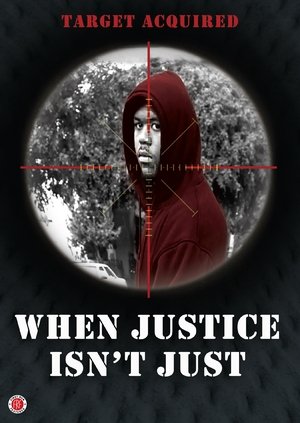
This documentary was produced by Citizen Film and Young Community Developers, in collaboration with a coalition of organizations, enterprises, city agencies, and community partners. To create the documentary, Citizen Film’s Tamara Walker facilitated and captured constructive dialogue between African American officers and the communities they police, helping officers understand how they are perceived by the community, and how the community is perceived by them.
A low-intensity war is being fought on the streets of Europe and the aim is on fascism. This critically acclaimed documentary takes us behind the masks of the militants called antifascists. In 2013 a group of armed nazis attacks a peaceful demonstration in Stockholm where several people are injured. In Greece the neo-nazi party Golden Dawn becomes the third largest in the election and in Malmö the activist Showan Shattak and his friends are attacked by a group of nazis with knives and he ends up in a coma. In this portrait of the antifascists in Greece and Sweden we get to meet key figures that explain their view on their radical politics but also to question the level their own violence and militancy.
The world knows the image of the good Canadian. But what if there was a dark secret behind a national identity? THE GOOD CANADIAN exposes the truth behind the idea of a True North strong and free. In this unflinching and eye-opening documentary, directors Leena Minifie and David Paperny move us through the corridors of systemic inequity, from the Indian Act to residential schools, to modern-day family separation. Fusing shocking footage with detailed interviews with experts, advocates, whistleblowers and politicians, THE GOOD CANADIAN challenges national myth-making, while offering Canadians the chance to forge a new identity from the truth.
Rap de Saia is a documentary that reports, through the voices and rhymes of the protagonists themselves, part of the historical trajectory of Female Rap in the State of Rio de Janeiro. In addition to its historical trajectory, Rap de Saia brings a collection of themes that leads us to reflect on women in today's society.
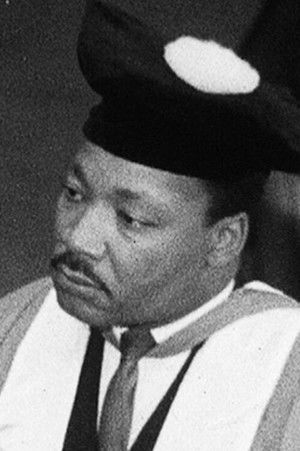
A remarkable event the great American civil rights leader, Martin Luther King makes a powerful speech on a unique visit to Newcastle University.
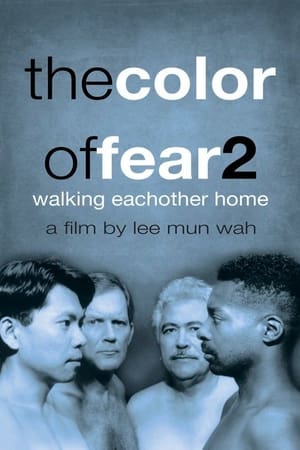
In THE COLOR OF FEAR, eight American men participated in emotionally charged discussions of racism. In this sequel, we hear and see more from those discussions, in which the men talk about about how racism has affected their lives in the United States. We also learn more about the relationships between them, and about their reactions during some of the most intense moments of that discussion.
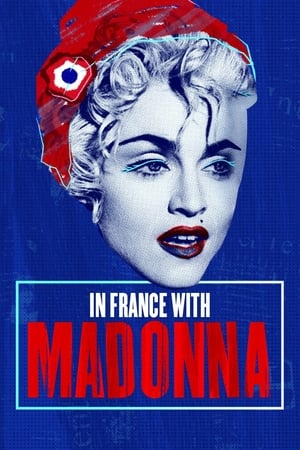
France is at the heart of Madonna's life. She is inspired by French culture and its values and has surrounded herself with French artists for many years. To celebrate the 40th anniversary of the Queen of Pop's career, this film revisits the close and unique bond between Madonna and France and features testimonials from close collaborators and French friends who have helped create her unique artistic universe: Maripol, Jean Paul Gaultier, Julien d'Ys, Nicolas Huchard, and Marion Motin. Today's artists such as Florence Foresti, Leïla Slimani, Victor Weinsanto and HollySiz talk about the influence of this emancipating figure, which extends far beyond music.
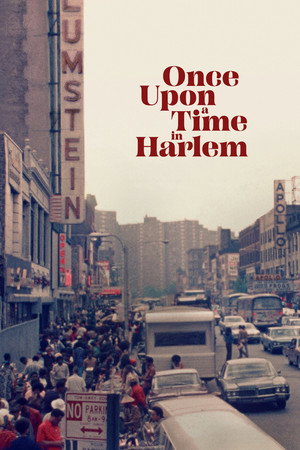
A decade after his death, genre-defying filmmaker William Greaves has one last trick up his sleeve with what he considered the most important event he captured on film: a 1972 party he engineered with the living luminaries of the Harlem Renaissance.
A French documentary on how groups of youth in Paris generated a backlash against the NeoNazi skinhead subculture, and by doing so earned themselves the nickname Chasseurs de Skins or 'Skinhead Hunters'.
The Black Contribution – Literature and Theater 1978 is a rare documentary highlighting the voices and cultural impact of African American writers and performers during the civil rights era. Introduced by NAACP leader Benjamin Hooks and narrated by Roscoe Lee Brown, the film weaves together dramatic readings, theatrical excerpts, and candid urban street footage. Margaret Walker’s poem For My People is performed alongside scenes of daily Black life in New York City — children playing, families on stoops, open fire hydrants, and the realities of poverty in 1970s neighborhoods. James Baldwin appears in interview footage, while signs for his play The Amen Corner and stage excerpts from Lorraine Hansberry’s A Raisin in the Sun underscore the powerful presence of Black voices in American theater. With rare shots of Harlem life, literature, and performance, this film documents the enduring contributions of African American artists to U.S. culture and history.
Since August 2024, in Martinique, a popular protest movement against the high cost of living has been reemerging under the leadership of the RPPRAC (Rassemblement Pour La Protection Des Peuples Et Des Ressources Afro-Caribéens – Gathering for the Protection of Afro-Caribbean Peoples and Resources). On the island, food prices are on average 54% higher than in mainland France.* Through various cultural figures, the people of Martinique are expressing their anger and seeking concrete solutions. *Source: Kiprix, Price comparison between supermarkets in the French overseas territories and mainland France.