Dimitri - Clown
An intimate portrayal of the everyday lives of Carthusian monks of the Grande Chartreuse, high in the French Alps (Chartreuse Mountains). The idea for the film was proposed to the monks in 1984, but the Carthusians said they wanted time to think about it. The Carthusians finally contacted Gröning 16 years later to say they were now willing to permit Gröning to shoot the movie, if he was still interested.
Max Frisch was the last big Swiss intellectual widely respected as a “voice” in its own right – a character hardly found today. The film retells Frisch’s story as a witness of the unfolding 20th century, wondering if such “voices” are needed at all, or if we could do without them.
Switzerland still carries out special flights, where passengers, dressed in diapers and helmets, are chained to their seats for 40 hours at worst. They are accompanied by police officers and immigration officials. The passengers are flown to their native countries, where they haven't set foot in in up to twenty years, and where their lives might be in danger. Children, wives and work are left behind in Switzerland. Near Geneva, in Frambois prison, live 25 illegal immigrants waiting for deportation. They are offered an opportunity to say goodbye to their families and return to their native countries on a regular flight, escorted by plain-clothes police officers. If they refuse this offer, the special flight is arranged fast and unexpectedly. The stories behind the locked cells are truly heartbreaking.
A documentary of an expedition to Churchill, Manitoba to film the Northern Lights.
Swiss artist Markus Raetz has a sixth sense for apprehending the extraordinary. His works are as astonishing as a magician's sleight of hand: they shake up visual habits and show things from a completely different perspective. To further surprise the viewer, this perceptive Swiss artist makes use of the most diverse techniques, materials and media. His installations and sculptures change their appearance according to their own movement or that of the viewer contemplating them. For example, a rabbit becomes a man in a hat, evoking Beuys, or a yes turns into a no. This document presents us with a highly personal view of the world and the man behind these exceptional works.
Zurich-born Hugo Koblet was the first international cycling star of the post-war period. He was a stylist on the bicycle and in life, and a huge heartthrob. Koblet had a meteoric rise and won the Giro d'Italia in 1950. Once he had reached the zenith of his career, Koblet was put under pressure by overly ambitious officials and ended up ruining his health with drugs. In 1954, he married a well-known model and they became a celebrity dream couple. After his athletic career ended, Koblet began to lose his footing. Threatened by bankruptcy, he crashed his Alfa into a tree.
Remue-ménage
In May of 1982 Julio Cortázar, the Argentinean writer and his companion in life, Carol Dunlop set out in their VW bus on a journey along the highway from Paris to Marseille that, for each of them, was to be their final one. Twenty-five years later, Océane Madelaine and Jocelyn Bonnerave set out to undertake the journey again.
Architects from Europe, America and China are invited to a Chinese provincial town. Within several months, they are to construct a park in Jinhua, intended to form the centre of a new district of that town. Where green fields now flourish and farmers plough the land, investors will soon flock, followed by new inhabitants and political reforms. But the project ends up being drawn out over years. The euphoria of the early stages runs up against a reality in which torn-open earth and the ambitious hopes of politicians, workers and locals are the only manifest features. The film documents the changes leading to the Jinhua Architecture Park - from the laying of the foundation stone to its final opening. In giving all participants in this process an opportunity to comment.
This documentary follows Swiss improvisation musicians and tells their stories.
Arami Ullón must return to Paraguay to make an important decision: what will happen to her sick mother, Mirna? The heartfelt gaze of the camera reveals a relationship filled with love, but also unspoken and unresolved issues. A sensitive film which examines the inner turmoil of the daughter during the final stages of her mother’s degenerative illness.
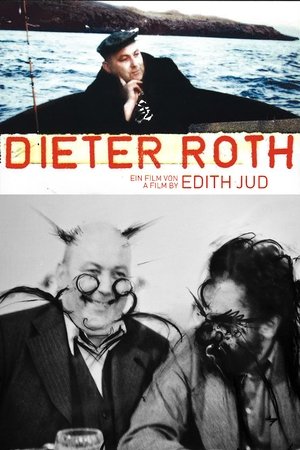
Dieter Roth was an artist who combined art and life in a unique way. He painted, drew, printed, wrote, filmed and made music. He created his own universe in which he turned all materials, no matter how banal or ephemeral, into art. The film "Dieter Roth" is conceived as an inner and outer journey, just as Dieter Roth lived, worked, taught, learned, loved and suffered while traveling. The starting point is his works, including videos and films in which he himself acts - friends and companions will also accompany this cinematic journey, above all his son Björn, who has worked with him for the last 20 years.
A well-preserved mammoth carcass is found in the remote New Siberian Islands in the Arctic Ocean, opening up the possibility of a world-changing “Jurassic Park” moment in genetics.
This documentary offers a complex portrait of Hollman Morris, the Colombian war journalist whose multiple award-winning news show Contravía is one of the few local current-affairs programs that refuses to pander to President Alvaro Uribe's staunchly authoritative government. While most television viewers in Columbia opt for variety shows and soap operas, citizens in search of suppressed truths tune in to Contravía to hear the latest news about forced disappearances, secret mass graves, and various other atrocities taking place all across the countryside. But when you live and work in the country that Reporters Without Borders claims is one of the most dangerous places in Latin America for a journalist to work, denouncing human rights abuses can be a dangerous game. Yet despite the danger to both himself and his family, Morris remains convinced that the situation in Columbia will never been improved if outspoken media figures like himself simply disappear into exile.
A documentary film about Tibetan traditional medicine.
Tracing the emigrations of his family over more than half a century, this riveting documentary epic from acclaimed expatriate Iraqi filmmaker Samir pays moving homage to the frustrated democratic dreams of a people successively plagued by the horrors of dictatorship, war and foreign occupation of Iraq.
A disturbing exploration of what it means to be a man Desert Wind unveils the innermost thoughts of 13 men about their lives and male identity, making a clean sweep of clichés. Their revelations -- a glimpse of the hidden side that few men spontaneously reveal -- are of equal interest for women.
Philippe Savoy head of the choir at Saint Michael's College in Fribourg is preparing to take his fifty-five students to Palestine for a series of concerts. From Bethlehem to Ramallah, passing by Jerusalem and Hebron, between check points and churches, discovering both refugee camps and historical tourism around the Dead Sea, the young musicians will discover an exploded territory, a country living in provisional peace with, in the background, the permanent humiliation of the Palestinian people.
The story of three Turkish men. They all grew up in Switzerland and all got deported after various criminal offenses.