After years of a happy marriage and producing a family, the husband of a catholic woman gets sick. This takes her into a whirl of rancor and hate that drives her to the destruction of her marriage, her family and the things that she loved most.
Guy drinks strange liquid, sees some shit
The old man’s daughter married the foreigner and moved abroad. Only his neighbor Gienyk remembers his name. Others call him “Beard”. “Beard” feeds hens, smokes cheap cigarettes, goes fishing as an ordinary villager. But nobody, even Gienyk knows what’s on his mind. His daughter visits him while passing by. He’s not at home at that moment. When he comes back, he founds his daughter on the threshold, ready to leave. The old man sees off his daughter with sadness. And then takes the gun. Everything’s going to change in a moment… The Beard will disappear.
Olia and Zina are sisters. Olia has a husband and children. Zina has a parrot and a cat. Olia moved to Germany, she couldn’t handle her mother who was dying of terminal illness. Zina has left her art career and dedicated herself to mother. Both of the women suffer from insults, innuendos, and self-reproaches. They’re parted by borders and social status. But there’s still something that urges them to arrange a meeting, even if a meeting is going to be virtual. And there’s still something that saves them from tragedy that is about to occur during their meetings.
A sickly scrawny man in a striped uniform takes a shaving brush and foam, and with a sharp blade, he shaves the back of the head of Rudolf Höss, the commandant of the Auschwitz camp himself. They will never speak with one another, and Joseph (we only learn his name during the credits) will never harm Höss, will not stop the flood of horrible murders with yet another murder. This short sketch about life of a death camp makes us feel pain and grief of millions of people who had passed beyond the walls of the shaving room during the imprisonment of Joseph, the man who outlived his torturer.
This is a story about the eternal miracle of life and death. The unfortunate death of a wild hare turns into a remarkable experience for children who find his body and bury it in a sand box. Now buried, the hare’s life fades away and dozens of magical creatures that lived inside him leave his body in search for a new home. The hare’s life ends by merging with nature, but is reborn in the plants and animals around it. This fairy-tale for children encourages us to think about what death is.
A super 8 projection which references the essay “On the Jewish Question” by Karl Marx.
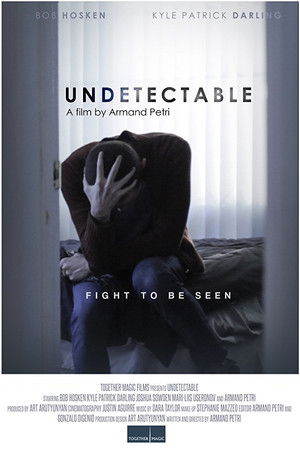
A gay man living with HIV must confront the guilt tormenting him after betraying and infecting his terminal ex-lover.
Working closely with the Van Gogh Museum in Amsterdam, Sunflowers goes beyond a ‘virtual exhibition’, delving into the rich and complex stories behind each of the paintings to unveil the mysteries of the sunflowers. What did the flowers mean to Van Gogh, and why do they resonate so much with audiences today? With a striking portrayal of the artist by actor Jamie de Courcey and fascinating insights from art historians, botanists and everything in between, the film offers a unique insight into Van Gogh’s life and artwork.
Two Russian craftsmen, slightly warmed up by a game of chess, where instead of pieces there are glasses with "strong drink", invent a perpetual motion machine... for a ballerina.
A father strives to give his daughter a perfect life full of happy memories, in spite of a troubling diagnosis and a partner overseas.
An intimately raw and magical journey through the life, mind, and heart of iconic artist Frida Kahlo. Told through her own words for the very first time — drawn from her diary, revealing letters, essays, and print interviews — and brought vividly to life by lyrical animation inspired by her unforgettable artwork.
In late 1968, the last SDS delegates' conference was held in Hanover. It had already been postponed by the Berlin Action Council in Frankfurt in September after the famous tomato throwing by the women. Now attempts are made once again to develop common criteria for the supra-regional context of the SDS, for an SDS whose organizational structures have been overturned by the revolt itself. Factions emerge, the Frankfurt Women's Council distributes its leaflet "Free the socialist eminences from their bourgeois tails", the wave of lawsuits looms. Joscha Schmierer as Django criticizes the student "shitty milieu that is out to satisfy immediate needs. Christian Semler calls for a strong central office. "Of course, I don't have a central office in mind, like the German Communist Party had a central office before '33". After all, the anti-authoritarians in the North region are attacking.
A couple is overjoyed to welcome their firstborn into the world. Euphoria slips away when they return to an unwinnable argument over the name they will give their son.
A man without his own half of the body is looking for the other half in the opposite sex. As for the integrity of his body, so for the sake of emotional healing.
VIVA ÁGUA is a meditation on the philosophical work entitled ÁGUA VIVA written by Clarice Lispector in 1973. The film reflects on Lispector’s interior experimental monologue on the “instant-now” of time, the discomforts of language which are “beyond thought” and the harmonious dissonant reminders and remainders of that “sometime what is seen is ineffable.”
A stranger approaches an aged tattoo artist with a special artistic and mystical request - He wants to know if the tattoo artist can copy an image he has onto his skin. The old man is amazed and shaken by the image. He knows its powerful history and reveals a bit of it to the young stranger.
Manet’s portraits are rarely afforded such close attention as they are given in this exquisitely crafted and insightful film presented by art expert Tim Marlow. Manet’s portraiture comprised about half his work, giving life on canvas to family, friends and the literary, political and artistic figures of the day.
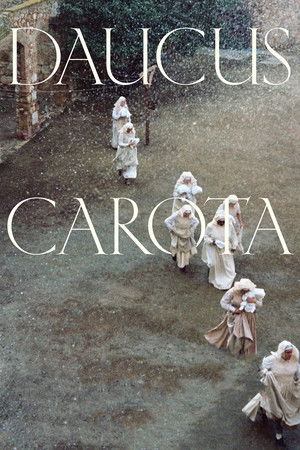
A community of women lives in an old convent that falls apart. They never talk and strive to keep everything clean. One day, Irene realizes for the first time that there is much more beyond the routine she and her sisters keep doing over and over. Irene, following nature’s signs, starts a journey of reconnection with her own impulses and body to finally find her own voice.
A young boy overcomes the communication obstacle he has with the object of his affection: A deaf girl.