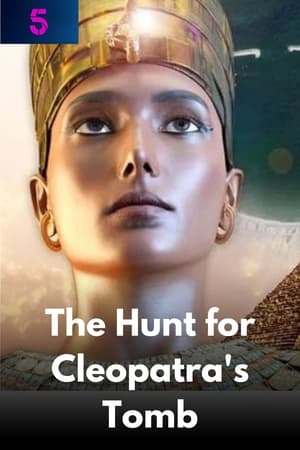
With over 60 tombs, the Valley of the Kings is the most-famous burial ground on Earth. In the biggest Egyptian excavation ever, a team of archaeologists led by Zahi Hawass heads into the Western Valley to hunt for evidence of an undiscovered tomb.
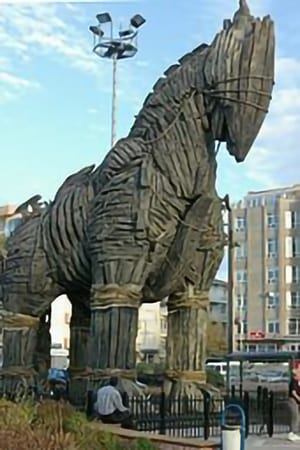
The story of the Trojan Horse is probably one of the most famous stories ever told: after ten years of bloody war, the Greek coalition decides to lift the siege and depart, but not before leaving at the gates a huge wooden horse, which the Trojans confidently lead into the city. A few hours later, the once invincible Troy goes up in flames. What exactly happened? Is this myth true or false?
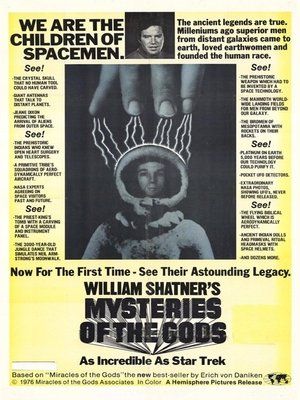
William Shatner explores the theory that the U.S. government is involved in a cover-up of visiting alien spacecraft. Based on a book by Erich von Däniken, this documentary contains evidence of extraterrestrial life here on earth. Proof discovered through photographs taken by scientists and evidence of actual voyages found by archaeologists.
What is true and what is false in the hideous stories spread about the controversial figure of the Roman emperor Gaius Julius Caesar Augustus Germanicus (12-41), nicknamed Caligula? Professor Mary Beard explains what is accurate and what is mythical in the historical accounts that portray him as an unbalanced despot. Was he a sadistic tyrant, as Roman historians have told, or perhaps the truth about him was manipulated because of political interests?
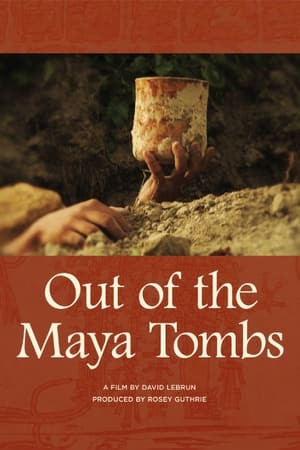
Over the past 50 years, thousands of exquisitely painted Maya vases, almost all looted from tombs, have flooded into public and private collections. These amazing works of art, filled with humor and mystery, have opened an extraordinary window on the Maya past. But the race to unearth these treasures has destroyed temples and palaces, culminating in the takeover of entire ancient cities by looter armies. OUT OF THE MAYA TOMBS (formerly titled DANCE OF THE MAIZE GOD) enters the world of the vases to explore the royal life and rich mythology of the Maya, as well as the tangled issues involved in the collection and study of Maya art. The story is told by villagers, looters, archaeologists, scholars, dealers and curators. For each, these vases have a radically different value and meaning.
In 1959, the mutilated bodies of nine hikers were found in the Ural Mountains. Fifty years on, speculation surrounding the story endures.
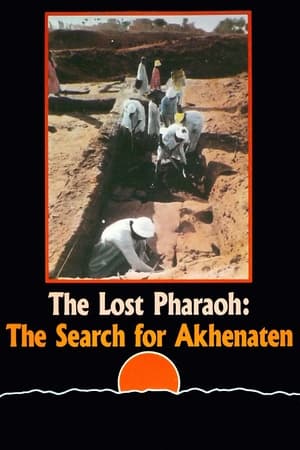
Ancient pharaoh Akhenaten was almost lost to history. Canadian archaeologist Donald Redford, who uncovered the foundation of one of the pharaoh’s many temples, attempts to finally piece together this great Egyptian ruler’s enigmatic story.
The Scythians, skilled horsemen and nomadic conquerors, built a feared empire in the vast Eurasian steppe between the 9th and 3rd centuries B.C. All that remains are their graves: the Kourganes. In April 1999, a 2400 year-old Scythian tomb was discovered in Kazakhstan. It contained, among other treasures, twelve horses completely harnessed in gold, suggesting high social status.
Forensic experts scan Pompeii’s victims to investigate why they didn’t escape the eruption.
5000 years ago the ancient Elamites established a glorious civilization that lasted about three millennia. They created marvelous works in architecture and craftsmanship. These works of art depict the lifestyle, thoughts, and beliefs of the Elamites.
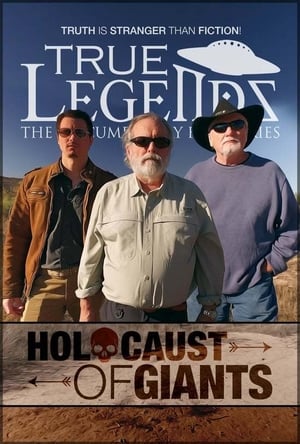
In this explosive episode, Steve Quayle, Timothy Alberino, and Tom Horn pick up the trail of the Anasazi Indians in the Desert Southwest of the United States. Their groundbreaking investigation reveals a dark and gruesome secret concerning the sudden annihilation of this mysterious tribe, and a cover-up of gigantic proportions. What they discover will demand the re-writing of American history! Join Timothy Alberino as he explores the enigmatic island of Sardinia in the Western Mediterranean Sea where the skeletal remains of giants are still being extracted from the tens of thousands of megalithic towers and tombs all over the island, and hear the jaw-dropping testimony of those who were hired by the government to dig them out. Discover why Sardinia was ground-zero for the man-eating Canaanite giants that ravished the Promised Land before their expulsion by “Joshua the Robber”.
In this gripping investigation, archaeologist Pepi Papakosta is on a hunt for Alexander the Great's lost tomb, and she makes an extraordinary discovery.
In the Formative Period 4,000 years before the Incas and the arrival of the Conquistadors, Peru’s earliest civilizations - the Chavín, Caral, Ventarrón, Sechin, Cupisnique, and Cajamarca cultures - built centers of learning and technological achievements, including the largest work of hydrological engineering in the ancient Americas: the Cumbemayo canals.
Shocking new evidence of highly advanced civilizations mounts as previously unexplored regions of the earth reveal mind boggling artifacts that defy all convention and utterly mystify today's academic and scientific factions. It's clear there are massive gaps between our current understanding of the cosmos and the origins of humanity and that of ancient civilizations that existed before "recorded history". Experience unprecedented relics and artifacts that force us to re-evaluate the mainstream dogma of who we are and where we came from.
A new exploration of familiar places located in the region of Rhône and Isère throught an reinvention of digital nuances, a study of perceptions and fluidity around the nature of motion in landscapes and human interactions.
Starting from the colonial city of Trujillo, this documentary reveals natural and archeological features along the north coast of Peru, where the Moche culture thrived from the 1st Century BC to the 6th Century AD.
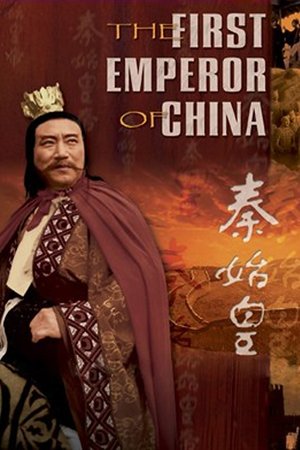
This historical drama tells the story of Qin Shihuang, who unified China's vast territory and declared himself emperor in 221 B.C. During his reign, he introduced sweeping reforms, built a vast network of roads and connected the Great Wall of China. From the grandiose inner sanctum of Emperor Qin's royal palace, to fierce battles with feudal kings, this film re-creates the glory and the terror of the Qin Dynasty, including footage of Qin's life-sized terra cotta army, constructed 2,200 years ago for his tomb.
Come back with us to Ancient Greece, 2,500 Years ago to the original Olympic Games. The ancient Games, like our modern Olympics, included champions and cheaters, glory and scandals, bitter rivalries and contests of strength, speed and savage combat. Set in 448 BC when the pounding of horse's hooves and the brutal hand-to-hand combat could be heard and seen by the crowds that filled the Olympic stadium. This one-hour special event follows the glory and corruption of the arc of a single, five-day Olympiad. The competitions include chariot racing, running, jumping, discus, javelin and two man-to-man combat finals-boxing and pankration, a form of extreme fighting in which death was not uncommon. With the help of sports historians and great athletes such as George Chuvalo and Olympic medallists Donovan Bailey and Angela Schneider, viewers travel back to a very different life-in a very different world.
About 4 000 years ago, Assyrian merchants established a commercial settlement in the ancient city of Kaneš, within Central Anatolia. They came from Aššur, north of Mesopotamia. We have come to understand their history through their writings on clay tablets that have stood the test of time: more than 22 500 cuneiform tablets have been unearthed from the archaeological site of Kültepe. How did these Mesopotamian clay tablets arrived in Anatolia and what do they tell us? The voice of Tarām-Kūbi, an Assyrian woman who corresponded with her brother and her husband in Kaneš, takes us back in time.
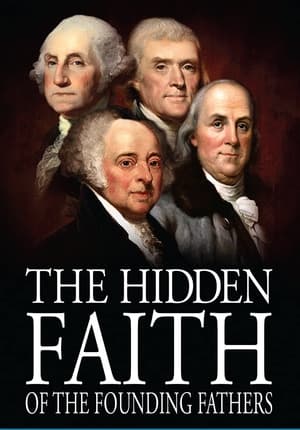
The 'Hidden Faith of Our Founding Fathers' is perhaps the first and only documentary to go where no film has ever gone before: into the hidden faith of America's founding fathers. Many founders were involved in secret societies, and yet it is often claimed these men were Christians who were trying to build a Christian nation. But was their faith the true faith of the Bible? And is it possible, as some claim, that the exact opposite is true? What did the founders believe about the Person of Jesus Christ? Were they fighting for Christianity, or against it? Moreover, is it possible that the events of the American Revolution have a much darker significance in the pages of Bible prophecy than most church leaders are aware?