Pták roháč
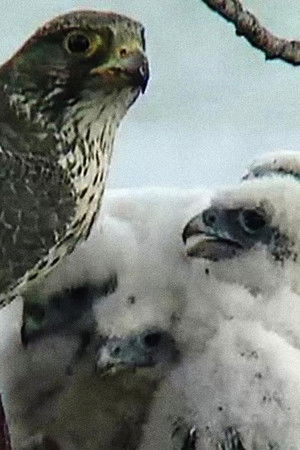
Luňáci a černí čápi
Na bílých křídlech
Mezi volavkami
Some champion exhibits from the National Cat Club Show and the Combined Bird and Aquaria Show, described by W. Cox-Ife, F. Hopkins, and L.C. Mandeville.
In Pica Pica Kristersson invites the viewer to be enthralled for an hour and a half by the vicissitudes of magpie life. Opposing himself to the current nature films that tend to highly compress time in order to end up with a concentrated sequence of action-elements Kristersson leaves rhythm and tempo almost completely up to the magpies themselves. With great integrity he filmed the daily, social and emotional life of a species of birds that has many points of contact with human life. Thus, the movie offers us the oppurtunity to view our own everyday existence through other eyes, from a world right above our heads, but yet so far away.
Did Cartier dream of making a country from this land of a million birds? In his records of his exploration he certainly marvelled at seeing the great auks that have since disappeared from Isle aux Ouaiseaulx, the razor-bills and gannets that are gone from Blanc-Sablon, and the kittiwakes from Anticosti, all the winged creatures of all the islands which he described as being "as full of birds as a meadow is of grass". And that's not even counting the countless snow geese.
Deutschlands wilde Vögel
An excellent display of how humans can rehabilitate and restore an area where a heavy industry polluted the water so severely that it was unsuitable to sustain any kind of life. A a film showing how birds returned to an environment once devastated by industry. The lakes around the northern Slovenian town of Velenje, placed in the Central Europe, are geographic center of the film. They emerged as the land above the lignite mines subsided and the depressions were filled with water. The mines started operating at the end of the 19th century. In the mid 20th century a power plant was built that caused a severe pollution of the lake waters to the extent of the lakes not being fit for any kind of life. As a consequence many birds moved from these parts. After a long ecological restoration that started in the mid 1980s, life returned to the water. Gradually the birds returned as well, including some there were previously never observed in this area.
La Fauvette et le coucou
Ostrovy milionů ptáků
This experimental nature documentary by Minna Rainio and Mark Roberts depicts climate change and the wave of extinction from the point of view of our near future. Actually, it depicts the age we live in now, or rather its fateful consequences.
Finland’s first nature documentary. The filmmakers’ expedition leads them all the way to the Åland Islands and the Karelian Isthmus.
Volavky na Velkém Tisém
Výři
Documents an eight-year project begun in 1979 under the direction of Larry M. Rymon to reintroduce the osprey into Pennsylvania. Due to loss of habitat and wide use of agricultural chemicals, the bird has disappeared from the state for nearly forty years
Wildlife in an early spring wetland.
This is the true account of one of the most surprising and remarkable love stories in the history of New York. It begins in 1993, when a young man from Belgium looking to change his life has an unexpected encounter in Central Park. He meets a hawk. Not just any hawk, but a wild Redtail, a fierce predator that has not lived in the City for almost a hundred years. Compelled to follow this extraordinary creature, he buys a video camera and sets out to track the hawk.
memory consolidation 01
From the North Pole to remote islands, birds can live almost anywhere. How do these resilient animals thrive in such different environments? They have become hardy and versatile through their bodies, feathers, movements, and songs. In this global birding tour, we learn about these nomads of the sky.