Equal parts film, conversation, and social experiment, this interactive documentary uses footage shot by activists in the crowd of the Maribor uprisings, a 2012 to 2013 Slovenian protest, to pull you into the fray, where you must collectively decide what happens next.
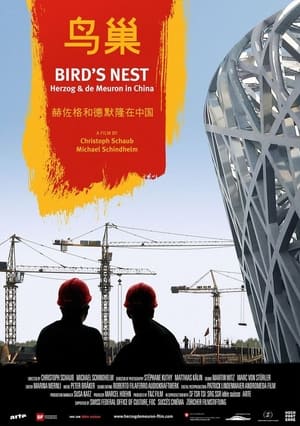
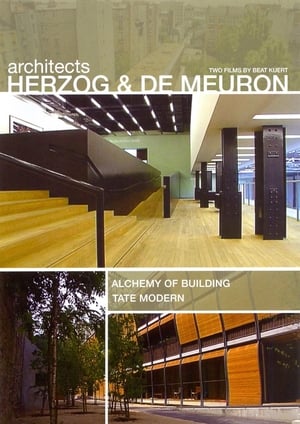
Schaub and Schindelm’s documentary follows two Swiss star architects, Jacques Herzog and Pierre de Meuron, on two very different projects: the national stadium for the Olympic summer games in Peking 2008 and a city area in the provincial town of Jinhua, China.
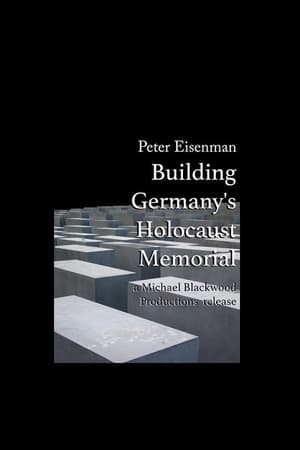
This documentary explores the creation of the Holocaust Memorial in Berlin as designed by architect Peter Eisenman. Reaction of the German public to the completed memorial is also shown.
A portrait of the internationally acclaimed Japanese architect who employs Buddhist ideas and western modernism to achieve intercultural architecture.
Explorations in 21st Century American Architecture Series: Ray Kappe has long been a cult figure in the architectural scene in and around Los Angeles. In 1972, he founded the influential, avant garde Southern California Institute of Architecture (SCI-ARC), where many of the younger-generation architects have studied or taught.
No understanding of the modern movement in architecture is possible without knowledge of its master builder, Mies van der Rohe. Together with documentation of his life, this film shows all his major buildings, as well as rare film footage of Mies explaining his philosophy. Phyllis Lambert relates her choice of Mies as the architect for the Seagram building. Mies's achievements and continuing influence are debated by architects Robert A.M. Stern, Robert Venturi, and Philip Johnson, by former students and by architectural historians. Mies is seen in rare documentary footage.
The British architect based in Stockholm looks back on major projects of a long career inspired by European Modernism combined with his personal sensitivity to nature and community. Erskine is especially valued for his vital understanding of social interaction, exemplified in commissions for universities and housing complexes built from Scandinavia to Italy. The architect takes the camera on a tour of his buildings while offering revealing comments and interpretations.
Alan Yentob profiles the most successful female architect there has ever been, the late Zaha Hadid, who designed buildings around the globe from Austria to Azerbaijan.
A poet among architects and an innovator among educators, John Hejduk converses with poet David Shapiro at The Cooper Union about the mystery and spirit of architecture. His own sketches and structures are shown
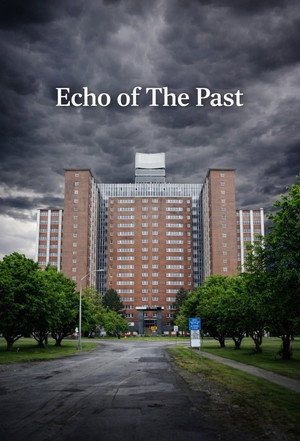
A historical documentary documenting the rise, function, and abandonment of a 17 story building that once housed The Rochester Psychiatric Center. This film tells the story of the building through historical footage, interviews of former staff and patients who recount their memories of the behemoth facility while also exploring the abandoned building as it is today.
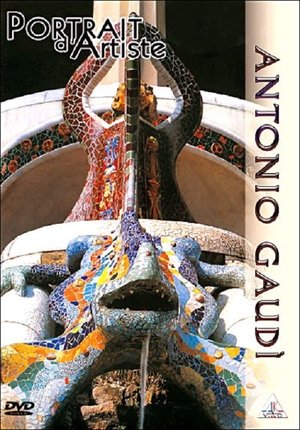
Catalan architect Antonio Gaudí (1852-1926) designed some of the world's most astonishing buildings, interiors, and parks; Japanese director Hiroshi Teshigahara constructed some of the most aesthetically audacious films ever made. With camera work as bold and sensual as the curves of his subject's organic structures, Teshigahara immortalizes Gaudí on film.
Regular or Super is a fascinating and informative introduction to the work of Mies van der Rohe (1886–1969), one of the 20th century's most influential architects, and a thought-provoking demonstration of the social and artistic contributions that architecture at its best can make to our urban environments
Arata Isozaki: Early Work in Japan takes a detailed look at the architect's pieces, exploring applauded projects such as the EXPO '70 Osaka Festival Plaza, Gunma Prefectural Museum of Modern Art and Kitakyushu Municipal Library. The extraordinary series of architectural breakthroughs made during this time contributed significantly to the evolution of contemporary architecture worldwide, and eventually gained him his first foreign commission
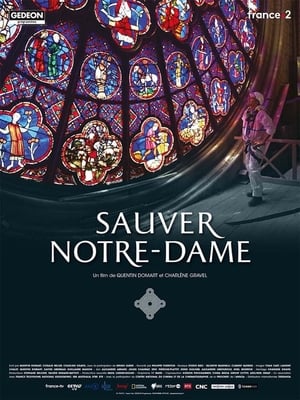
In the aftermath of the fire that struck Notre-Dame de Paris in 2019, the cathedral is in danger of collapsing. A race against time begins for a hundred men and women who will face danger, the unknown, and toxic lead dust for a year to save this world heritage site. Architects, stonemasons, carpenters, crane operators, scaffolders, rope access technicians, archaeologists: this unique project brings together rare skills. With rare enthusiasm and cohesion, they will achieve numerous technical and human feats. This film recounts the spectacular and moving adventure of these builders fighting to save Notre Dame.
World-famous architect Louis Kahn (Exeter Library, Salk Institute, Bangladeshi Capitol Building) had two illegitimate children with two different women outside of his marriage. Son Nathaniel always hoped that someday his father would come and live with him and his mother, but Kahn never left his wife. Instead, Kahn was found dead in a men's room in Penn Station when Nathaniel was only 11.
"Steven Holl: The Body in Space" explores the career of the innovative, highly renowned American architect. In this portrait Holl presents some of his most acclaimed works, including the Makuhari Housing Complex in Chiba, Japan and the Chapel of St. Ignatius in Seattle. Centered around the completion of Holl's Museum of Contemporary Art in Helsinki, the film observes his process and reasoning throughout the duration of the project
Isamu Noguchi was a sculptor, designer, architect, and craftsman. Throughout his life he struggled to see, alter, and recreate his natural surroundings. His gardens and fountains were transformations meant to bring out the beauty their locations had always possessed.
Codelli is a feature-length docudrama about a little-known film project by Slovenian inventor Baron Anton Codelli. Together with filmmaker and adventurer Hans Schomburgk he filmed in Togo in 1914 the first live-action film in Africa, which possibly inspired James Rice Burroughs for his novel on Tarzan. In the company of three Codelli’s descendants and actor Primož Bezjak, we traced the fate of Codelli’s film, brought the remains from Togo and Berlin to Ljubljana and used the Green Screen technology to bring to life 15 live-action scenes based on 600 Codelli’s museum photographs.
Tadao Ando, a self-taught architect, proposes an international architecture that he believes can only be conceived by someone Japanese. His architecture mixes Piranesian drama with contemplative spaces in urban complexes, residences and chapels. This film presents the formative years of his impressive career before he embarked on projects in Europe and the United States.
Drahý mistře