This documentary series follows Carlos Alcaraz as he balances the pressures of a phenomenal tennis career with a 20-year-old's desire to let loose.
A deep dive into Elizabeth Taylor's craft and technique as an actor – one who mesmerized cinemagoers, but also changed the relationship between audiences and stars – while going on to spotlight her work becoming a billion-dollar businesswoman, activist and advocate.
Three-part biopic of the Liverpudlian songbird who would later find fame and fortune. It tells of her rocky road to fame and captures the essence of 1960s Liverpool.
A documentary which explores the remarkable parallels between the careers of Adolf Hitler and Winston Churchill, as well as their personal rivalry and animosity.
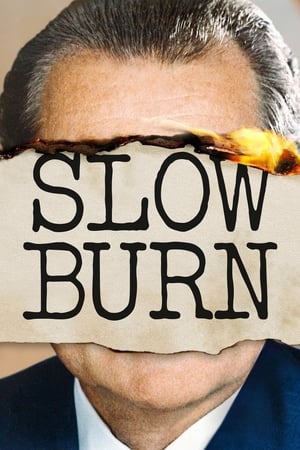
In this adaptation of the award-winning podcast, Slow Burn’s Leon Neyfakh excavates the strange subplots and forgotten characters of recent political history—and finds surprising parallels to the present.
Aux frontières de l'Histoire - La France
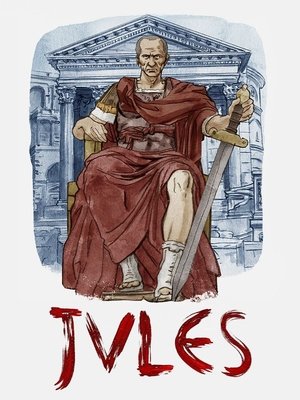
In 1831, a woman flees her abusive marriage, moves to Paris under a male pseudonym, and challenges gender norms by wearing men's clothing, pursuing affairs, and advocating for women's rights through writing.
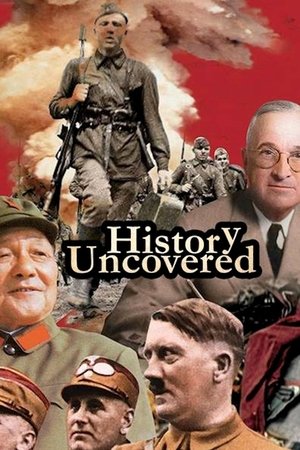
Myths die hard, and the history of the 20th century is no exception to this rule. Even today, we hold popular beliefs that we take for Evangelical truths. Thus, we believe that Hiroshima caused Japan to surrender, that the Marshall Plan saved Europe, that Adolf Hitler was a military genius, or that Mao Zedong was a necessary evil for China’s modernization. Of course, these judgements contain some truth; but, too broad-stroked to be accurate, they contradict the historical reality by denying its complexity. What if the truth was slightly different? Through an exploration of great national or international myths, this full archive documentary collection revisits the key moments of the 20th century with a new perspective in order to provide a new, smarter and more subtle interpretation, bringing elements to light that have been forgotten or sometimes overshadowed.
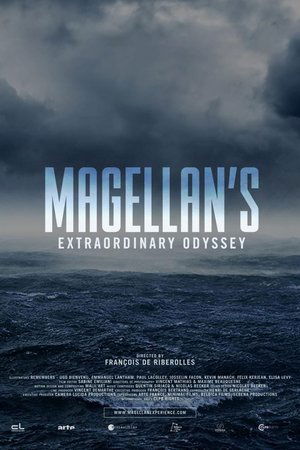
L'Incroyable Périple de Magellan
Karl Lagerfeld was an enigmatic figure who spent his life reinventing himself. He ruled the fashion world for decades, making history with his achievements at Chanel, Fendi and his own brand. An extraordinary personality, a fashion Stakhanovite, a tireless worker who created day and night until his last breath. A flamboyant man too, in his appearance and in his words, known for his outbursts mixing perfidy, provocation and self-deprecation. He was also an illusionist, a provocateur, a controversial icon, who used the truth - particularly about his past - to embellish his legend. But where does this determination come from? What were his inspirations and motivations? And behind his enigmatic façade - with his tight suit, ponytail and dark glasses - who really was Karl Lagerfeld?
The story of how women have fought their way into the world of sport, an arena jealously guarded by men.
Elite sprinters navigate training, media scrutiny and fierce competition in this sports series following their race to become the world's fastest humans.
Journalist and writer Graham Hancock travels the globe hunting for evidence of mysterious, lost civilizations dating back to the last Ice Age. He attempts to prove that a climatic event 12,000 years ago wiped out an entire civilization far more sophisticated than the simple hunter-gatherers some archaeologists believe lived at that time.
Our cities, transformed a mere century ago to accommodate cars, now want to rid their streets of them. Countries go to war over fuel shortages, and automobiles are at the core of a global ecological crisis. Today, the history of automobile has hit its climax. How did we get here? How did the invention of a single machine reorganize how we work, revolutionize our lifestyles, transform our landscapes, trigger global crises and wreak havoc with the equilibrium of our planet? This documentary series explores the creation and meteoric development of an unprecedented object - the automobile - and its role in mankind’s wild race toward progress.
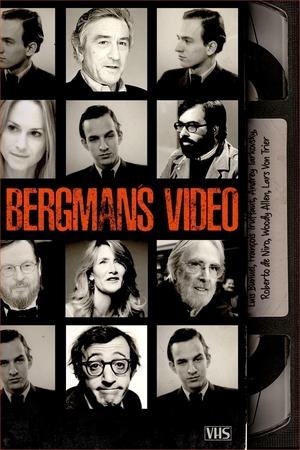
In the sixties, Swedish filmmaker Ingmar Bergman (1918-2007) built a house on the remote island of Fårö, located in the Baltic Sea, and left Stockholm to live there. When he died, the house was preserved. A group of very special film buffs, came from all over the world, travel to Fårö in search of the genius and his legacy. (Released in 2013, edited and abridged, as Trespassing Bergman.)
Juger Pétain
In a school in northeastern Japan, five friends in the animation club, Aoi, Ema, Shizuka, Misa, and Midori swear to complete a new anime called "Shinbutsu Konkou SHICHIFUKUJIN" with some donuts. Since then, day after day, the five spend all of their time on anime production. The awe of going from rough sketches to animation, and the awkward acting in the after-recording session... The final product was finished at the cultural fair six months later. After they graduated they still pursued animation and swore on some donuts that they would make another anime together.
Fame. Money. Power. One young woman fights to become the next hottest celebrity in the glamorous yet scandalous world of influencers in Seoul.
Secrets to Civilisation is a groundbreaking History series which explores the recent explosion in data about our planet's past, offering a completely fresh perspective on the ancient world from the Bronze Age to the fall of Rome.
The Blues (2003) is a seven-part documentary series produced by Martin Scorsese that explores the history and influence of blues music. Each episode, directed by a different filmmaker, traces a unique aspect of the genre’s evolution—from its African roots to its global impact. Originally airing on PBS, the series includes Scorsese’s Feel Like Going Home, Wim Wenders’ The Soul of a Man, Richard Pearce’s The Road to Memphis, Charles Burnett’s Warming by the Devil’s Fire, Marc Levin’s Godfathers and Sons, Mike Figgis’ Red, White and Blues, and Clint Eastwood’s Piano Blues.