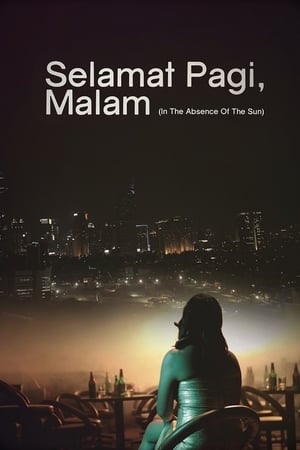
Toni, Aghi, Bubu, and Saras get the task of making essays. They create a free school for street children but they chose to earn money than learn.
Christian mission propaganda film about 'a slice of heathen life, with the bamboo bush people of Borado-Likowali'. Keli is forced to marry Wesa but has a lover in another village. This causes war to break out between the two villages and Wesa is killed. Wesa's father Meo now wants Keli to marry his other son. Keli refuses and the hostilities continue. Just when the authorities have locked up a number of troublemakers, Father Jacobs arrives. The missionary tries to win the confidence of the locals but becomes embroiled in the conflict. An assault by Meo's men leaves him dangerously wounded. The villagers stop fighting and Meo asks the dying missionary's forgiveness.
A poor girl struggles to buy new trending sandals.
A true story about Frank Abagnale Jr. who, before his 19th birthday, successfully conned millions of dollars worth of checks as a Pan Am pilot, doctor, and legal prosecutor. An FBI agent makes it his mission to put him behind bars. But Frank not only eludes capture, he revels in the pursuit.
An omnibus movie derived from five real events experienced by some urban Jakarta residents during maghrib.
The parents of Christian girl Ria Rago have arranged for her to marry Dapo, a Muslim. She refuses and, after a beating, flees to the mission sisters who offer her a safe haven. Her father and his cronies aren't long in finding her, however, and she is taken back into the kampong. After months of torture, Ria still won't give in. She escapes again and manages to reach the mission post where she collapses. On the brink of death, she is administered the last rites. Ria's father decides to call off the marriage and returns the dowry to Dapo. On her deathbed Rita forgives her parents.
Set in the 1930s, and narrated like a ballad from the past, "The Tiger from Tjampa" tells of how a young man, Lukman, seeks to avenge his father’s murder by learning pencak silat, a traditional form of self defence, based on the movements of animals.
Back when urbanization was a new phenomenon, this film captured the aspirations desired by three young men from North Sumatera of Batak ethnicity. As the case with other regional area, people from the rural realm were convinced that their way of live is inadequate, so that they "need" to make it in the city, or bust. So Sabar, Tigor and Sahat went up and down their luck in order to find their desired "gold" in a strange land.
A remake of 1973 film of the same name. "Bulan di Atas Kuburan" is a tale of hardships in the capital city. Sahat, Tigor and Sabar ; three friends from Samosir, North Sumatra, quest after greatness whilst deperately holding on to their inner idealism.
Aisyah just graduated. She lives in Ciwidey, West Java, a religious village near a tea plantation, with her mother and younger brother. Her father had died a few years ago. She wants to be a teacher. One day, she gets a call from the foundation where she enrolled: she gets her wish fulfilled at the location that she never knows: Derok, North Middle Timor District. From the beginning she feels like a "foreigner". The local people mistake her as Sister Maria, just because she wears a veil like a sister. The people is expecting the arrival of Sister Maria as a teacher in the village. This isolated village is without electricity and cellular signals. The new environment, the different tradition and religion make Aisyah giddy. Fortunately there is Pedro (Arie Kriting) who makes the problems easy. She must face the hatred of one of his student, Lordis Defam. Through the chief, she understand that she is a Muslim who is considered an enemy by Lordis Defam who is a catholic
A young Australian reporter tries to navigate the political turmoil of Indonesia during the rule of President Sukarno with the help of a diminutive photographer.
A popular high school girl strains her relationship with her close-knit clique when she begins falling for a reclusive, lower-class schoolmate.
Indonesian activist Soe Hok Gie experiences a political awakening during the tumultuous regimes of Soeharto and Soekarno.
After being trained in the art of silat, a disciple gets sent on a journey by his mentor to take down a treacherous e-pupil with a villainous plan.
The world becomes unpredictable when the pandemic happens. But in the face of despair, people put aside reasons and stop worrying. For these couples from Malaysia, Indonesia, and Korea, even love blossoms. They embrace each other and cling to one another desperately and fearlessly. Kuala Lumpur, Jakarta, and Seoul. Three couples in three cities in three countries: The paths of a telemarketer for a loan company and a cart rink owner are destined to cross. A pub owner and a woman with their own background stories. A virgin forklift operator who has never kissed before and a kiss-for-sale manager.
In Minangkabau, West Sumatera, Yuda a skilled practitioner of Silat Harimau is in the final preparations to begin his "Merantau" a century's old rites-of-passage to be carried out by the community's young men that will see him leave the comforts of his idyllic farming village and make a name for himself in the bustling city of Jakarta.
Dewi returns to her village in Yogyakarta after ten years of leaving. A letter and newspaper clipping sent by her mother, make her return to her village: Dee’s mysterious pregnancy, her mentally handicapped sister Dewi finds her parents' home situation has not changed. What has changed is the pregnancy of Dee and the always changing view behind the large window of the house. Dewi then knows Priyanto who is just a year living in the village. They make an unusual love story. Joko, Dewi’s old friend, is jealous. The arrival of Dewi reveals his unfinished past.
Rifki finds himself trapped in the lure of online gambling, enticed by promises of instant winnings that instead lead to ruin. With a single click, he loses his wealth and hopes, realizing that unchecked ambition can destroy everything. "The Rush That Misses" is a poignant tale that serves as a stark reminder of the dangers of the digital world and hasty decisions.
Determined to discover her roots, a young woman travels to Indonesia and pieces together her parents' unconventional love story.
Tantra and Tantri are inseparable. When they secretly steal eggs from the family’s sacrificial offering, Tantri always gets the whites and Tantra the yolks. One day, however, the yolk is missing, as is Tantra. Her brother gravely ill and in hospital, Tantri starts slipping into magical parallel worlds, approaching the inevitable farewell through costumes, body paint and dance. When at one point Tantri’s mother washes the paint from her face, it is as if tenderly to expel the illusion that things can remain as they are. In long dream sequences and against the background of the Balinese philosophy of sekala – the seen – and niskala – the unseen – Andini relates how one ten-year-old girl deals with parting and grief.