When Axel, a young axolotl, gets separated from his family by ancient magic it’s up to him and Memo, an unlikely human ally, to get him out of the Cenote he’s trapped in and back to his home.
Opposites Adam and Evan live in a small village in the French countryside. They go to the same high school but have never spoken to each other. During the summer holidays a prank lands the pair in trouble, and as a result they are forced to get to know each other.
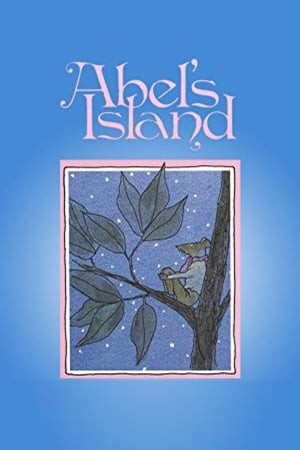
One summer afternoon in 1907, Abel and his wife (both mice) are picnicking, when they become separated during a violent rainstorm. After flying some distance, Abel discovers himself alone on a river island, unable to swim due to the powerful current. Abel periodically attempts to leave the island by various means: flying on a leaf, rowing a crudely fashioned boat, etc. Meanwhile, he tries to create a normal life of sorts, even learning to enjoy a new hobby: sculpture. Still, Abel's goal is to escape the island and rejoin his wife in the city.
Hykade's third and final part of The Country Trilogy. The once dead father of "We Lived in Grass" returns. "I give you the runt," he says. "But you take care of it and you kill it next year."
A boy is by an accident a member of a crew that is going to travel to the moon.
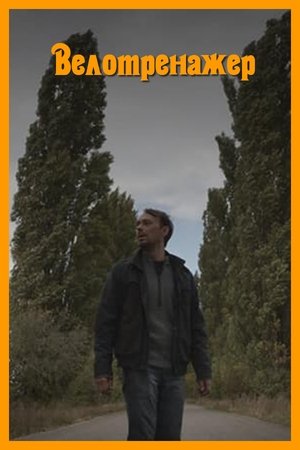
Adaptation of Stephen King's story "Stationary Bike". After the tragic death of his wife, Boris loses all meaning in life, and his only desire is to be with his beloved again. Her old stationary bike becomes a bridge that connects his world with the path to his wife.
This is a classing Jordan animation, primarily in B/W, with touches of color. Actually, the engraved art work was film on color negative, so that subtle variations in tone are recorded. The mood--enhanced by John Davis' original music--is dream-like. It is both lyric and crackling, producing a kind of anticipatory tension. The scenes, in the usual Jordan manner, follow the surreal principle of placing objects and people where the ought not to be, and making movements that in the waking world are impossible. Each scene is a kind of drama from another world.
A film about the vortex of time. It’s also about childhood and how it marks us for life. It’s a film that speaks of the relationship a son has with his father. And of the many words never spoken because they’re written in one’s heart.
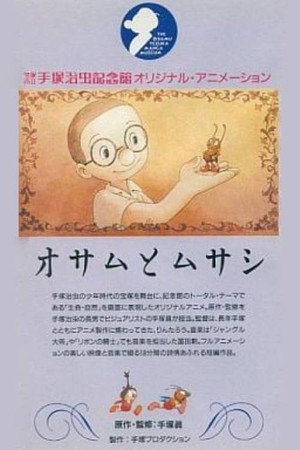
The animation was produced for the Tezuka Osamu Manga Museum, thus it features scenes from the "life and nature" of Tezuka Osamu's childhood, themes that are central to the museum as a whole, through exchanges between the boy Osamu and the carabid beetle (Osamushi) who provided the origin for the artist's name.
Le pont de Mauves
The film existed only in Jacque’s memory because all that remained were the two cardboard thief characters. Jacques called upon his memories to recreate the decor and the characters with a decorator. The operator then filmed frame by frame to reconstruct the film.
When Agnès Varda was preparing the film Jacquot de Nantes in 1990, she was able to shoot in the small apartment where Jacques was raised. While emptying the attic, Agnès found pieces of 9.5 mm film, dry and folded, almost broken and two small cardboard figures. The film was impossible to project and the film had to be remade. Showing the pieces of film to Jacques he immediately identified La Ballerine. A student from the Fine Arts School of Nantes therefore redrew each shot, frame by frame, on blank 16 mm film.
A disturbed young man pushes away his exurban family to seek wildness in the woods. The boy's urge for the primitive manifests in his bedroom at home and in a wild dog he follows through the countryside.
Gayoung, a director, expects to hear a farewell confession from her boyfriend, who's an actor. (Part of "100인 X 100초영화 프로젝트", a project dedicated to celebrate 100 years of South Korean cinema.)
After the cremation of his father, Vincent and his family gather relatives in the back shop of the family butchery for a final tribute. Vincent announce to his family that he leaves for some time with his boyfriend Olivier.
A babysitter takes the son of a wealthy family for a walk in the park. After a carelessness of the babysitter, the child follows two children from the street, who before returning him with her, will be responsible for giving him the best day of his life.
Vincent, an artist with unresolved inner demons, meets a mysterious girl who helps him come to terms with his creative legacy… and eventual death.
Longing for acceptance, a neurodivergent boy taunts the boundaries of his best friend: his brother.
Focusing on developing relationships with the computer as a nonhuman entity, Listener is an iterative, site-specific performance artwork which speculates a future through Lakota ontology, narratively and physically manifesting a relationship with metals in electronics, performed via an electronic interface woven into hair (hair is sacred to the Lakota). The sonic landscape includes live police scanners, synthesizers played by the hair, and algorithmically re-arranging poetry with a voice speaking of a future landscape, prophecies, dreams, and the possibilities in listening.
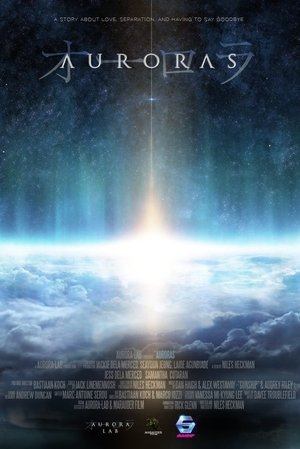
Constantly orbiting at 400 km (250 mi) above the earth, the ISS is perfectly situated to witness the beautiful streamers of green and red light emanating from the collision of highly charged solar wind particles with oxygen and nitrogen atoms in the earth's atmosphere. Centered about the northern (Aurora Borealis) and southern (Aurora Australis) poles the Auroras move in an almost hypnotic dance below the space station.