What would we be without mucus? Can we live on water? How much does life weigh? Finding out the answers is the aim of ARTE's new science show. In a nod to Douglas Adams's "Hitchhiker's Guide to the Galaxy", where the figure 42 is the ultimate answer to all questions, 42 tries to provide the answers.
Tales of the Unexpected is a new strand of provocative, confronting and thoroughly entertaining science documentaries. Each episode reveals a fascinating, sometimes awkward, and frequently unsettling world where peculiar ideas are put to the test. Come with us to where nothing is quite as it seems, where diseases are diagnosed by palm-readers, where paternity uncertainty drives the mating game, and where breasts are a toxic health hazard.
This series explores the history, traditions and culture of Chinese food. Filmed at over 160 locations across China, this series truly is a feast for the senses. The seven-episode documentary series introduces the history and story behind foods of various kinds in more than 160 locations in mainland China, Hong Kong, and Taiwan. The documentary has also been actively encouraged as a means of introducing Chinese food culture to those unfamiliar with local cuisine.
Stephen Hawking’s Science of the Future investigates the very latest game changing innovations. Each episode takes one area of progress and sends five top scientists out to actively test the inventions and breakthroughs that are driving it. The team explore human upgrades, the virtual world, bio-mimicry, high-tech emergency responses, and more. Featuring a wide range of examples, from advanced robotics and breathtaking digital actors, to cutting edge smart homes and electronic brain stimulation, the series reveals how science is delivering astonishing improvements to all our lives. Using the evidence they gather, the team reveals the year when each innovation will be rolled out for us all to benefit from, and Hawking then draws out his own uniquely insightful predictions about what our world will be like in the years to come.
Indonézia 4 arca
Documentary series which ranges widely over Britain's social and cultural history, its narrative-led storytelling offering a richly immersive and varied window onto the past.
Pedro Andrade, Pedro pelo Mundo ("Pedro the Wanderer"), takes viewers on a trip around the world to explore the most fascinating and off-the-beaten-path destinations. The series follows Andrade as he globe-trots, meets the locals, tries exotic flavors, discover traditions, and celebrates diverse cultures. In each city, Pedro immerse himself in the local culture and visits the best places to eat, relax, discover, and live life as a local.
It is said to be one of the oldest books in the world. Has it been altered? If yes why? A remarkable journey back in time to see what the Old Testament and the New Testament is hiding from us.
Rick Steves, America's leading authority on European travel, returns to transport viewers to the continent's bustling cities, quaint villages and picturesque countryside.
Jamie Oliver travels the country searching for new ideas and inspiration and to find out what makes British food great.
Simon Schama explores the story of the Jewish experience from ancient times to the present day.
Series in which intrepid presenter Kate Humble follows the ancient frankincense trade route of Arabia across the amazing modern world of the Middle East. Kate's journey along the 2,000-mile trail that first connected the Arab world with the West takes her on a quest that's steeped in history, searing with desert heat, and full of characters and adventure.
"Talent" Chip Tsao went to London, Greenwich, Wales, Oxford, Cambridge, England, to analyze the British people's living habits, academic development, economic conditions, etc .; and went to Warsaw, Gdansk, Krakow to know a country with a hundred years of blood and tears. Eason Chan visited Tokyo, Kyoto, Osaka, and Fukuoka in Japan to learn about the cultural differences; Social worker Shiu Ka-chun went deep into Finland's Turku, Helsinki, Nokia and other places to experience the local customs through living with locals. They will introduce the details of each famous city from a social, historical, and cultural perspective, bringing different connotations, depths, and education.
Follow journalist Nick Watt as he explores the world to answer burning questions such as: Are the French really rude? Do cowboys still exist? Is Albania that weird? Using his quick wit, he'll offer a point of view that is both surprising and entertaining.
When she was a child, Kate Humble wanted to be a nomad. Living in some of the world's most remote wildernesses, cheek by jowl with nature, seemed like such a wildly romantic existence.
The cameras follow Joanna Lumley as she travels from East to West on a Trans-Siberian adventure. She starts in Hong Kong and crosses 5777 miles of both Asia and Europe, through seven time zones, taking in an immense panorama of vistas and cultures, people and places, before her final arrival in Moscow.
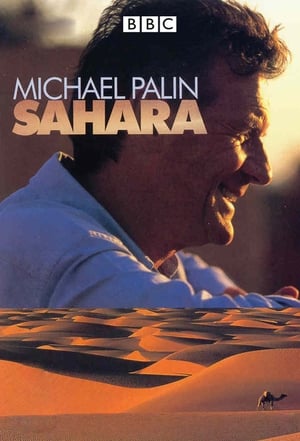
In this four-part BBC documentary, former Monty Python funnyman and renowned globe-trotter Michael Palin sets off from Gibraltar to travel across the Sahara, his witty humor downplaying the hardships he faces along the arduous journey. He travels to Morocco, Mauritania, Mali and beyond, across some of the harshest terrain on the planet.
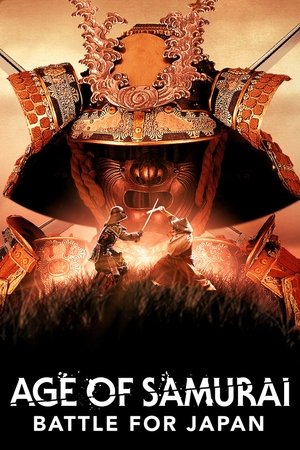
Dynamic reenactments and expert commentaries bring to life the tumultuous history and power struggles of a warring 16th-century feudal Japan.
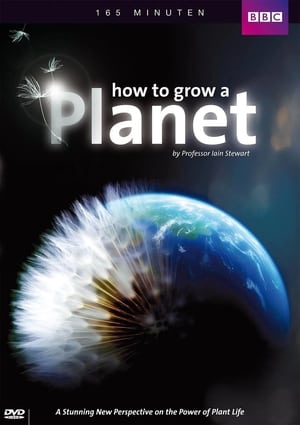
Geologist Iain Stewart explain in three stages of natural history the crucial interaction of our very planet's physiology and its unique wildlife. Biological evolution is largely driven bu adaptation to conditions such as climate, soil and irrigation, but biotopes were also shaped by wildlife changing earth's surface and climate significantly, even disregarding human activity.
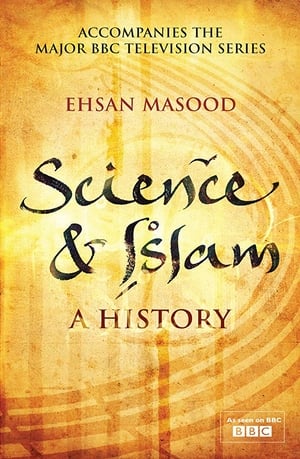
Science And Islam