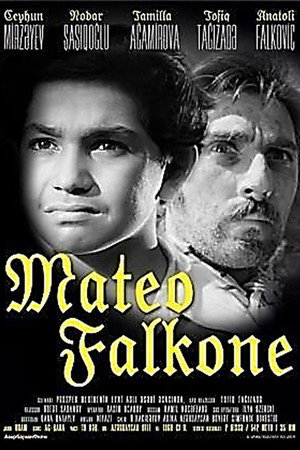
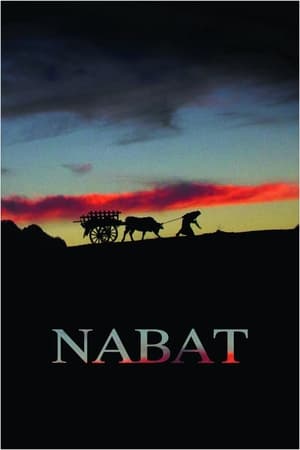
This film was based on Samad Vurgun's "Komsomol poem". Seven sons, like seven samurai become the seven komsomols (communist leaders) who were sent to a village to establish Soviet power. Seven sons become the romanticized images of people's heroes ready to take revenge.
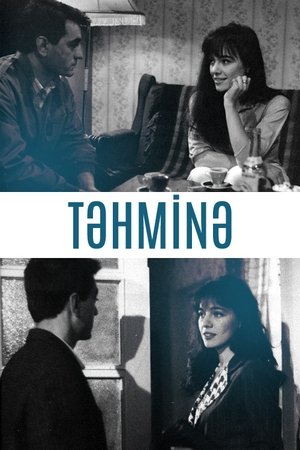
Madina is a young married woman who is mentally strong despite the problems she encounters.She has no children and her relationship with her husband is bad, although he loves her.She makes carpets which is a way for her to express her feelings. One day, she meets a man working in a circus. She gets to know him better and becomes transformed by him as he helps her improve her husband and the carpets she creates.
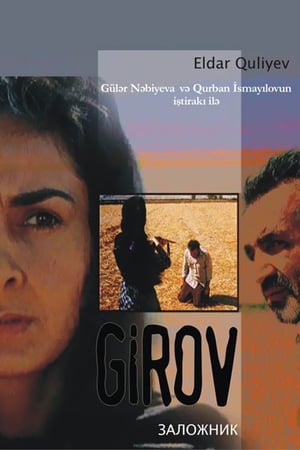
During the late 1980s and early 1990s the Armenian minority in Nagorono-Karabakh attempted to break away from Azerbaijan, one of the former Soviet republics. Overnight these former neighbors became enemies, and simple village folk were suddenly made hostages in a complex power game. One of the Azerbaijani villages right on the border is home to the family of the peasant farmer Kerim, who has just been captured by the Armenians. The village council decides to take an Armenian in order to arrange a hostage exchange. They imprison the wounded man in the barn next to Kerim's house, where his wife and three children desperately await the husband's return. The captive from the other side of the border finds himself in exactly the same situation - he, too, has three children, he finds it hard to scrape a living together, he has never done anything to harm anyone and, like Kerim, he just wants to go back home. But life in Karabakh is far more complex now. Blood calls for blood.
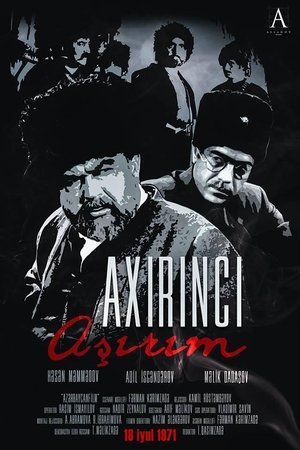
A historical revolutionary film depicting the struggle of peasants and the Baku proletariat against landowners and Musavatists in 1919.
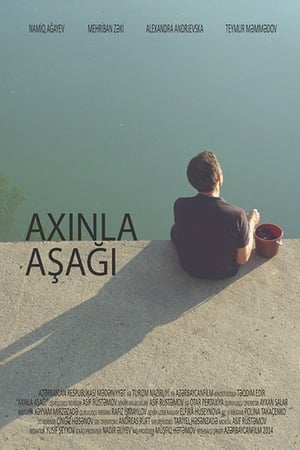
Young Ruslan rows for a team coached by his father Ali, who places many demands upon his son and is continually dissatisfied by his performance. But when tragedy strikes, his father is overcome with emotions he doesn’t know how to deal with. Debut director Asif Rustamov treats the heavy topic with remarkable subtlety and discretion, emphasizing the characters’ carefully elaborated psychology.
While there is famine during WW2, a boy with mom far away, tries to stay strong.
The film is about the girl who was lost during the war and her return to her motherland after some events.
Jan Vacek, a revolutionary of Czech origin, organizes the retreat of communist troops in Baku after the Bolshevik Revolution, following the fall of the local commune...
The film is about an oilman who took a lost worker's place and won the respect of other oilmen, was also based on this same ideology, depicting the heroism of oil workers, who never became exhausted and continued working in oil, generation after generation.
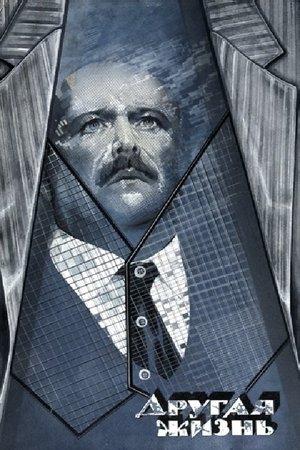
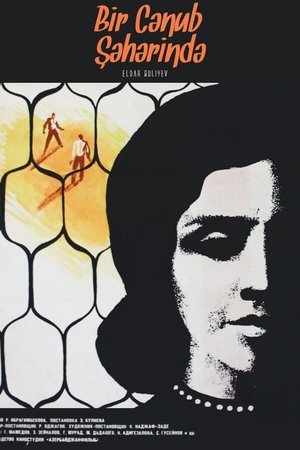
The film explores intelligent feelings of harmonious coordination and human problems, as well as psychological issues. The film addresses topical issues of contemporary morality. The protagonist, Murad, has a family and a good job, but on a whim, he suddenly feels compelled to abandon everything. Deep down, he is torn between feelings of love and indifference.
The film is about lad who joined the underworld, after coming from Afghan war.
The film is about the Soviet People's patriotism and friendship.
Novruzali brings a gift from the village to the Khan as usual. The Khan writes a letter to his friend living in Yerevan, promising to come there with his wife and to tidy and heat the house where they will stay. He sends Novruzali to the post office to put the letter in the mailbox. And instructs him not to give it to anyone. Novruzali, who does not know what mail is, puts a letter in the mailbox for the first time in his life. Not knowing the rules, he waits near the mailbox. When the postal worker takes the letters from the mailbox, Novruzali thinks he is a thief and confronts him.
Young scientist Jamal Zakhidov is convinced that the ruins of the ancient city of Aran are located in Azerbaijan. Zakhidov is seeking to organize an expedition to the area where he believes Aran is located. Zahidov's friend, a young archaeologist named Jalil, is also well versed in geology. He believes that the rocks he accidentally found at the foot of Gyzyl-Gaya contain valuable materials. But Imam-zade, a secret agent of a foreign intelligence service, steals these samples. The expedition members meet an old man named Murtaz. The old man recognizes Imam-zade as the son of Suleiman-bek, the former ruler of these lands, who killed geologist Karimov, who was conducting research here in 1920. Realizing that he has been exposed, Imam-zade blows up the cave in an attempt to destroy the expedition. But the locals rescue the expedition members. Imam-zade is detained by MGB officers. Uranium is found in the rocks discovered by Jalil at the excavation site...
The film is dedicated to the life and creative work of the great Azerbaijani educator, playwright, and philosopher, Mirza Fatali Akhundov, affectionately known as Sabuhi, meaning “man of the morning.”
The film takes place in Baku in 1918-19 and then several years later. The film is based on the opera of the same name by Fikret Amirov. Sevil became the first film opera in the history of Azerbaijani cinema.
The film is about the replacement of four generation.
The film is about two fishermen who went through difficult ordeal during the shipwreck.
The film is about the first oil-well in the world in the world in the 1920th.
On the seashore, the mother and father decided to build a country house where their three sons, daughter, daughters-in-law and grandchildren could gather together. But neither the sons nor the daughter can find time to visit and help their parents. Only the eldest son understands his father and mother...