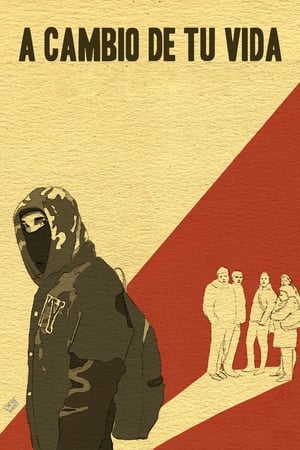
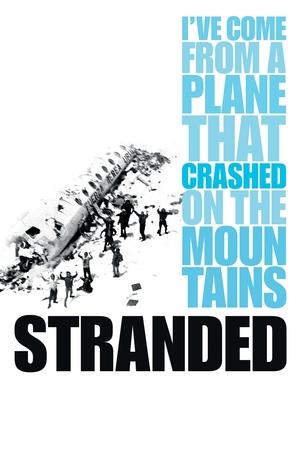
The story, told by the survivors, of a group of young men, members of a Uruguayan rugby team, who managed to survive for 72 days, at an altitude of almost 4,000 meters, in the heart of the Andes Mountains, after their plane, en route to Chile, crashed there on October 13, 1972.
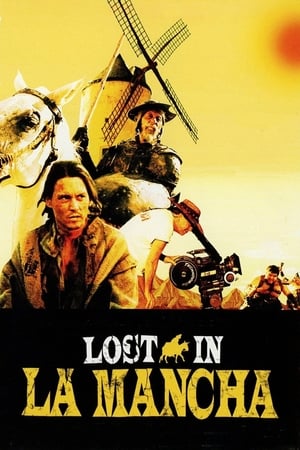
Fulton and Pepe's 2000 documentary captures Terry Gilliam's attempt to get The Man Who Killed Don Quixote off the ground. Back injuries, freakish storms, and more zoom in to sabotage the project.
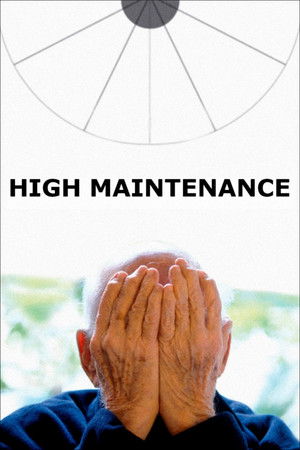
More than anyone in the cynical film industry, legendary artist Robert Redford embodies the United States' brightest side: perseverance, independence, idealism, and integrity. A champion of active environmentalism and the right to openly criticize any institutional abuse, he has put his artistic work at the service of his political commitments, whether as an actor, director, producer, or founder of the Sundance Festival, a formidable forum for his struggles since 1985.
A documentary-style capturing of the life of Ab, a young struggling artist trying to find her way, all while dealing with unwanted company.
Gaga has travelled through time with her ever changing sound, reinventing herself for every album, award ceremony and red carpet. With a strong fan base behind her, she continues to reign as one of the biggest pop stars of the industry.
Act of Violence Upon a Young Journalist is a film shot in 1988 and released on VHS in 1989; a mysterious cult work of Uruguayan cinema surrounded by strange theories about Manuel Lamas, its unknown creator. Until now.
An unflinching and deeply personal journey into the life and work of guitarist Eric Clapton told through his own words and songs.
A two-hour documentary special Robin Williams: Behind Closed Doors which gives viewers an intimate look at his life from his childhood in the suburbs of Chicago to small comedy clubs in Los Angeles, his breakthrough role on the TV show Happy Days as Mork from Ork and his big screen triumphs.
A short documentary exploring the theatrical release of Just Jaeckin's Emmanuelle (1974) in Ontario, Canada, at the time of a major shift in its provincial film censorship regime. What followed was a new era in the Ontario government's uneasy dance with film, a debate over art and morality — not only about sex on screen, but about who gets to decide what is too much, too far, or too French.
A jaded lawyer wastes an afternoon trying to figure out if a dim-witted government employee has ever used a photocopier. All the dialogue in this short comes from an actual deposition filed with the Supreme Court of Ohio.
This historical drama tells the story of Qin Shihuang, who unified China's vast territory and declared himself emperor in 221 B.C. During his reign, he introduced sweeping reforms, built a vast network of roads and connected the Great Wall of China. From the grandiose inner sanctum of Emperor Qin's royal palace, to fierce battles with feudal kings, this film re-creates the glory and the terror of the Qin Dynasty, including footage of Qin's life-sized terra cotta army, constructed 2,200 years ago for his tomb.
From his poor childhood to his rise to fame, from his triumphs to his failures, from Paris to New York, discover the exceptional journey of an artist. Intimate, intense, fragile and indestructible, devoted to his art until the very end, here is one of the most immortal singers of all time: MONSIEUR AZNAVOUR.
During the Syrian civil war, the district of Yarmouk, home to thousands of Palestinians, became the scene of dramatic and ferocious fighting. The film follows the destiny of civilians during the brutal sieges, imposed by the Syrian regime, that took place in the wake of the battles. With his camera, Abdallah Al-Khatib composes a love song to a place that proudly resists the atrocities of war.
The story of the Trojan Horse is probably one of the most famous stories ever told: after ten years of bloody war, the Greek coalition decides to lift the siege and depart, but not before leaving at the gates a huge wooden horse, which the Trojans confidently lead into the city. A few hours later, the once invincible Troy goes up in flames. What exactly happened? Is this myth true or false?
Jack L. Warner, Harry Warner, Albert Warner and Sam Warner were siblings who were born in Poland and emigrated to Canada near the turn of the century. In 1903, the brothers entered the budding motion picture business. In time, the Warner Brothers moved into film production and would open their own studio in 1923.
Portrait of Andy Goldsworthy, an artist whose specialty is ephemeral sculptures made from elements of nature.
Fifty years after its release, the special effects makeup team behind Planet of the Apes reflect on making the iconic film.
During the Napoleonic Wars at the beginning of the 19th century, Andreas Hofer became a Tyrolean folk hero. As the head of a resistance movement, he became caught up in a dangerous political game of interests between the French and Austrians, Napoleon and the Habsburgs. After the defeat at Austerlitz, the Habsburgs had to cede Tyrol to the Bavarian kings in 1805. The liberal Bavarians implemented numerous reforms in Tyrol, including religious reforms, which met with resistance from the rural population. The young Archduke Johann wanted to take advantage of their discontent. In Andreas Hofer, the commander-in-chief of the Tyrolean troops, the brother of Emperor Franz I finds a loyal patriot whom he can use for his political moves. The Tyrolean revolt against the French and Bavarians puts Napoleon in a tight spot. In several battles, the rebels succeed in defeating the Bavarian and French troops, but not in defeating them for good.
Famous French director Tavernier tells us about his fantastic voyage through the cinema of his country.
A documentary film that delves into the life and cinematic career of one of Japan's most prolific directors: Ishiro Honda. The film will spotlight Honda's filmography from both a historical and personal perspective, exploring his contributions to the Japanese film industry and his firsthand experiences of war, from which he barely survived. It will also delve into his profound feelings regarding the atomic bomb, a subject that became an obsession for him and was frequently reflected in his films. The documentary will analyze Honda's body of work through interviews with individuals who had the privilege of collaborating with him, as well as experts on Honda's films from both Japan and the Western world. Furthermore, the film will uncover Honda's friendship and professional relationship with director Akira Kurosawa.