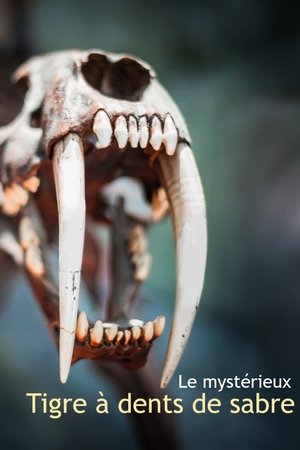
Titans of the Ice Age transports viewers to the beautiful and otherworldly frozen landscapes of North America, Europe and Asia ten thousand years before modern civilization. Dazzling computer-generated imagery brings this mysterious era to life - from saber-toothed cats and giant sloths to the iconic mammoths, giants both feared and hunted by prehistoric humans.
A documentary about the 1999 discovery of a Mastodon skeleton in a Hyde Park backyard.
A collection of trailers from various "B" dinosaur and creature movies spanning though out film history, but mostly focusing on the drive-in type films of the 1950's, 60's, 70's and early 80's.
Polish educational cartoon about dinosaurs
A detailed exploration of honoring the dinosaurs of past Jurassic Park films while using cutting-edge technology to make them more realistic.
L'autre monde des dinosaures
Dinosaurs roamed and ruled earth for more than 150-million years, then suddenly vanished leaving only fossils to fascinate and befuddle us. In a feature-length unique approach to historical analysis of these creatures, we don't focus on the latest technology or the most controversial theory. Instead, we look chronologically at what we've gotten wrong about dinosaurs throughout the short history of scientific study of these magnificent, misunderstood creatures, and see where paleontologists are digging today.
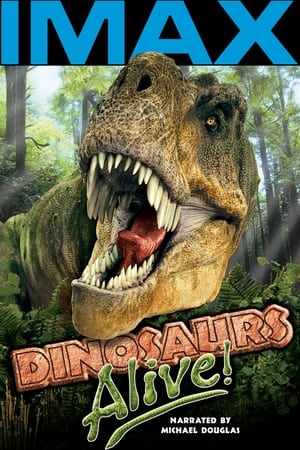
See the earliest creatures of the Triassic Period to the monsters of the Cretaceous in a ‘life-sized’ IMAX ® presentation. Join renowned paleontologists as they discover new fossils and uncover evidence that dinosaur descendants are still among us. Realistic and scientifically-accurate computer generated animation brings dinosaurs back to life…in a big way!
Content creator Paleo Analysis explores the Precambrian and the Paleozoic era on his quest to evolve back into a human.
Documentary tells the story of Germany's origins from the Carboniferous period to the present day. It leads from the highest Alpine peaks to the rugged North Sea coasts - from the craters of the Eifel to the river labyrinth of the Spreewald. Back then - around 300 million years ago - giant dragonflies, for example, buzzed through dozens of meter-high fern forests. In the course of the Earth's history, however, we also encounter dying dinosaurs, meet rhinos and elephants on the Rhine and come across what is probably the first human in Heidelberg. Later, the Neanderthals appear and suddenly disappear again - for reasons that are still unknown. And finally, modern humans gradually spread and began to shape their environment.
A key piece of the Paluxy Human Track narrative that swept the country's creation-evolution dialogue in the 1970s and 1980s and cemented the claims that dinosaur and human track ways were preserved in the Paluxy River in the public sphere. Originally release in January 1973, the film was considered lost media by the 1980's but a 16mm cut of the film resurfaced in 2023.
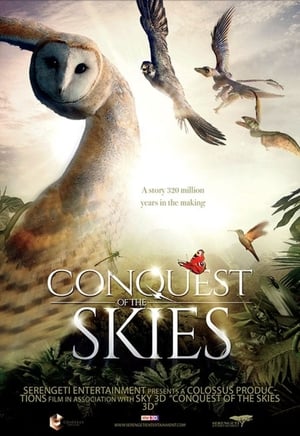
The ability to fly is one of the greatest miracles in the natural world. Millions of creatures soar above our heads today, using a fabulous variety of techniques to defy gravity and master their aerial environment. Wild Flight: Conquest of the Skies 3D uses the very latest science and stunning special effects to uncover the 300-million-year story of flight as never before. The most advanced filming technology allows us to show the beauty and excitement of life on the wing, from the fastest predatory falcons to the most acrobatic of insects, night flyers like owls and bats, and the soaring and gliding specialists capable of traveling huge distances. Audiences will truly enter the amazing world of these remarkable animal aviators, and leave the theatre both stunned by the spectacle and thrilled by the story of Wild Flight: Conquest of the Skies.
49,000 year old Neanderthal bones have been discovered by chance in a remote, mountainous region of Northern Spain. The bones may help solve the biggest Neanderthal puzzle of all – why we are here today and Neanderthals are not. ‘The Neanderthals’ dark Secret’ revolves around ongoing investigations deep inside the forbidding subterranean cave system called El Sidrón. Here, Palaeontologist Antonio Rosas and Archaeologist Marco de la Rasilla are in their 11th year of excavation. Bones from at least 12 people and 400 stone tool fragments have been recovered. We’ll bring these people back from the past. Our haunting, hologram-like Neanderthal characters, will communicate to the scientists of today, as they unlock the secrets of El Sidrón. Many mysteries surround the site, foremost, how the bones and tools came to be here in the first place. The remains aren’t weathered nor do they show signs of scavenging from large animals.
220 million years ago dinosaurs were beginning their domination of Earth. But another group of reptiles was about to make an extraordinary leap: pterosaurs were taking control of the skies. The story of how and why these mysterious creatures took to the air is more fantastical than any fiction. In Flying Monsters 3D, Sir David Attenborough the world’s leading naturalist, sets out to uncover the truth about the enigmatic pterosaurs, whose wingspans of up to 40 feet were equal to that of a modern day jet plane.
Richard Dawkins in a 1980's television special based on his book The Blind Watchmaker.
Joachim Barrande – ztracená moře
Documents the 1985 expedition in the Painted Desert and Petrified Forest National Park, led by paleontologist Robert A. Long, to uncover a complete skeleton of a whopping small dinosaur
Titanosaur 3D uses vividly photorealistic animation to imagine what these long-necked sauropods looked like and how they moved, ate, and interacted. Travel back over 100 million years to get a glimpse of their Cretaceous environment and follow a titanosaur’s life from egg to towering titan.
"Hunted by Moonlight" is the second film of Dinosauria Volume 2, and the seventh of the Dinosauria Animated Series overall.
Three researchers work on a paleontological project focusing on two dinosaurs: one fictional, the one created by special effects genius Ray Harryhausen for the film The Valley of Gwangi (1969); the other real, the Concavenator corcovatus, whose remains were discovered in 2003 at the Las Hoyas site, in the province of Cuenca (Spain), very close to where the filming took place.