Rylan Clark shares his experiences of homophobia and his complicated relationship with football. He also meets people involved in the sport to ask why it's not a wholly welcoming place for gay men and how homophobia has an impact on those exposed to it.
Some months after the fall of the Berlin wall, during the time of federal elections in Germany in 1990, Chris Marker shot this passionate documentary, reflecting the state of the place and its spirit with remarkable acuity.
SOAR
JB Smoove and Martin Starr host a celebration of 20 years of "Spider-Man" movies, from the Sam Raimi trilogy to Marc Webb's movies and the trio from Jon Watts.
It is a daring idea: to grow food from old mattresses in a desolate camp at the edge of a war zone. When a refugee scientist meets two quirky professors, they must confront their own catastrophes - and make a garden grow. Short film now streaming on Waterbear.com.
Cormac McCarthy has spent the last 25 years writing his novels at the mountain top retreat of the Santa Fe Institute (SFI) in New Mexico. An institute dedicated to the formal analysis of complex systems. In this documentary filmed at the library at SFI (and in the desert), Cormac in conversation with his colleague David Krakauer, reflects on isolation, mathematics, character, and the nature of the unconscious
Orson Welles acted in Brazilian culture and music by deeply researching Brazil's historical geology, consciously completing a legendary cultural mission. Although being turned down by Hollywood producers, he developed a triumphantly accomplished mission in the language domain - three friends of Welles' testified his love for cinema, his passion for Brazilian music and people and his obstinate endurance against formidable pressures coming from inside and outside Hollywood regarding his unfinished "It's All True".
A former U.S. Navy Seal seeks life, liberty and the pursuit of happiness living life as a transgender woman.
Filmmaker Alain Resnais documents the atrocities behind the walls of Hitler's concentration camps.
A short documentary covering the conclave and election of Pope Pius XII.
Compilation of lighting and costume tests from various films, most notably Sternberg's "The Devil Is a Woman" (1935).
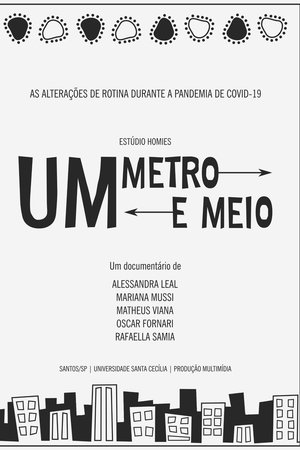
At the beginning of the year 2020, a relentless plague sweeps the planet and, as a consequence, a global lockdown is gradually decreed: how did people from very different latitudes, living necessarily very different situations, experience this shared solitude? How did people adapt to the restriction by decree of their personal freedoms and the transformation of many bustling metropolises into ghost cities?
Documentary on the river Ganges.
El conserje
Equatorial Guinea became independent 51 years ago from Spain. This African country lives under one of the longest-lived dictatorships in the world, Teodoro Obiang, a military man trained in Zaragoza. His regime strongly represses all freedoms, including sexual ones. Franco Spanish laws are still in force in the country, such as the «public scandal». It is not possible to protest on the street and the only LGTB organization in the country has not been able to legalize itself. In addition, the country’s Parliament is studying hardening the current penal code. To denounce the situation, the group «We are part of the world» has collected the voices of the community in a documentary that pays tribute to Fidel Lemoy, one of its best-known faces, who disappeared last year.
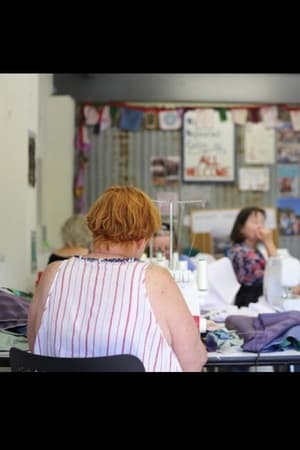
This walk in the daily life of several psychiatric institutions, allows us to meet extraordinary people who let us enter their privacy.
After the sunset, a man wonders between the edges of the highways gathering edible roadkill animals.
A day in the life of an old shepherd during the lambing season on the Sussex Downs. He talks of the problems in Winter, when lambing is complicated by snow. -BFI
Bernhard, an actress-comedienne whose brassy humor attracts a cult-like following, here offers a semiconfessional view of her life's landscape. Childhood memories of her father, a doctor, and her mother, an artist, are warmly rendered in scenes of the Jewish family amiably accommodating itself to the Christmas season, and of the obligatory communal vacations joined by colorful relatives. The abrupt transition to a flamboyant denizen of "downtowns," Los Angeles or New York, to an existence as a character in the lives of marginal people, is evoked in sharply satirical terms, in a melange of humorous fact and fiction, monologues akin to those that make Bernhard an icon of pop culture.
Working men and women leave through the main gate of the Lumière factory in Lyon, France. Filmed on 22 March 1895, it is often referred to as the first real motion picture ever made, although Louis Le Prince's 1888 Roundhay Garden Scene pre-dated it by seven years. Three separate versions of this film exist, which differ from one another in numerous ways. The first version features a carriage drawn by one horse, while in the second version the carriage is drawn by two horses, and there is no carriage at all in the third version. The clothing style is also different between the three versions, demonstrating the different seasons in which each was filmed. This film was made in the 35 mm format with an aspect ratio of 1.33:1, and at a speed of 16 frames per second. At that rate, the 17 meters of film length provided a duration of 46 seconds, holding a total of 800 frames.