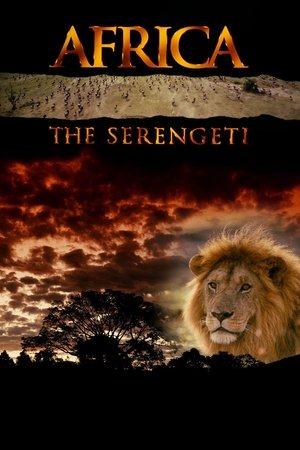
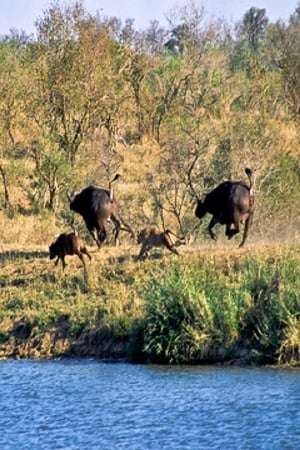
National Geographic filmmakers, Dereck and Beverly Joubert, explore how some animals are thrust together by the forces of nature-sometimes through a millennium of evolution or even last year’s drought. In the aftermath of strange elephant deaths, they piece together a visually stunning story that confirms their theory that lions were hunting elephants. Narrated by Jeremy Irons.
The film reveals the story of conflict between lions and hyenas, relatively unknown or even suspected in the scientific world before this. The intense relationship and enduring rivalry between the two species play out in a battle of survival.
The story of Darwin's finches and their relationship with other creatures of the Galapagos; tracing their evolution, how the islands were formed and how it's main inhabitants got there.
Follows the story of "Grizzly Man" Timothy Treadwell and what the thirteen summers in a National Park in Alaska were like in his attempt to protect the grizzly bears. The film is full of unique images and a look into the spirit of a man who sacrificed himself for nature.
From somewhere along the east coast of South America, an osprey has just flown 4000 miles to a small saltmarsh at the delta of the Connecticut River, the place that is imprinted on his memory since birth and where he will rejoin his mate. Over the course of one summer, the reunited osprey pair fends off enemies, hunts hundreds of fish, and raises their chicks into the next generation of sea hawks.
A dramatized tale of how wolves recovered in Europe after almost going extinct.
The deep waters of the Southern and Pacific Oceans still hold many mysteries. Two international teams of scientists set out to explore the icy depths of Antarctica and the abysses of the Mariana Trench. Filmed for the first time, creatures seemingly from another galaxy cohabit with champions of survival in extreme conditions.
David Attenborough brings to life, in unprecedented detail, the last days of the dinosaurs. Palaeontologist Robert DePalma has made an incredible discovery in a prehistoric graveyard: fossilised creatures, astonishingly well preserved, that could help change our understanding of the last days of the dinosaurs. Evidence from his site records the day when an asteroid bigger than Mount Everest devastated our planet and caused the extinction of the dinosaurs. Based on brand new evidence, witness the catastrophic events of that day play out minute by minute.
Impressive family film offers a unique stories of the wonderful animals who inhabit the Aldabra atoll, were born here, create communities, give birth to young and struggle for their survival.
In a time of hardship, Hobart resident Peter Walsh turns to the secretive platypus for solace, only to discover it is the platypus that need his help to survive in a habitat under threat.
The documentary features some of the least explored parts of Russia: Altai, Amur, Kamchatka, Yamal, and the Arctic. In each region, the crew uncovered how species have adapted to Russia's challenging terrain: from polar bears, hunting on melting ice caps, and musk oxen coping with punishing Arctic conditions, to the toad-headed agama lizards doing their best to survive in the scorched desert near the Caspian Sea. These precious habitats and the animals that call them home are under direct threat from climate change as a result of global warming occurring around the world. The film captures the incredible diversity of this immense wilderness, demonstrate the shooting process of the film, and lead you to think what might be done to mitigate such potential destruction.
This fun and informative documentary examines and attempts to validate some of the most outrageous theories surrounding the infamous cryptid.
Tim Laman a photographer for National Geographic and ornithologist Ed Scholes have been traveling to some of the most remote jungles the world has to offer in search of observing and photographing all 39 species of tropical bird. This particular group of birds are entitled as the “Birds of Paradise” and can be found in some of the last truly wild locations of New Guinea.
Menschen eingesperrt, Tiere befreit
Deep Blue is a major documentary feature film shot by the BBC Natural History Unit. An epic cinematic rollercoaster ride for all ages, Deep Blue uses amazing footage to tell us the story of our oceans and the life they support.
Takes us to locations all around the US and shows us the heavy toll that modern technology is having on humans and the earth. The visual tone poem contains neither dialogue nor a vocalized narration: its tone is set by the juxtaposition of images and the exceptional music by Philip Glass.
Planet Killers : Les barons de la corne
In a remote stretch of Patagonia, Argentina, there is a family - the Dickasons - who speak a language from a country 7,000km to the east. They are part of a 114-year-old Afrikaans Boer community - South Africans of Dutch descent who sailed across the ocean to South America after the destruction of a war with the British. Today, less than 50 still speak the language and they struggle to keep their culture alive. Patriarch "Ty" Dickason, 82, is a cowboy who has never flown in a plane - and yet he yearns to one day visit the country of his blood before he and his compatriots pass away. This multiple SAFTA award-winning documentary is a portrait of the last days of the community - a parallel world where Afrikaans was never linked to Apartheid - and one family's journey to reconnect with South Africa.
Follow ocean legend Sylvia Earle, renowned underwater National Geographic photographer Brian Skerry, writer Max Kennedy and their crew of teenage aquanauts on a year-long quest to deploy science and photography to inspire President Obama to establish new Blue Parks to protect essential habitats across an unseen American Wilderness.
After many years of careful conservation, Banff and Jasper National Parks have become vast zoological gardens. Deer, moose, bear, big-horn sheep, birds and small animals that live above the treeline are natural subjects for the close-up camera, with a backdrop of snowy peaks.