An account of the professional and personal life of renowned American photographer Annie Leibovitz, from her early artistic endeavors to her international success as a photojournalist, war reporter, and pop culture chronicler.
A video album by English alternative rock musician PJ Harvey. Most of the footage featured in Reeling is live footage from a performance at the London Forum in May 1993. Other footage featured throughout includes backstage footage, in-studio footage from the Rid of Me sessions, extracts from interviews, and two full-length music videos of "50ft Queenie" and "Man-Size".
Paying tribute to some of America's only surviving drive-ins – and those who keep them running – this heartfelt documentary captures efforts to preserve these nostalgic theaters in small-towns across the country.
The story of Meat Loaf's chaotic two-week journey through Ireland's heartland—a tour that reignited his love for people and music, ultimately helping his career get back on track.
This film reveals the resurgent San Francisco Bay Area culture of zines - artistic publications that are self-made, accessible, intentionally tactile and NOT the Internet. We meet remarkable zine authors in their studios, a major art museum curator, and avid zine festival goers and promoters.
During the exhibition Splendors of the Oases of Uzbekistan at the Louvre, a journey to the mythical city of Samarkand, a fabulous tapestry of civilizations.
A conversation with Patty McCormack.
Why did the Roman Empire, which dominated Europe and the Mediterranean for five centuries, inexorably weaken until it disappeared? Archaeologists, specialists in ancient pathologies and climate historians are now accumulating clues converging on the same factors: a powerful cooling and pandemics. A disease, whose symptoms described by the Greek physician Galen are reminiscent of those of smallpox, struck Rome in 167, soon devastating its army. At the same time, a sudden climatic disorder that was underway as far as Eurasia caused agricultural yields to plummet and led to the westward migration of the Huns. Plagued by economic and military difficulties, attacked from all sides by barbarian tribes, the Roman edifice gradually cracked.
E. T. the Extra-Terrestrial, Steven Spielberg's endearing movie released in 1982, achieved the triple feat of bringing to life one of the most iconic characters in pop culture, revolutionizing science fiction cinema and establishing itself as one of the highest-grossing family movies in the history of cinema, capable of making the whole world laugh and cry.
Sedna
Three octogenarian friends: Libaniel, Ramiro and José Heliodoro, who in their youth were bohemian artists, decide to meet again after decades to put on their last play. The three now face memories, years, illness and oblivion.
Stanley Nelson's syncopated voyage through the history of funk music, from early roots to 1970s urban funk and beyond.
110 of the world's top cinematographers discuss the art of how and why films look the way they do.
A summary of the Dominican Republic's undefeated championship run in the 2013 World Baseball Classic.
Efímero
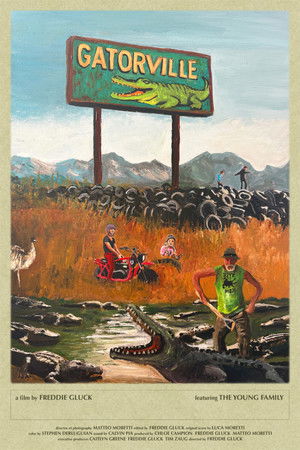
Gatorville
In this new program, actors Beverly D'Angelo, Don Dacus, Ellen Foley, Annie Golden, John Savage, and Dorsey Wright recall how they became involved with Hair, what it was like to work under the direction of Milos Forman, and era in which the film emerged, and how it impacted their acting ambitions and careers. (Some of Mr. Savage's comments are very emotional).
As France's first ZAC (Zone d'Aménagement Concerté, or concerted development zone), Grigny is the ideal place to describe how France transformed its dream of a happy suburb into an impoverished urban nightmare. The film aims to leave the camera rolling throughout the story, to discover the inhabitants and the labyrinths of yesterday and today, and to answer the essential questions. From the residents to the architects, including the city of Grigny, the mayor, the prefect, the landlords, and the ANRU (National Agency for Urban Renewal), the film examines and deciphers the consequences of what happened in Grigny and the state's housing policy. Through the analysis of Grigny's history, we see how the state has participated and continues to participate in the creation of social exclusion.
For generations, Sa Bastida has been much more than a house: it has been a refuge, a witness, and a vital centre for the Barceló family. Today, however, solitude has settled into every room, and Joan, the last one who remains, carries the living memory of all that it once was. As the arrival of new rhythms, infrastructures, and urban landscapes threatens this fragile environment, the documentary delves into the tension between the persistence of the past and the relentless advance of modernity. With an intimate and contemplative gaze, Dear Sa Bastida portrays not only the physical decay of a home, but also the emotional and symbolic value of a space that is quietly fading away. It is a tribute to the spaces that disappear, to the people who endure within them, and to the need to preserve memory before progress completely erases what defines us.
A bare-knuckled critique of corporate America told through the powerful true story of a toxic CEO who evolves from a profits-over-people, philandering executive to an unorthodox leader, populist messenger, and mentor to American influencers. It’s a story of growth, redemption and the impact of self-awareness on leadership and life.