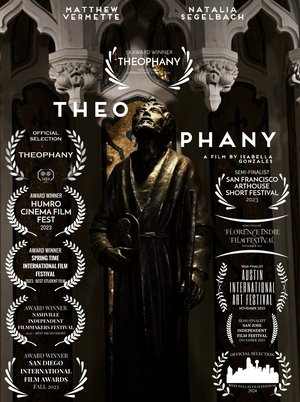
After his mother's death, a young man edits the family's home videos to bring back her image. As he delves into the occult he begins to reveal the paradoxical magic of memories and cinema.
Writes Ando, "Oh! My Mother was the first work I made using a newly bought 16mm camera I had purchased with the writer Shuji Terayama in Paris. This piece was selected for the Oberhausen International Film Festival. In 1969, there were, of course, no video cameras like ones we see now, and color TVs were only found at broadcast television studios. I had just been employed at the TBS (Tokyo Broadcasting System), and I often snuck into the studios after hours to experiment with the equipment. Oh! My Mother was made using the feedback effect, which is produced by infinitely expanding the image by looping the video."
Suffering from insomnia, disturbed loner Travis Bickle takes a job as a New York City cabbie, haunting the streets nightly, growing increasingly detached from reality as he dreams of cleaning up the filthy city.
Maria is a shellfisherwoman and midwife in a small village in the Illa de Arousa in 1970s Galicia. After an unexpected event, she is forced to flee to Portugal.
In Tokyo, a girl and her boyfriend spend a night talking about their life, their precarious condition and their difficulties to earn a living, their place in the world, if ever they have one...
Caleb, a coder at the world's largest internet company, wins a competition to spend a week at a private mountain retreat belonging to Nathan, the reclusive CEO of the company. But when Caleb arrives at the remote location he finds that he will have to participate in a strange and fascinating experiment in which he must interact with the world's first true artificial intelligence, housed in the body of a beautiful robot girl.
A comic study of 20th-century history, reconstructing the life of writer, creator and professional prisoner Tulse Luper. Born in 1911 Newport and last heard of in 1989, Luper’s life is pieced together from the evidence found in 92 suitcases scattered across the globe. In the first of three parts, we follow Luper through three distinct episodes: as a child during the First World War; as an explorer in Mormon Utah; and as a writer in Belgium during the rise of fascism.
The story takes place in the landscapes of La Spezia, where urban and rural environments intertwine. Water plays a primary role as a form, alongside the circle (e.g., bicycle wheels, pizzas, clocks…), which sets the rhythm of the character’s life, dynamically accelerating until it becomes very fast. The overlapping forms invite the viewer into the cyclical rhythm of the short film, moving from the spinning bicycle wheel to the washing machine drum in the character’s bathroom, from a freshly tossed pizza to the delivery mailbox, and finally to a dead-end wall. Savana is a race against oneself and against others; it’s a matter of decision and unpredictability — it’s black or white.
Two 17-year-old boys mark the new year by doing twelve dangerous but exciting tasks set for them by their friends.
The Garden is an experimental work that describes the inner worlds of two sisters manifested through their connection with the garden outside their home. While mourning the passing of their close relative, the sisters encounter a man in the garden, evoking a sense of mortality in one and awakening the sensuality in another. The film was directed by Ong Ann Meng (better known as Meng Ong), who went on to win numerous awards for his short films at the Singapore International Film Festival between 1991 and 1993. His first feature, Miss Wonton (2001), won the FIPRESCI Prize at the Locarno International Film Festival.
Tranquility is a silent short film centering feelings of emptiness and the search for fulfillment.
After the end of a relationship, a young Belgian woman remains alone in an isolated house and turns silence, repetition, and solitude into forms of existence and resistance to forgetting.
Ocean was a girl and now just a paper head. Her brother reminisces the times they shared during their childhood, a sorry experience that birthed emotional scars.
Single mom Laura, along with her awkward 14 year-old son Henry is forced to drive Jack, her estranged, care-free pot dealing father across country after he's kicked out of yet another nursing home.
In the Swedish city of Lethe, people from different walks of life take part in a series of short, deadpan vignettes that rush past. Some are just seconds long, none longer than a couple of minutes. A young woman remembers a fantasy honeymoon with a rock guitarist. A man awakes from a dream about bomber planes. A businessman boasts about success while being robbed by a pickpocket, and so on. The absurdist collection is accompanied by Dixieland jazz and similar music.
Two different but strangely complementary young women living together are pictured in a fragmented and non-linear narrative about incommunicability and alienation.
A relationship between a man and a woman discloses during the course of the film.
A gay office worker feels alienated due to being straight-passing and not fitting in with his peers. He dreams of a better environment and is outed, leading to a mysterious change in community.
The film builds itself as a noir narrative heavy with doubt, shadows, and suspicion making everything feel larger than it is. Parody slips in quietly. Beneath the metaphors and hard-boiled dialogue lies an absurd truth: it’s all about a missing office remote. Every line, every “pressure” and “control,” is just wordplay masking something trivial. At its core, the film is a satirical portrait of paranoia, control, and inflated self-importance—where nothing means much, yet everything feels fatal.
A satire about an alien who lands in Belgium and tries to attain citizenship. During the integration programme he experiences discrimination and unfairness whilst he just wants to fit in with the rest.