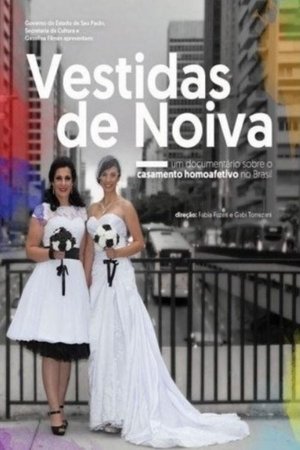
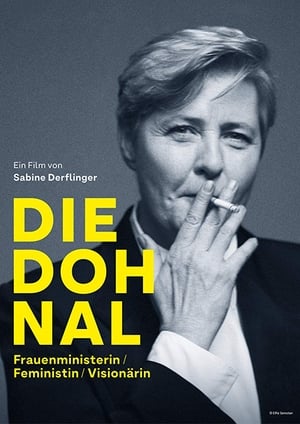
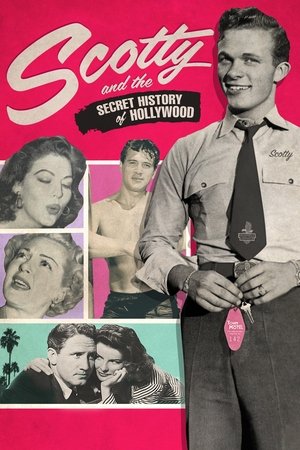
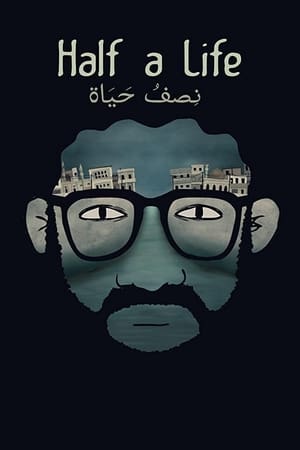
A Brazilian production that follows an amateur soccer team entirely consisting of homosexual players." Some gay soccer players got together for fun and founded a team which became so popular that it started a movement all across Brazil.
In 2014, Luke was a small-town boy growing up in Ohio. The only son and adopted child of a single mother, he dropped out of college and moved to New York to become a gay porn star: Levi Karter.
É Babado!
In 1959, Jean Cocteau looked back on his artistic journey for the Télé Monte-Carlo television show Tout la vérité, rien que la vérité. The program ends with a tasty anecdote about television that Cocteau describes as a “box of tricks”. A few weeks later, in the same Victorine studios, Cocteau directed most of the sequences for his last opus: The Testament of Orpheus (1959).
Outrage kiss-in at Bow Street police station in London, with a demonstration against homophobic government bills clause 25/28.
Chronicles of a male homosexual drug addict in 1980's in voice-over with long take scenes from Rome, television snippets of news of Gulf War and commercials.
I Always Said Yes is a portrait of pioneering filmmaker Wakefield Poole, whose careers as dancer, choreographer, and director spanned the golden years of Broadway, television, porno chic, and gay liberation.
A feature film that chronicles a complete season of the International Gay Rodeo Association. Roping and riding across north America for the past 30 years, the IGRA's courageous cowboys and cowgirls brave challenges both in and out of the arena on their quest to qualify for the World Finals at the end of the season. And along the way, they'll bust every stereotype in the book.
As a sci-fi obsessed woman living in near isolation, Beverly Glenn-Copeland wrote and self-released Keyboard Fantasies in Huntsville, Ontario back in 1986. Recorded in an Atari-powered home-studio, the cassette featured seven tracks of a curious folk-electronica hybrid, a sound realized far before its time. Three decades on, the musician – now Glenn Copeland – began to receive emails from people across the world, thanking him for the music they’d recently discovered.
The story of war, love and death that was documented by the immediate participants of events. Off screen and later on it are the two - a boy and a girl. He volunteered for the front; she went to the place just after the battle. He got into Ilovaysk cauldron, lost his closest brother-soldiers. She, while travelling along the ruined towns, strives to understand the essence of war and love. Both tell openly one another about their feelings during the war, escaping the cauldron, a try to live together after, and a common trip to the frontline.
In this film, the idea of the iron rabbit is used as a metaphor for bisexuals’ situation. Something that looks like a rabbit is not necessarily a rabbit. When a straight couple appears, people often consider them to be ordinary heterosexuals. And when two gay people get together, people simply think of them as homosexuals. In this instinctive view, which holds that people are either homo or hetero, bisexuals seem to fade out. This film is a real reflection of the lives of bisexual people in Taiwan. We hope that through the film, people can understand more about bisexuals.
In this home movie collection of gay men, memory serves as an act of hope, power, and above all, resilience.
New York City's Stonewall Inn is regarded by many as the site of gay and lesbian liberation since it was at this bar that drag queens fought back against police June 27-28, 1969. This documentary uses extensive archival film, movie clips and personal recollections to construct an audiovisual history of the gay community before the Stonewall riots.
In 2019, some still consider homosexuality as a disease that needs to be cured. Focusing on movements with roots in the United States, which draw on both religion and psychiatry to justify so-called conversion therapies, an investigation into the devastating consequences of certain practices that seem to successfully avoid any control by European public authorities.
Exuberant, eye-opening movie that serves up a dazzling hundred-year history of the role of gay men and lesbians have had on the silver screen. Film contains fabulous footage from 120 films showing the changing face of cinema sexuality, from cruel stereotypes to covert love to the activist triumphs of the 1990s.
A 16mm anthology of experimental super 8 films by Derek Jarman, Michael Kostiff, Cerith Wyn Evans and John Maybury, with framing footage by Tim Burke of Brion Gysin using a dream machine. Jarman's contribution is a version of his 1977 Art and the Pose (aka Arty the Pose), refilmed at 3fps, with a musical soundtrack. Jarman planned The Dream Machine as a commemoration of William Burroughs and Gysin's 1982 visit to the UK, and received initial funding from the Arts Council in 1983, then rethought the project as a portmanteau film featuring Gysin alone. The production remained in limbo until 1986, when James Mackay obtained completion funding from the British Film Institute. (Since this film was released on VHS accompanied by Jarman's Broken English: Three Songs by Marianne Faithfull, T.G.: Psychic Rally in Heaven and Pirate Tape under the umbrella title The Dream Machine, synopses of this film have often muddled up its details with those of the earlier films. )
The journey of eight characters of different ages, regions, life trajectories and religions – and behind them, stories of overcoming difficulties, prejudice and self-acceptance, passing through themes transversal to the letters that form the acronym LGBTQIA+ – that culminate in the celebration of being able to be who you are and in the exaltation of these voices.
A fascinating and intimate exploration of the daily lives and struggles of 7 LGBT families in 7 different European countries: The Netherlands, Spain, Italy, France, Greece, Switzerland and in Catalonia. Although separated by borders, they are all united in their struggle to have LGBT family rights recognized. The differences between countries are highlighted, from having full equality in some, to a total lack of rights in others: we are exploring those different laws and irregularities, realizing how the children of LGBT families are being made vulnerable across Europe.
It was 24 hours with him. I saw him shake his ass with a friend. Scrubbing tile corners. Have egg salad for lunch. Buy cleaning products. Rehearse in the studio. Playing with children on the grass. In a huge theatre, review texts about scenes of decolonization. Smoke one, or two. Problematizing on the bus. Undressing on the couch in my house. Sleeping without fitting into the bed because you are too tall. I saw the sun bursting on your skin in the morning and said goodbye. I thought a standard session wouldn't encompass the complexity of an intimate recording. So I was his voyeur for 24 hours. Uninterrupted.
Seven transgender and gender nonconforming individuals share their unique experiences with Silas Howard.