In the ruggedness of the American West, death is always a shadow over the shoulder: a grizzly bear encounter, an avalanche, or a bite from a rattlesnake can change everything in an instant; and those are just the natural threats. If one wants to get away with murder, the mountain ranges of the West may be the perfect place to do it. Peering into the dusty files found in the back country sheriff's offices and highlighting the cases that were deemed unsolvable because the crime scene was too rugged, too remote, or the victim assumed too hard to find; despite the odds in this landscape, justice prevails.
Explore the secret life of a woman we all grew up watching: the sitcom wife. The series looks to break television convention and ask what the world looks like through her eyes. Alternating between single-camera realism and multi-camera zaniness, the formats will inform one another as we imagine what happens when the sitcom wife escapes her confines, and takes the lead in her own life.
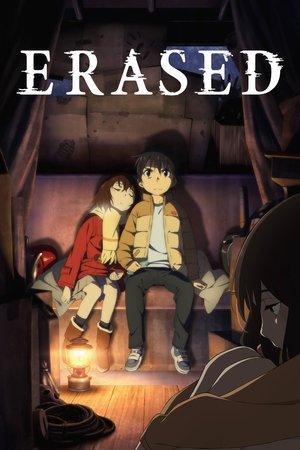
Satoru Fujinuma is a struggling manga artist who has the ability to turn back time and prevent deaths. When his mother is killed he turns back time to solve the mystery, but ends up back in elementary school, just before the disappearance of his classmate Kayo.
Sol Negro was an Argentine television miniseries that aired on the América TV channel in late 2003. The plot focuses on the story of a young man who is admitted to a neuropsychiatric hospital to evade prison, and revolves around his insertion in the circle of inmates of the hospital and a complicity network to take away his share of a family inheritance.
Two college students, Frances and Bobbi, forge a strange and unexpected relationship with a married couple.
About ten years after the Second World War, a group of juvenile offenders are sent to the Shounan Special Reform School, a kind of juvenile detention center, to deal with the atrocities and injustices they experienced in the war.
Prisoner is an Australian soap opera that is set in the Wentworth Detention Centre, a fictional women's prison.
C.A.T.S. Eyes is a British television series made by TVS for ITV between 1985 and 1987. A spin-off of the series The Gentle Touch, Maggie Forbes leads an all-female detective agency called "Eyes" that secretly operates as a Home Office team known as C.A.T.S. (Covert Activities Thames Section).
Hannay is a 1988 spin-off prequel series to the 1978 film adaptation of John Buchan's novel The Thirty-Nine Steps which stars Robert Powell as Richard Hannay, a role which he reprises in the series, an Edwardian mining engineer from Rhodesia of Scottish origin. It features his adventures in pre-World War I Great Britain. These stories had little in common with Buchan's novels about the character, although some names are taken from his other novels.
After a night of partying with a female stranger, a man wakes up to find her stabbed to death and is charged with her murder.
Twenty years have passed since Alexis del Mundo, also known as the second Shaider, destroyed the clan of Fuuma Le-ar. The descendants of the clan, now known as the Kuuma, have emerged to wreak havoc on an unsuspecting universe. Gallian, a descendant of del Mundo, has a mission and forms an elite group of space police known as the Zaido.
Jeonokseo, the most horrifying prison in Joseon, is where Ok Nyeo was born. This genius girl learns the art of living from the most eccentric people of the time. Despite the difficulties, Ok Nyeo grows up to introduce a human rights institution of Joseon to protect the weak.
Arcadia is plagued with evil, life-draining demons called Thanatos and a vast lack of Purifiers to exterminate them all. While attending school, Angelique attracts the eye of a man who intends to turn the tides to the people's favor. What lies within her is the key to Arcadia's survival.
For the Greater Good is a three-part 1991 BBC Two television drama serial written by G.F. Newman and directed by Danny Boyle. It centres on three politicians attempting to reform the British prison system. However, their efforts are undermined when the tabloid press exposes their private lives.
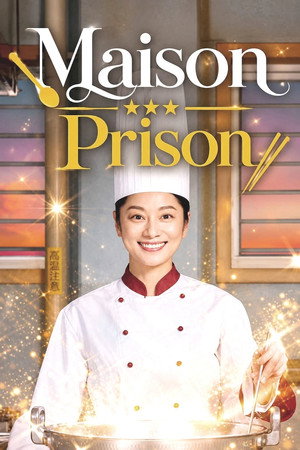
Yoko Ginbayashi is a celebrated chef whose fine Italian restaurant falls apart after the owner disappears with funds. Raising two children alone, she takes a job at a men's prison. While planning low-budget meals, she is called into the kitchen, where inexperienced inmates create chaos. Through her inventive cooking at Maison Prison, Yoko changes both the inmates and herself.
The story of military hero Eric Carter's return to the U.S. and the trouble that follows him back – compelling him to ask CTU for help in saving his life, and stopping what potentially could be one of the largest-scale terror attacks on American soil.
Bawoo asks his longtime friend Hoon to date for a week to move on—but with a stalker looming and feelings deepening, fake love may turn real.
RoboCop: The Series is a 1994 television series based on the film of the same name. It stars Richard Eden as the title character. Made to appeal primarily to children and young teenagers, it lacks the graphic violence that was the hallmark of RoboCop and RoboCop 2. RoboCop has several non-lethal alternatives to killing criminals, which ensures that certain villains can be recurring. The OCP Chairman and his corporation are treated as simply naïve and ignorant, in contrast to their malicious and immoral behavior from the second film onward.
Barlow at Large is a British television programme created by Troy Kennedy Martin and Elwyn Jones. It broadcast from September 1971 to February 1975, with a total of 29 episodes across four series. Stratford Johns reprises his role of DCI Charles Barlow from Z-Cars, Softly, Softly, and Softly, Softly: Taskforce. Barlow at Large originated as a three-part self-contained spin-off from Softly, Softly in 1971 with Barlow co-opted by the home office to investigate police corruption in Wales. Johns departed in 1972, but returned for a further series of Barlow at Large in the following year, Barlow having gone on full-time secondment to the Home Office. In 1974, the series was rebranded Barlow and two further series of eight episodes each followed, introducing DI Tucker. After the finale's transmission in February 1975, Barlow was next seen in the programme Second Verdict in which he, alongside a former colleague, investigates unsolved cases and unsafe historical convictions.
Shokun, Matteo, Burger, and King face challenges as desires and emotions threaten their bonds of friendship.