How the 1948 Olympic Games came into being, as the world struggled to cope in the aftermath of the Second World War, and the Games were held for the first time in 12 years. With Britain in the midst of widespread poverty and rationing, hosting the event seemed unlikely, but existing venues were renovated despite a low budget and little time to play with, and the British people pulled together to make the Games a success.
Like an indelible memory, this Olympic closing ceremony will be marked by audacity, fraternity and emotion. In the heart of the Stade de France, athletes from all over the world will represent their countries one last time in an incredible moment of celebration and sharing. With their eyes riveted to the flame, the emotion will be immense as we close the great Olympic book of Paris 2024.
In August 1936, the Olympic Games, orchestrated by Joseph Goebbels, the Third Reich's Minister of Propaganda, took place in Berlin. This was a vast charm offensive designed to present Germany as a nation that respected the Olympic principles of equality and fraternity. This documentary reveals the political strategies of the Third Reich, which benefited from the complicity of the International Olympic Committee in thwarting calls for a boycott by several countries. Once the games were over, Nazi policy intensified. How could the civilized world turn a blind eye to this "great illusion"? Gretel Bergmann, the German Jewish athlete at the center of a bargaining chip between the German authorities and the US government, and Noël Vandernotte, who won a bronze medal in rowing, share their stories.
While investigating the furtive world of illegal doping in sports, director Bryan Fogel connects with renegade Russian scientist Dr. Grigory Rodchenkov—a pillar of his country’s “anti-doping” program. Over dozens of Skype calls, urine samples, and badly administered hormone injections, Fogel and Rodchenkov grow closer despite shocking allegations that place Rodchenkov at the center of Russia’s state-sponsored Olympic doping program.
This documentary on the "youth movement" of the late 1960s focuses on the hippie pot smoking/free love culture in the San Francisco Bay area.
An intimate look at the Woodstock Music & Art Festival held in Bethel, NY in 1969, from preparation through cleanup, with historic access to insiders, blistering concert footage, and portraits of the concertgoers; negative and positive aspects are shown, from drug use by performers to naked fans sliding in the mud, from the collapse of the fences by the unexpected hordes to the surreal arrival of National Guard helicopters with food and medical assistance for the impromptu city of 500,000.
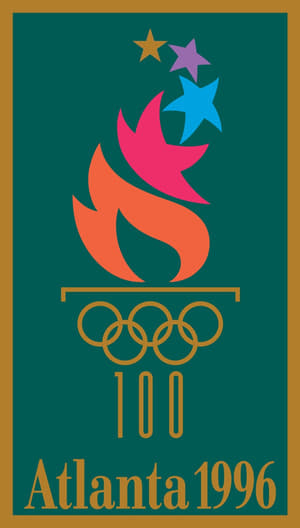
Live coverage of the opening ceremony of the 1996 Summer Olympics which took place in the evening on Friday 19 July in the Centennial Olympic Stadium, Atlanta, United States.
Examine one of sports' biggest steroid scandals via interviews with the head of BALCO lab, athletes suspected of using performance-enhancing drugs and more.
Combining the author's poetic voice with those of Bernard Hinault, Antoine de Caunes, and Daniel Mangeas, the film offers a passionate journey into the heart of the history and imagination of the Tour. It captures the spirit of the great epics, the Anquetil-Poulidor duel, Yvette Horner's accordion, the popular fervor, but also the physical and spectacular reality of the dangers of racing. Women's cycling plays an important role thanks to the testimony of Cédrine Kerbaol. The contemporary scene is represented by cyclist Guillaume Martin.
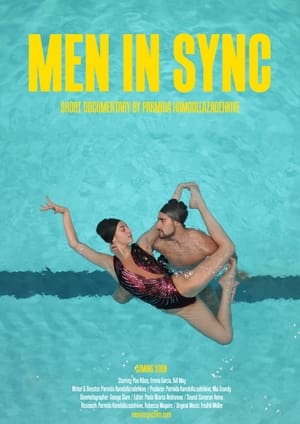
In February 2022, in Kharkiv, twin sisters Maryna and Vladyslava Alexiiva had to flee in the middle of the night under the bombs. In extremis, they take with them their bronze medals, won in Tokyo a year earlier in synchronized swimming. They took refuge in Italy for six months, then decided to return to Ukraine to reunite with their team. From then on, they were obsessed with a single goal: to win the gold medal in Paris in 2024.
"RUNN" is a heartfelt portrayal of one man’s, Nedd Brockmann’s, extraordinary mission to make a difference. As he runs across Australia raising money for homelessness, we witness Nedd's humour, grit, mullet and profound humanity, reminding us that even in the vastness of the Australian landscape, one person's determination can ignite a movement and change lives for the better.
The opening ceremony of the 2014 Winter Olympics took place at the Fisht Olympic Stadium in Sochi, Russia, on 7 February 2014. It began at 20:14 MSK (UTC+4) and finished at 23:02 MSK (UTC+4) This was the first Winter Olympics and first Olympic Games opening ceremony under the IOC presidency of Thomas Bach. The Games were officially opened by President Vladimir Putin. An audience of 40,000 were in attendance at the stadium with an estimated 2,000 performers. The ceremony touched upon various aspects of Russian history, and included tributes to famous Russians, such as Peter Tchaikovsky (1840–1893), Ukrainian-born Russian humourist, dramatist, and novelist Nikolai Gogol (1809–1852), filmmaker Sergei Eisenstein (1898–1948), ballet dancer Vaslav Nijinsky (1889–1950), and patron of arts, and founder of Ballet Russes, Sergei Diaghilev (1872–1929).
Pushing the limits of the human race: that is what runners aspire to when they take to the Olympic 100-meter track every four years. But for Usain Bolt, the record holder for the distance with his explosive 9.58 seconds, to become the fastest sprinter in history, crossing the finish line at some 44 km/h, it took more than a century of technical refinement. From the early days of sprinting to Usain Bolt's records, directors Jean-Christophe Rosé and Benoît Heimermann trace the history of the 100 meters, the flagship event of the Olympic Games, and its champions.
Having stood on the gold medal podium a record 8 times during one Olympic Games, Michael Phelps now stands alone as the the greatest Olympic champion in history. With exclusive interviews and commentary, Michael takes us on his personal journey to Olympic stardom. Includes all his races and special behind-the-scenes footage.
War has been declared between William and Harry, who are no longer on speaking terms. The elder brother, temperamental and ultra-traditionalist, was raised by his grandmother, for whom only the crown mattered. Harry, on the other hand, is the unloved one. He was the most popular member of the family before he left for the United States with his wife Meghan. Who will win the battle for the hearts and minds of the British people?
Welcome to a hard driving video about the biggest winners of all, the athletes and teams who broken records in their sports.
The history of surfing is like one long ride in which surfers relay the baton to each other across the years on a single, endless wave. In order to understand how this ancestral Polynesian tradition was able to span the globe and the eras until it became a competitive sport and eventually won a place at the Olympics, we’ll plunge into its history through the exceptional stories of those who allowed it to survive and be reinvented.
The Japanese volleyball players called the “Oriental Witches” are now in their 70s. From the formation of the team at the factory until their victory at the Tokyo Olympics in 1964, memories and legends rise to the surface and blend inextricably.
Part two of Leni Riefenstahl's monumental examination of the 1938 Olympic Games, the cameras leave the main stadium and venture into the many halls and fields deployed for such sports as fencing, polo, cycling, and the modern pentathlon, which was won by American Glenn Morris.
A stationary camera, looking diagonally across a racetrack toward the infield, records the horses as they race past. Once they are out of view and the race is over, police officers run onto the infield. The crowd moves around.