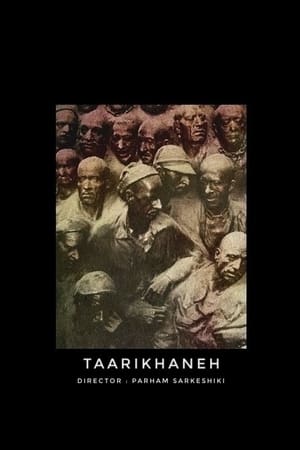
An exploration —manipulated and staged— of life in Las Hurdes, in the province of Cáceres, in Extremadura, Spain, as it was in 1932. Insalubrity, misery and lack of opportunities provoke the emigration of young people and the solitude of those who remain in the desolation of one of the poorest and least developed Spanish regions at that time.
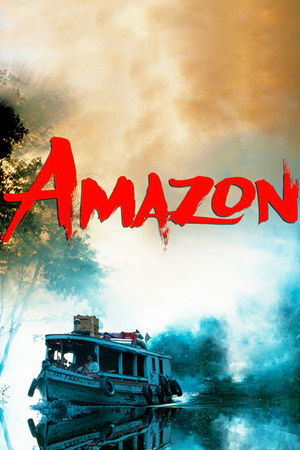
Inspired by these intense exhanges and images partially filmed in the South of Tolima in Columbia. The final film of the trilogy focuses on the current systemic war led by transnational firms against the tiniest and most essential aspect of life: seeds.
The short documentary Legends of Great Outdoors Colorado celebrates the visionaries who put Great Outdoors Colorado (GOCO) into motion three decades ago, creating a unique-in-the-nation resource and an enduring legacy of protecting and enhancing Colorado’s wildlife, parks, rivers, trails, and open spaces. In-depth conversations with legendary Coloradans, including GOCO co-founders Roy Romer and Ken Salazar, tell the origin story, and how the mission is possible thanks to passionate partners across the state, the people of Colorado, and GOCO's funding source, the Colorado Lottery. A combination of intimate interviews, archival footage, present-day scenes, and 8-mm film pays homage to Colorado’s outdoor heritage and GOCO’s continued commitment to conservation and recreation.
A group of friends reunite in the north of Scotland during summer.
What makes European cinema so special? Find out in Paul Joyce’s feature-length documentary, Pictures of Europe, which examines the differences between American independent and Hollywood movies and films from European directors. Featuring luminary iconoclasts from European cinema such as Agnes Varda, Bernardo Bertolucci and Pedro Almodovar, as well as American counterpoints from Paul Schrader, and those who have crossed back and forth, such as Paul Verhoeven
A non-narrative voyage round Sedlec Ossuary, which has been constructed from over 50,000 human skeletons (victims of the Black Death).
Documentary on Les Charlots, known as The Crazy Boys in the English-speaking world, a group of French musicians, singers, comedians and film actors who were popular in the 1960s, 1970s, and early 1980s.
Behind The Looking Glass is a film about the lives of women whose partners have or want to ‘transition’. While we hear a great deal of “stunning and brave” stories of men, there is a deadly silence when it comes to the stories of the wives or partners. This film will be the first of its kind in collecting such experiences of women from around the world.
Elizabeth Windsor tells the story of the girl who was never supposed to be Queen. Born the first daughter of 'the spare', the Duke of York, Princess Elizabeth's life was destined to be nothing more than a bit part in the privileged shadows of the British Royal family.
Hedda Hopper plays hostess at a party for her (grown) son William (DeWolfe Jr.). Hopper, attends the dedication of the Motion Picture Relief Fund's country home and goes to the Mocambo. There is also a sequence dedicated to the Milwaukee, Wisconsin world premiere of the first short in this series attended by more that a few film stars.
From the banks of the Bahamas to the seas of Argentina, we go underwater to meet dolphins. Two scientists who study dolphin communication and behaviour lead us on encounters in the wild. Featuring the music of Sting. Nominated for an Academy Award®, Best Documentary, Short Subject, 2000.
A synaesthetic portrait made between French Polynesia and Brittany, Color-blind follows the restless ghost of Gauguin in excavating the colonial legacy of a post-postcolonial present.
Scottish alt-rock band The Joy Hotel travels to La Frette Studios on the outskirts of Paris, France to record their sophomore album. Confined to the house for three weeks, the delicate dynamic begins to fracture, forcing the band to confront their individual aspirations and insecurities.
Jesus 'Chuy' Aceves and a dozen living members of his extended family suffer from the very rare condition of congenital hypertrichosis, meaning they were born with excessive hair on their faces and bodies. Due to their appearance, they suffer from discrimination in all areas of their lives: the children are made fun of at school and abandoned by their 'non-hairy' parents, and the adults cannot find work unless they choose to exhibit themselves as freaks in circuses. This moving and visually arresting documentary is a portrait of Chuy and his family members. It examines their day-to-day lives and their struggle to find love, acceptance and employment.
"The Monsters in My Home" focuses on the work Carme Artero, a foster mother from Majorca, Spain, who has devoted her time to setting up a foundation in defense of the rights of children who have suffered from abuse. The documentary features testimonies and the experience of people who care of children living situations of vulnerability, such as sexual or physical abuse or neglect and whose parents have their parental custody taken away by the Law.
A documentary about the artistic and verbal expressions of mentally ill people.
As daylight breaks between the border cities of El Paso, Texas, and Juarez, Mexico, undocumented migrants and their relatives, divided by a wall, prepare to participate in an activist event. For three minutes, they’ll embrace in no man’s land for the briefest and sweetest of reunions.
On the Puerto Rican diaspora, which includes renowned artists who have converted New York, Florida, Chicago, Hawaii, Santa Cruz and Dominican Republic into their second home, but with Puerto Rico in their hearts.
Two countries, two restaurants, one vision. At Gabriela Cámara's acclaimed Contramar in Mexico City, the welcoming, uniformed waiters are as beloved by diners as the menu featuring fresh, local seafood caught within 24 hours. The entire staff sees themselves as part of an extended family. Meanwhile at Cala in San Francisco, Cámara hires staff from different backgrounds and cultures, including ex-felons and ex-addicts, who view the work as an important opportunity to grow as individuals. A Tale of Two Kitchens explores the ways in which a restaurant can serve as a place of both dignity and community.
Making of documentary on the set of New Zealand's first epic Utu (1983), working with little money and dealing respectfully with matters of cultural protocol. Merata Mita discusses complex issues of inter-cultural conflict.