Shahjehan (a raw Rehman in one of his first releases) is approached by a Rajput chieftain, Jwala Singh, narrating the plight of his foster daughter, Ruhi (Ragini), who is blessed with unheard of beauty. This gives rise to an army of suitors, who indulge in violence to prevent her from getting married by scaring her to-be grooms. Her beauty, confined to four walls of Jwala's haveli becomes part of folklore, and street gossip, through the poetry of Sohail (Saigal) who accidentally catches her glimpse, and falls in love with her.
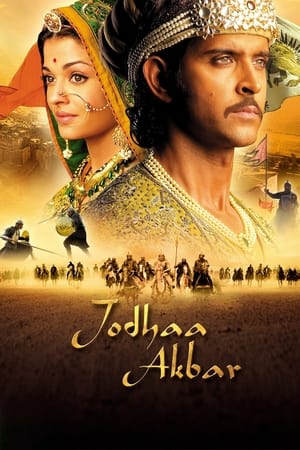
Rajputana, India, 13th century. The tyrannical usurper Alauddin Khilji, sultan of Delhi, becomes obsessed with Queen Padmavati, wife of King Ratan Singh of Mewar, and goes to great lengths to satisfy his greed for her.
Zubeidaa, an aspiring Muslim actress, marries a Hindu prince to become his second wife. Her tumultuous relationship with her husband, and her inner demons lead her to a decision which has fatal consequences for them all.
Shudra: The Rising is a Hindi language film with a storyline based on the caste system in ancient India, and more specifically the Hindu Varna system. It is directed by Sanjiv Jaiswal and dedicated to Bhim Rao Ambedkar. The film depicts the four basic units of the caste system - the Brahmins, Kshatriyas, Vaishyas and the Shudras. The film shows various rules imposed on the Shudras such as waking with a bell around their ankles and a long leaf behind their back,and a pot hanging around their neck.
The year is 1893 and India is under British occupation. In a small village, the tyrannical Captain Russell has imposed an unprecedented land tax on its citizens. Outraged, Bhuvan, a rebellious farmer, rallies the villagers to publicly oppose the tax. Russell offers a novel way to settle the dispute: he challenges Bhuvan and his men to a game of cricket, a sport completely foreign to India. If Bhuvan and his men can defeat Russell's team, the tax will be repealed.
Set in 1961 Goa, this is a story of a rich and influential Goan family and what happens to them over a period of time. The movie is narrated in past-tense by one of the friends of the family.
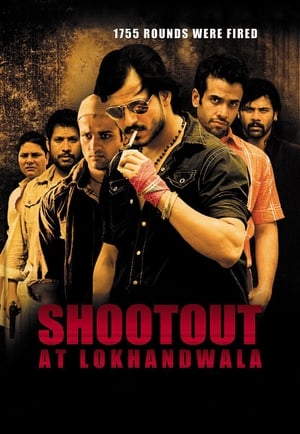
An account of the gangster Maya Dolas and his gang which terrorized Mumbai City, and the ensuing standoff between Mumbai Police and the gang on 16 November 1991.
The film begins in 1857, when India was ruled by the British East India Company. Mangal Pandey is a sepoy, a soldier of Indian origin, in the army of the East India Company. Pandey is fighting in the Anglo-Afghan Wars and saves the life of his British commanding officer, William Gordon. Gordon is indebted to Pandey and a strong friendship develops between them, transcending both rank and race.
Children of War is a movie based on the true events of the 1971 Genocide. Can we, in search of power, become animals? A genocide; neglected! The first use of rape as a weapon of war; undocumented! The lives of millions; unaccounted! The culprits; unpunished!
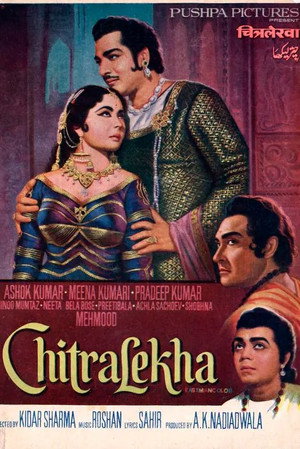
Chitralekha is a 1964 historical-philosophical Hindi film, directed by Kidar Sharma, starring Ashok Kumar, Meena Kumari and Pradeep Kumar. It was based on 1934 Hindi novel by the same name by Bhagwati Charan Verma about Bijgupta serving under the Maurya Empire and the king Chandragupta Maurya (340 BCE – 298 BCE) and his love for courtesan Chitralekha. Set in the back drop of the middle age society. The portrayal of the three tools wisdom, knowledge and power become superfluous in the absence of strength of character.
Shivaji's death sparks the Maratha-Mughal conflict. His son Sambhaji leads resistance against Aurangzeb's forces. Amid battles and intrigue, both sides face challenges in a struggle for power.
Indu’s husband, a government employee, believes in using the state of Emergency to advance his career, but a moral and ideological discrepancy sets her on a own path.
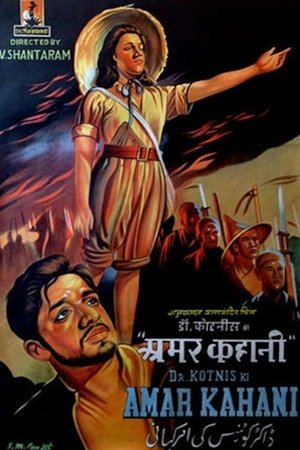
During the Japanese invasion of China, a young Indian doctor joins the Chinese resistance, meets and courts a Chinese girl, cures a virulent plague, and is captured by a Japanese platoon...
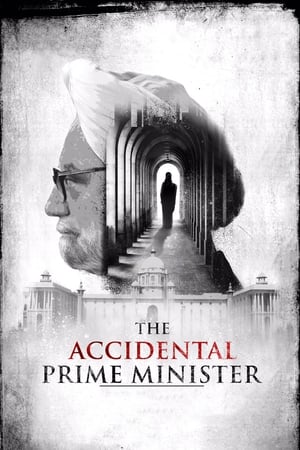
Based on the memoir by Indian policy analyst Sanjaya Baru, The Accidental Prime Minister explores Manmohan Singh's tenure as the Prime Minister of India, and the kind of control he had over his cabinet and the country.
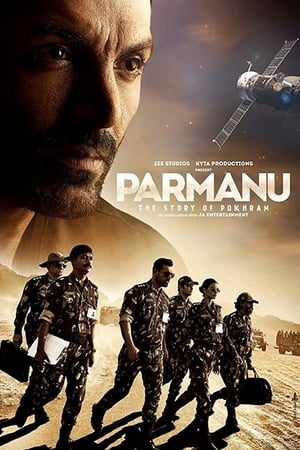
A look at India's second confidential nuclear test series at Pokhran lead by Dr. APJ Abdul Kalam, during the time of PM Atal Bihari Vajpayee's tenure.
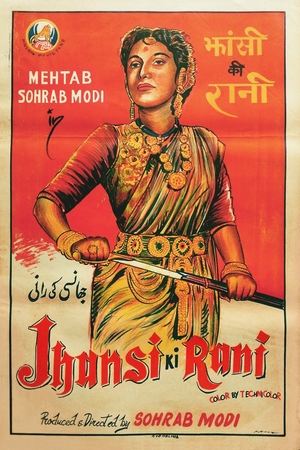
Set in the 19th century against the backdrop of the Mutiny of 1857, the film is about the bravery of queen Lakshmibai, Rani of Jhansi, who took up arms and led her army against the British.
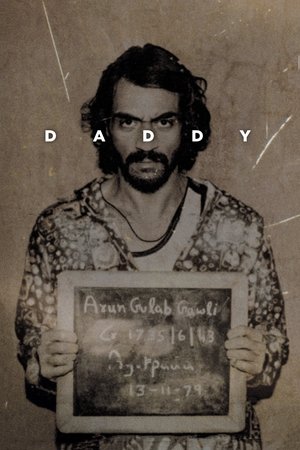
This is the gritty and sensational true story of Arun Gulab Gawli, a mill worker’s son who grew up in Mumbai’s impoverished Dagdi Chawl, to become an infamous don, politician and chief rival of the most powerful crime boss of the day, Dawood Ibrahim. Daddy realistically charts Mumbai’s true crime history from the 1970s and 1980s until 2012, when Gawli was finally sentenced to life imprisonment.
Unable to live in his father's gigantic shadow, Mahatma Gandhi's eldest son, Harilal, gets distraught and resorts to alcoholism.
Natasha and her fiance, Sunny visit her ancestral property where she meets Devdhar, a man who she forms a passionate connection with.
Snake Goddess Mansa is having a bad day. It's her birthday but she is restless and irritated by her followers in Naglok. Fortuitously Nagraj turns up and she manages to cajole him into revealing the name of her father, who is none other than Lord Shiva.