Through exclusive testimonies and clandestine videos, this documentary gives voice to courageous women in Iran who risked their lives to share their stories and to prominent women in culture, art and academia who were forced to leave their beloved country. They are a guiding force, able to explain through their individual, perilous and often tragic experiences, the drastic shift of a nation, caught between patriarchy, deep economic crisis, corruption, rigid religious and ideological beliefs.
Composed of images filmed in April 1975, a few months before the Green March, during an expedition of more than 3000 kilometres across the then Spanish Sahara, a unique testimony of the life of this region in an era in which it was preparing for its independence.
Presentation of Western Sahara’s history and the Polisario Front’s struggle for the independence of this territory, which has been occupied by Morocco since 1976. It shows the social organization of the Polisario Front, gender equality, which is highlighted (particularly in combat), vaccination campaigns, military training from the age of 14, and education into Sahrawi culture, traditions, and music.
A documentary about monks evacuating from Valamo, Ladoga to Finland during the Winter War.
Alongside England, Spain is the other great historical monarchy on the European continent. Sex, money, revenge, and betrayal—the recent history of the Spanish monarchy reads like a suspenseful soap opera. We take a closer look at the best-kept secrets of the Spanish crown: its true heritage, its daily lifestyle, and finally, how the women of the family took power.
On November 13, 2015, the attacks in Paris and Saint-Denis, carried out by three Islamist commandos and claimed by ISIS, were the deadliest in France since the end of World War II. In the months that followed, the November 13 Program was launched by the CNRS and Inserm to study the construction of individual and collective memory around an event that profoundly marked French society. Today, the testimonies of 27 volunteers—among some 1,000 people—who participated in the study form a mosaic of experiences that shows how trauma extends beyond the immediate circle to permeate the national collective memory.
A huge bestseller in its day, the novel Uncle Tom's Cabin championed the abolitionist cause while perpetuating racist prejudices about African Americans. A remarkable analysis of a work steeped in ambivalence, which left a lasting impression on readers.
Few amateur films with sound were produced in the 1930s and fewer remain extant. A charming artifact that demonstrates the expressive possibilities and technical limitations of amateur talkies, "The Spider and the Fly" includes a backyard Labor Day gathering, a trip to the Riverview Amusement Park, and a homemade Halloween parade of witches and ghouls.
L'Europe des Fronts Populaires
Revealing the flaws of Japanese society, the 1995 sarin gas attack in the Tokyo subway prompted Murakami to return to his homeland, whose conformism he rejected, to examine it closely. This led to the creation of two works: Underground and 1Q84.
A documentary about the United States Military Academy at West Point that conveys the vibrancy, sense of fraternity and fierce loyalty that mark the West Point experience.
On November 25, 1973, the first of four car-free Sundays transformed West Germany's deserted highways into spaces for walking, cycling, and horse-drawn carriages, while towns and cities took on a festive atmosphere. Introduced during the oil crisis to conserve fuel after the Arab oil embargo and production cuts following the Yom Kippur War, the measure became an unforgettable collective experience. Beyond the immediate energy shortage, the crisis marked a turning point, ending the postwar economic boom and encouraging greater awareness of energy use, consumerism, and environmental issues.
A look at Palenque's best kept secret: The Red Queen.
Ihantalan ihme
French documentary on Walt Disney's relationship with France through his personal and professional life.
In contrast to the lens that focuses exclusively on the racist traditions that are rooted in America’s social history, the moral counterweight of close, loving, friendship and collaboration, which have always been present in our history, represents “the other tradition.” This “other tradition” is a source of inspiration and presents models of behavior that are instructional and include unknown and uncelebrated legacies to be absorbed and emulated across generations of present day Americans. The documentary discusses the “better in us” a needed collective perspective in the current climate of national disunity across racial, religious, and political lines. This has significant implications for addressing public issues from immigration to health care and the myriad of governmental, educational, business, and religious challenges that we must successfully meet to weave the fabric of unity which is indispensable to survival as a nation.
It all started with a simple question: Is it possible to travel to the oldest and newest places on Earth? YouTuber, author and filmmaker Joe Scott looked into it, and it turned into the trip of a lifetime. It's a journey across 4 billion years of geologic history that explores the past and present of our remarkable planet, the absurd immensity of deep time, and our tiny but important place in it.
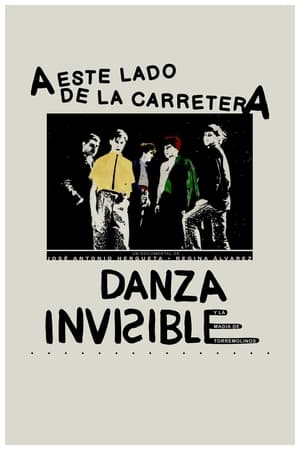
Torremolinos, province of Málaga, Spain, autumn 1981. In the basement of a pub frequented by foreigners, five young self-taught people found a musical group that in less than a year conquers the charts: Danza Invisible, one of the best bands in the history of Spanish pop music, was born.
Forty four years ago, it seemed like a good idea to build a squat, concrete motel in downtown Columbia, Missouri. But within a few years, guests were calling for a do-over. Now, with the downtrodden building’s fate sealed, the Rabid Hands artist collective arrives on the scene as hospice workers, assisting in the passing of the building’s soul. What ensues is a New Orleans-style voodoo celebration of a previously unsung piece of architecture.
Over three nights in April 1922, 13 men were murdered in west Cork, because, according the late Canadian historian Peter Hart, they were Protestants. This documentary goes to the root of the bitter dispute his controversial views have created.