Billions of years ago, Venus may have harbored life-giving habitats similar to those on the early Earth. Today, Earth's twin is a planet knocked upside down and turned inside out. Its burned-out surface is a global fossil of volcanic destruction, shrouded in a dense, toxic atmosphere. Scientists are now unveiling daring new strategies to search for clues from a time when the planet was alive.
Human genetics is one of the most exciting fields in science at the moment. Not only does it advance exponentially fast, it is also a field of study that will very soon affect our daily lives. We will all have to deal with the possibilities and technologies that human genetics have to offer, today and in the coming years. Quite a few questions and dilemmas still have to be answered by us. Do I want to know everything that can be found out from my DNA? And who is allowed to use and read my genetic code? My doctor? The police? The chef of my favourite restaurant? Also, what genetic technologies do I want to use? Do I want to clone my dog, choose my children’s eye colour, or genetically modify them to give them extra talents? Do I want others in society to be allowed to do that? The current and future possibilities of human genetics are simply overwhelming. They are both promising and frightening, chilling and delightful.
A fictionalized account of famous French writer Émile Zola and his involvement in the Dreyfus Affair. After struggling to establish himself, Zola wins success documenting the unsavory side of Paris and settles into a comfortable upper-class life. However, his complacency is shaken when Jewish officer Alfred Dreyfus is imprisoned for espionage. Realizing that Dreyfus is an innocent victim of anti-Semitism, Zola boldly pens an exposé, only to be charged with libel and now he must defend himself in a dramatic courtroom testimony.
Secrets of the Empire State Building
An experimental film following a trip made by three friends in which the contrast between the agitated city of São Paulo, Brazil and the calmness of the beach leads the flow. No script. No story. Just vibes.
Having helped his brother King Edward IV take the throne of England, the jealous hunchback Richard, Duke of Gloucester, plots to seize power for himself. Masterfully deceiving and plotting against nearly everyone in the royal court, including his eventual wife, Lady Anne, and his brother George, Duke of Clarence, Richard orchestrates a bloody rise to power before finding all his gains jeopardized by those he betrayed.
The SS chief Heinrich Himmler wanted to exchange Jews against so-called German Reich abroad, against arms sales or for cash - with the express approval of Hitler.
Documents the denial of rights to American citizens of Japanese descent who were forced from their homes to Utah's desert rangeland during World War II. This documentary discusses internment, contains interviews with former internees, and has footage of Topaz from Dave Tatsuno's movie filmed during camp.
Bhoutan, la naissance d'une démocratie
Last Hours of Pompeii
Les couleurs de l'Antiquité
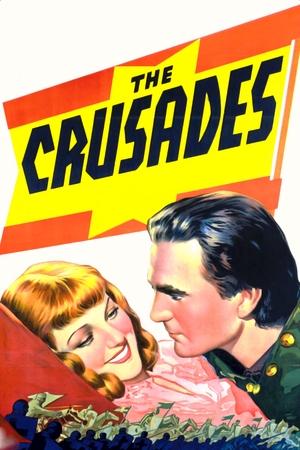
King Richard the Lionhearted launches a crusade to preserve Christianity in Jerusalem.
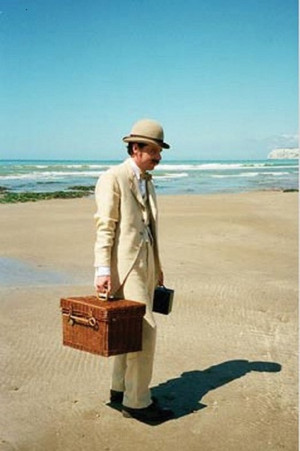
Russell revisits the life of composer Edward Elgar, using his own music as the score and featuring evocative, visually rich scenes, often set in the Malvern Hills where Elgar grew up.
In Iasi, Romania, from June 28 to July 6, 1941, nearly 15 000 Jews were murdered in the course of a horrifying pogrom. At the time, the programmed extermination of European Jews had not yet began. After the war, the successive communist governments did all they could to ensure the Iasi pogrom would be forgotten. It was not until November of 2004 that Romania recognized for the first time its direct responsibility in the pogrom. All that remains of this massacre are about a hundred photographs taken as souvenirs by german and romanian soldiers, and a few remaining survivors.
Unfolding in a series of eight vignettes, Sound Spring explores the history ofYellow Springs, Ohio over hundreds of years, as narrated by its residents incomical scenes: one interviewee rollerblades and reads the village's water meters, another stands on his head in a breakdancing freeze. The villagers describe American history-their ancestors' settlements after slavery, a friendship with Coretta Scott King, and Ohio's Trail of Tears- among other more personal details of village life. The wording of their recollections is imperfect, unsure-in fact they are all re-stagings of their previous audio interviews. Through performing their own previously recorded media, villagers uncover layers of time and storytelling.
Romantic art was a response to the social upheavals of the 19th century, as shown by works by its emblematic painters Friedrich, Venetsianov and Delacroix.
Experts uncover long-lost secrets and discover new evidence in the infamous story of Pompeii offering new stories of what happened in those fateful final hours. (This appears to be a a standalone, truncated, single movie adaptation of the three-part TV Series Pompeii's Final Hours: New Evidence (2018) [tmdbid= 86218].
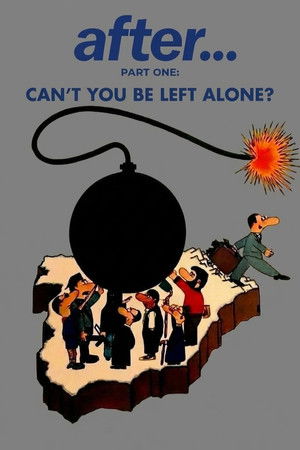
A history of the Spanish Transition told in first person by the main protagonists: on the one hand, the politicians, idealistic or merely opportunistic, who brought it to a successful conclusion in the tribunes and offices; on the other hand, the citizens who, in the streets, supported it sincerely or fought it with ferocity.
The story of iconic Spanish artist Susana Estrada's struggle against censorship and sexual repression during the turbulent years following the death of dictator Francisco Franco.
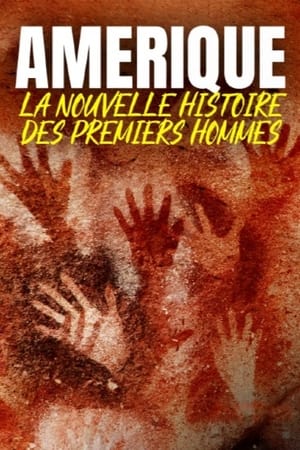
From the far north of Canada to the southern tip of Chile, through the southern United States, central Mexico and the Brazilian Mato Grosso, new concordant but still controversial archaeological discoveries have brought a new paradigm to the archaeology of American prehistory: the appearance of the first humans on the continent could date back to nearly 30,000 years before our era, that is to say, about 15,000 years earlier than the commonly accepted and taught thesis. Although there were a few mavericks in the past who disputed the scenario according to which the first ancestors of Americans arrived on foot through the Bering Strait 16,000 years ago, they were long kept out of the scientific community.