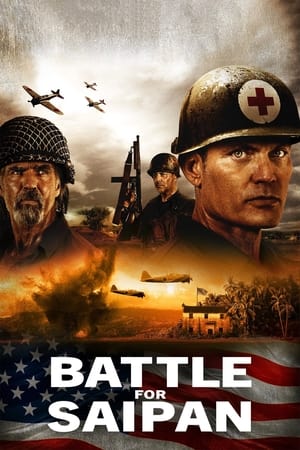
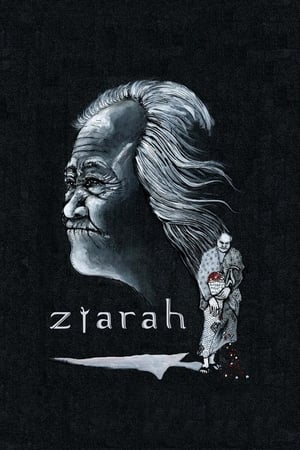
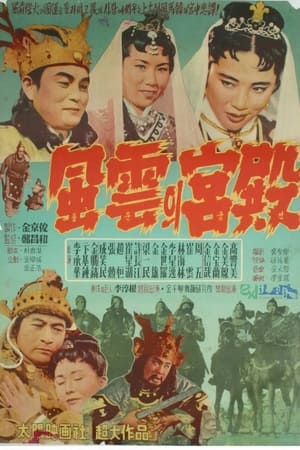
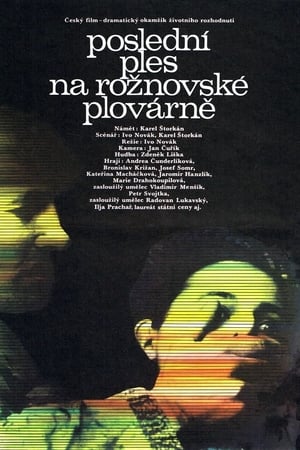
A domineering but charismatic rancher wages a war of intimidation on his brother's new wife and her teen son, until long-hidden secrets come to light.
March 1945, on the frontlines of the Tatra Mountains, Romanian and German soldiers prepare for battle, bound by the same hidden fear. In the chaos of combat, beyond bullets and grenades, a harsh truth emerges: in war, they are all just humans.
Young soldier Heikki fights on the Karelian Isthmus alongside his friend Pauli. Arvo, recently released from prison, joins the company, challenging the others' views on war and duty with his worldview. The ceasefire raises hopes of returning home, but it soon becomes clear that Finland must turn against its former German allies in Lapland. At the same time, Saara, who works as a German interpreter in Rovaniemi, must choose her future: stay in Finland or flee to Germany with her beloved, Major Duisberg.
Struggling fair owner Kesselring (Nicolás de Jesús) is given a unique opportunity to restore the fair to its former glory when his friend Dr. Goodkat (Fredy Roque) introduces him to Marcus Kelevra (Alexis Adrián), a man whose mysterious act will draw people back to the fair, at a deadly cost, and even sparking interest among his fellow fairgoers.
Rio de Janeiro, Brazil, 1950. In the conservative home of the Gusmão family, Eurídice and Guida are two inseparable sisters who support each other. While Guida can share with her younger sister the details of her romantic adventures, Eurídice finds in her older sister the encouragement she needs to pursue her dream of becoming a professional pianist.
A rich widower impregnates a poor young woman and dumps her. Her brother, member of a resistance group during the Occupation, tries to mend things up.
A story of a farmer and his calf, the only survivors of the German WW2 punitive expeditions that passed through their village. While evading before the dangers of war, the farmer develops a deep attachment to his calf and tries to save it at all costs, but it wouldn't be much easier for them even after the liberation day.
During World War 2, four soldiers are trapped between a harsh winter and the enemy. They need food and shelter, but this comes at the expense of their position. With no where else to turn, they begin an odyssey through the mountains.
At the end of World War II, Red Army soldiers bent on brutal revenge for past atrocities attack a German city. Compassion comes from an unlikely source. Based on a true story.
During the brutal invasion of China in 1937 by Imperial Japanese forces, tens of thousands of civilians and prisoners of war are murdered and women raped in what is known simply as "The Rape of Nanking." This docudrama is a stirring account of a small band of courageous American missionaries who choose to stay in Nanking to try and protect a quarter million vulnerable Chinese civilians who are trapped in a city ruled by a savage, out of control army. Their stories are brought vividly to life through actual real-time letters and diaries as they bear witness to one of the worst wartime atrocities in history.
Set in the Taisho era, which might be regarded as Japan's Hippie Phase, Hana no ran is a story about fashionable people without impulse control. Much of the action centers on a popular woman writer, the real-life poet Akiko Yosano, and her experiences among the literati of early 20th century Japan. Because of her independent, anti-war and often erotic poetry, she was a lightning rod for revolutionaries and other extremists, many of whom were destined to glamorous, yet ultimately pointless, deaths. The closest parallels might be the Byron/Shelley group or the people drawn to the Beat Generation.
The story of the miraculous evacuation of Allied soldiers from Belgium, Britain, Canada and France, who were cut off and surrounded by the German army from the beaches and harbour of Dunkirk between May 26th and June 4th 1940 during World War II.
1942. The State of Finland has formed an alliance with Nazi Germany. An elderly man single-handedly tries to stop a secret attempt by the Finnish State Police to hand over Jewish refugees directly to the Gestapo.
Part of the Shûhei Fujisawa New Drama Series.
Hollywood, 1942. The US government pressures Hungarian-born film director Michael Curtiz, who is about to finish shooting Casablanca, to accentuate the film's propaganda message in order to sway public opinion in favor of the country's intervention in the European war.
The end of World War II brings Europe a new political system, reshapes national and personal identities. Three women from Milan, Paris and Berlin report on the days of liberation in their diaries. Their personal stories expand the historical picture and make LIBERATION DIARIES a chronicle of female self-empowerment, resistance and resilience.
Women held in prison by the Nazi's in Italy during WW2.
The story of Anne Frank, the Jewish girl who went into hiding with her family in Amsterdam and became a victim of the Holocaust.
A special story about love, dance, and immortality takes place in the late 1940s. A young man, dance master Mayer, arrives at a pulmonary sanatorium. His diagnosis is serious—tuberculosis. However, he does not give in to his illness and begins to actively fight it with dance and optimism. Gradually, he wins over other patients who had previously resigned themselves to their fate. Soon, however, his illness breaks out in full force and insidiousness. Facing death, he embodies human courage and a positive attitude towards life.
In this John Nesbitt's Passing Parade short, a man recovers his lost memories when he is forced to relive events in his dreams.