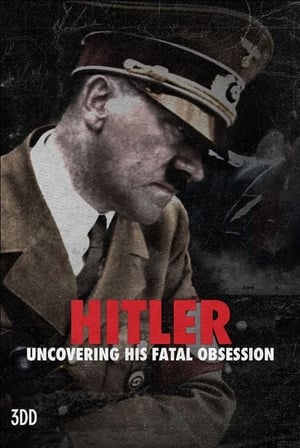
Adolf Hitler pretended to be poor but amassed a huge private fortune. The Führer may have believed he was Jewish. Rigorously fact-checked revelations throw a genuine new light on the Nazi regime.
It's the land we love and the land we think we know. We see America's breathtaking landscapes and wildlife as timeless, but the truth is very different. Its unique geography drives the forces of nature to extremes, shaping and reshaping the land and throwing down new challenges for life. Led by the iconic species that resonate with us most, journey through America's visually spectacular regions: the Frozen North, the Wild West, the Grassy Heartland, the Deep South and the Mountainous High Wilderness.
As part of the RAF's centenary, model aircraft enthusiasts from Britain and Germany recreate the Battle of Britain in miniature, to understand and commemorate the pilots.
Wings of War
In the United States, you may have been born in one state or even in a different country. You may go to school or work in another community, and then move somewhere else by choice or circumstance. What is it that ties us to these places and makes us call them home? And how does our state affect who we are and how we identify ourselves? In a time where identity, unity and belonging are under scrutiny, STATES OF AMERICA asks these questions in lyrical short documentaries. Featuring everyday people as distinct as the physical and cultural landscapes they call home, these films begin to portray a mosaic of America's famously emerging identity.
This 9-episodes documentary series extensively examines the history of Poland in the 20th Century, telling the story through archival films, newsreels, interviews, and readings from novels and poems.
Mémoires d'ex
The story of Hitler’s war on the Eastern Front – an attempt to liquidate the Russian people and gain living space for his superior Aryan race. It is a conquest that takes the Nazis all the way to the gates of Moscow and back to the heart of Berlin, and culminates in the collapse of the Third Reich. The series reveals the cunning strategy, defensive megastructures and military technology deployed in this devastating war of brutality between giants.
WWII history series following a four-man team as they explore the war zones of the Eastern Front in an effort to excavate and preserve the forgotten battle relics, at the same time discovering the stories of fallen soldiers from their remains.
The story of the biggest seaborne invasion in history, told using a treasure trove of rare and previously unheard recordings of those who lived through it, lip-synched by actors.
A three-part insight into an amazing wartime mission in Norway, undertaken in the early 1940s, which was immortalised by the Hollywood movie The Heroes of Telemark.
The Lost Evidence is a television program on The History Channel which uses three-dimensional landscapes, reconnaissance photos, eyewitness testimony and documents to reevaluate and recreate key battles of World War II.
Documentary using recorded figures and statistics to outline the full extent of the conflict, explaining the horrors of war and how it ever came to take place.
The three-part miniseries chronicles the life of Franklin D. Roosevelt, the thirty-second President of the United States.
A documentary series that gives a historical account of the events of World War II, from its roots in the 1920s to the aftermath and the lives it profoundly influenced.
Dwight D. Eisenhower, John F. Kennedy, Lyndon B. Johnson, Richard Nixon, Gerald Ford, Jimmy Carter, Ronald Reagan and George H.W. Bush. This is the story of how their war experiences change them, how they emerge from conflict as leaders and how the crucible of war shapes the decisions they make when they reach the White House.
6 June 1944. A titanic fleet launched an assault on the beaches of Normandy. Objective: to liberate Europe from Hitler's yoke. Drawing on the lessons learned from the Dieppe raid in August 1942, the mission was a spectacular success.
A series that explains the history and technology of weapons at war.
Diaries, correspondence and family film recordings reveal a unique view of the life and privacy of the citizens of the so-called Protectorate of Bohemia and Moravia… Young documentarian Ondřej Veverka approached dozens of witnesses of the protectorate times and their descendants to share unique film recordings and written testimonies with him from that time. The result is a three-part documentary that provides a unique perspective on the protectorate. At that time, perhaps more than ever, amateur cameras noticed ordinary everyday things, small joys and ordinary life. Perhaps so that one can at least for a moment succumb to the illusion that the world is actually still in order. But soon tragedy entered these shots as well.
The year is 1961 and Ingmar Bergman is making a movie. While planted on the scene as apprentice to Bergman, Vilgot Sjöman (director, I Am Curious–Yellow, 1967), suggests to Swedish Television that they take the opportunity to record with the acclaimed director. In August, Sjöman and the television crew begin to capture what would become a comprehensive five-part documentary on the making of Winter Light, offering views of script development, set construction and lighting, rehearsals and editing, as well as intimate conversations with Bergman and members of his cast and crew. Footage from the film’s Swedish premiere delivers immediate audience reactions and the critics’ reviews the following day.