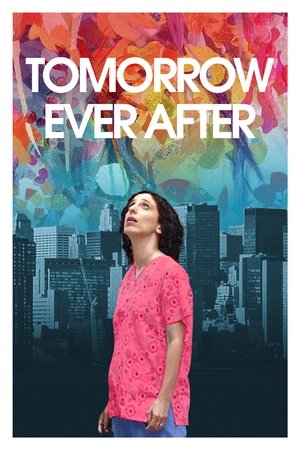
Tunisian-born Myriam, a Sephardic beauty, lives in Montreal. Théo, her grad-student boyfriend, breaks up with her, and she's desolate. She house-sits for a friend for several weeks: during that time, her father arrives looking for her after 20 years, Théo realizes he misses her, and she meets the quirky Lou, a poetry-spouting squatter who introduces himself by clipping a lock of her hair during a movie; he later breaks into her flat to chat with her. She's angry with her father, confused by Théo, and delighted with Lou, whose free spirit and undemanding attention inspire her. Working out her feelings about her father gives her to key to decide what to do next.
Sent from the future to look after a lonely girl, Eggy finds himself falling for her. But dating is forbidden and would risk both their fates.
A 1966 biopic of Francis of Assisi presents him as a troubled rebel and champion of radical brotherhood, reflecting the spirit of 1968 student protests. Praised and condemned, the film sparked controversy for its bold, dissenting portrayal of faith.
The film concerns an old Irish immigrant living in London who is looking back over his life. He recalls his early life in the west of Ireland, his first love, emigrating to England, searching for his brother Joe, who disappeared after he emigrated several years previously. His marriage and wife's later depth is also remembered.
This film is about the relationship of a mother and her daughter, the split-up of their family, the blessing and curse of belonging together and about coming of age - all this from the perspective of the young girl Aglaja. The story is based on real-life events, an Eastern European circus artist family that fled to the West. If they want to stay in the circus business they have to make up an exotic act. The mother spends all their money to buy a very dangerous act: hanging by her hair high up in the dome of the circus while juggling with burning torches. Every night Aglaja is terrified by the fear of losing her mother. But, on some day, she has to follow the family tradition and become the "Woman with the Hair of Steel".
Antonis arrives at a hotel resort by the sea. It is wintertime, the hotel is closed and Antonis drifts around alone. He has a lot of time to kill. Until television announces the disappearance of the famous TV host Antonis Paraskevas…
The rise and fall of the most distinguished Polish-Roma poetess Bronislawa Wajs, widely known as Papusza, and her relationship with her discoverer, writer Jerzy Ficowski.
Set in contemporary Rome, the film shows through a series of encounters with “ancient” Romans, how the economic and political manipulation by ancient Roman society led to Caesar’s dictatorship. - British Film Institute
Santos Palace is a coffee shop in Belgium. There, a waitress serves a strange client. Their eyes meet, minutes pass and we seem to witness a love story that hasn’t began or may have already started, with its potential jealousies and passions, or which may never happen at all; another type of romance. The feeling of seeing or being seen, the rhythmical editing, the use of cinemascope to make objects and spaces appear as abstract forms, the predominance of detailed shots: these are all obsessions, forms and audiovisual ideas that explode in this surprising film.
About hardships of the first years of War, which fell to the lot of ordinary people in Ukraine, who got under the yoke of fascist occupation, and heroic struggle against the invaders. A young Russian woman asks a Red Army soldier to spend the night with her in the wake of the Nazi invasion. Fearing she may soon perish, the woman hopes for one night of romance before what could be a horrible demise.
Film director Sergei Parajanov creates brilliant films. His nonconformist behavior conflicts with Soviet System. He is committed to prison for being eccentric. His indestructible love for beauty allows him to withstand the years of imprisonment, isolation and oblivion.
After locking herself out of her apartment, a young woman finds herself in the company of a strange and frightening neighbor.
Dido Elizabeth Bell, the illegitimate, mixed-race daughter of a Royal Navy admiral, plays an important role in the campaign to abolish slavery in England.
Euphoria brings together two intersecting road stories about the same person - a little girl called Lily who is taken away from home by her mother Celeste, and a young woman, Michelle, who journeys home to unravel the truth about her mysterious past.
Children from the village Bystrá are awaiting a nice and thrilling weekend. On Saturday they will play the championship football match with the nonresident boys from the village Skuhrov, on Sunday there will be the funfair with merry-go-round, swings and stalls with dainties. The members of the family of the merry-go-round man are brother and sister Janek and Zaneta Mareks whom the children have known since the last year. At that time Zaneta made friends with girls and Janek, an excellent football player, has been a welcome support of the football club.
Eva is a divorced soon-to-be empty-nester wondering about her next act. Then she meets Marianne, the embodiment of her perfect self. Armed with a restored outlook on being middle-aged and single, Eva decides to take a chance on her new love interest Albert — a sweet, funny and like-minded man. But things get complicated when Eva discovers that Albert is in fact the dreaded ex–husband of Marianne...
When 17-year-old Ben visits his father Heinrich in Marrakech, it is the start of an adventurous journey through a foreign country with a picturesque charm and a rough beauty where everything appears possible — including the chance that father and son will lose each other for good, or find one another again.
A shy caretaker believes that the father of her teenage charge is falling in love with her, unaware that she is actually the victim of the girl's prank.
The (mostly) true story of the greatest jazz drummer you've never heard of who stumbled upon a 16-year-old singer and nurtured her into a legend.
A tribute to Mallarmé that not only asserts the continuing relevance of his work but also confronts its literary ambiguities with political and cinematic ambiguities of its own. In outline, the film could not be more straightforward: it offers a recitation of one of Mallarmé’s most celebrated and complex poems (it was his last published work in his own lifetime, appearing in 1897, a year before his death) and proposes a cinematic equivalent for the author’s original experiment with typography and layout by assigning the words to nine different speakers, separating each speaker from the other as she or he speaks, and using slight pauses to correspond with white spaces on the original page.