Stan Hill Jr. is a Haudenosaunee artist living in Miawpukek First Nation Reserve, Conne River, Newfoundland. In “The Bear Inside a Whale,” he and his family discuss racism, identity, religion, creation and art, along with the cultural extinction of the Beothuk of Newfoundland. Throughout the film, we follow Stan carving a bear out of a whale vertebra. And we visit The Rooms (museum) in St. John’s, Newfoundland, where Stan talks about viewing and reclaiming Indigenous artefacts.
A documentary film exploring an untold part of Canada’s past through the eyes of Inuk artist and filmmaker Elisapie Isaac. After facing a moral dilemma, Elisapie sets out to meet others who, like her, are “Hudson Baybies,” the children born of the mixed unions between Indigenous women and Hudson’s Bay Company employees working in trading posts and general stores across the North.
A documentary road movie. Traveling across his homeland, the filmmaker explores what Yakut cinema is, and what it means to the Sakha people and to himself.
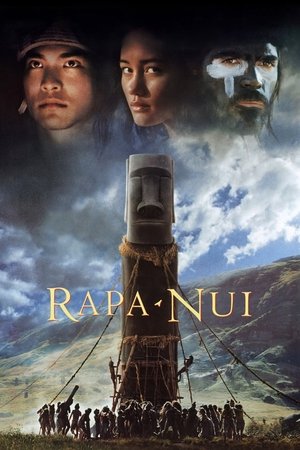
Inter-tribal rivalry leads to a competition to erect a huge Maoi statue in record time before Make can take part in the race to retrieve the egg of a Sooty Tern. The reward for winning this race is to rule the island for one year.
This short documentary revisits Mi’kmaq territory, where an iconic moment was captured in 2013—igniting into a symbol of Indigenous resistance and halting fracking exploration on unceded lands.
For thousands of years, gold has been the most treasured and coveted of all metals. But extraction sites are dwindling and what little gold that remains is harder and harder to mine. However, there is a place where you can still find vast quantities of gold. Underwater archaeology has revealed that 3 million shipwrecks litter the ocean floor, 3,500 of which sunk with cargoes of ’precious metals’ onboard. Billions of dollars worth of gold, just sitting there, at the bottom of the sea. With today’s technology, this gold is in reach.
In New France before the British Conquest, Marie, an indigenous slave, serves the local surgeon. Her daily life of household chores is bleak and alienating. The encounter with a young girl she presumes to be her child will give her motivation to undertake radical actions.
Incident at Restigouche is a 1984 documentary film by Alanis Obomsawin, chronicling a series of two raids on the Listuguj Mi'gmaq First Nation (Restigouche) by the Sûreté du Québec in 1981, as part of the efforts of the Quebec government to impose new restrictions on Native salmon fishermen. Incident at Restigouche delves into the history behind the Quebec Provincial Police (QPP) raids on the Restigouche Reserve on June 11 and 20, 1981. The Quebec government had decided to restrict fishing, resulting in anger among the Micmac Indians as salmon was traditionally an important source of food and income. Using a combination of documents, news clips, photographs and interviews, this powerful film provides an in-depth investigation into the history-making raids that put justice on trial.
A paralysingly beautiful documentary with a global vision—an odyssey through landscape and time—that attempts to capture the essence of life.
Pakatakan (route des portages)
Drama documentary based on the latest discovery of a 16th Century sailing shipwreck found close to Malta by an underwater research team led by maritime archaeologist Timmy Gambin.
Two young men spend an ordinary weekend together as Jehovah's Witnesses in the historic industry town of Trail, British Columbia. They eat junk food, play video games, watch movies, drink energy drinks, go out in the Ministry, then go their separate ways towards the silence of living. In that silence they contend with the hidden realities of their lives and feelings.
During the marijuana bonanza, a violent decade that saw the origins of drug trafficking in Colombia, Rapayet and his indigenous family get involved in a war to control the business that ends up destroying their lives and their culture.
A stop-motion documentary that describes the artificial mummification (black and red mummies) of the Chinchorro culture, a pre-hispanic society of fishermen and hunter-gatherers who practiced funeral rites with sophisticated techniques for body preservation 7,000 years ago, originating on the Camarones coast of Chile.
Since 15 years ago, an archaeological team is travelling to the free territories of the Western Sahara to search, identify and study the legacy of a disappeared civilisation. In 2009, a group of UN soldiers in a peace mission in the Western Sahara destroyed some of this heritage by painting with blue acrylic paint on some ancient paintings and rock art sites.
Yellowtail is the story of a young Native American cowboy searching for meaning as his chaotic lifestyle begins to wear on him both physically and mentally. To find his purpose the young man has to reflect on his upbringing as a native to become the spiritually connect man he was meant to be.
By retracing the mixed heritage of First Nations peoples and Quebecers, painting a modern portrait, and sketching a human geography, this film helps us (re)discover the beauty and strength of our common territory: the Americas.
A personal, scientific, mystical exploration of Amazonian curanderismo, focus on Ayahuasca and Master Plants, their healing and visionary properties and risks, along with the Shipibo people and their songs.
A documentary on the massacre of Planas in the Colombian east plains in 1970. An Indigenous community formed a cooperative to defend their rights from settlers and colonists, but the government organized a military operation to protect the latter and foreign companies.
A hunter on horseback accidentally discovers a portal to another world in this fantastical true Tsilhqot'in story.