One of the world's most acclaimed comedies, M*A*S*H focuses on three Korean War Army surgeons brilliantly brought to life by Donald Sutherland, Tom Skerritt and Elliott Gould. Though highly skilled and deeply dedicated, they adopt a hilarious, lunatic lifestyle as an antidote to the tragedies of their Mobile Army Surgical Hospital, and in the process infuriate Army bureaucrats. Robert Duvall, Gary Burghoff and Sally Kellerman co-star as a sanctimonious Major, an other-worldly Corporal, and a self-righteous yet lusty nurse.
The film depicts a romance set against the backdrop of the Korean War.
The film exposes the atrocities of war through the eyes of two children who are stranded in the DMZ after the end of the Korean War. The DMZ, strewn with abandoned tanks, dead bodies, land mines, and unexploded shells, is an exceedingly dangerous place for children. But what most endangers them in the end are not weapons but people.
A look at the Korean War through the eyes of a mute boy who was kept as a mascot by a regiment of soldiers near the front lines.
The harrowing true story of two elite US Navy fighter pilots during the Korean War. Their heroic sacrifices would ultimately make them the Navy's most celebrated wingmen.
A group of women climbs a summer mountain situated in South Korea. They are refugees who have settled into South Korean society after fleeing from North Korea. For them, climbing the mountains has been an unavoidable journey for survival - a matter of life and death.
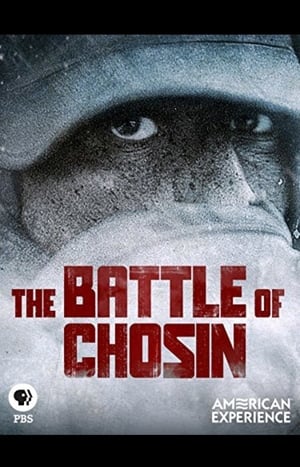
An amazingly harrowing story of the 17 day engagement of bloody combat and heroic survival in subartic temperatures. UN forces largely outnumbered and surrounded, due to a surprise attack led by 120,000 Chinese troops.
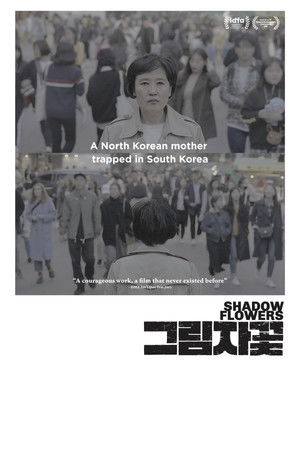
Ryun-hee Kim, a North Korean housewife, was forced to come to South Korea and became its citizen against her will. As her seven years of struggle to go back to her family in North Korea continues, the political absurdity hinders her journey back to her loved ones. The life of her family in the North goes on in emptiness, and she fears that she might become someone, like a shadow, who exists only in the fading memory of her family.
In the early days of the founding of the People's Republic of China in 1949, New China was faced with "internal and external troubles". Since the outbreak of the Korean Civil War, the U.S. military has repeatedly provoked the border between China and North Korea, and civilians have been brutally bombed. In order to maintain the hard-won peace and long-term stability for generations, in October 1950, the Chinese People's Volunteers entered North Korea, and the "Resist US Aid Korea" war kicked off.
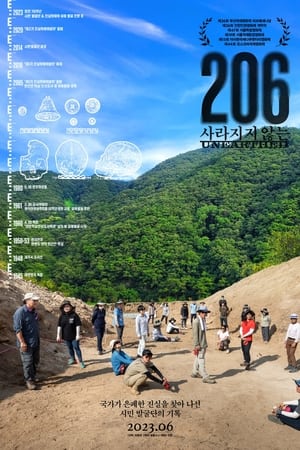
After the dissolution of the Truth and Reconciliation Commission, which was launched as a South Korean government organization in 2005, civic groups and bereaved families wishing to complete the mission the government had failed to accomplish form a joint organization to investigate the remains of civilians who were massacred during the Korean War. A three-year-long documentary about the organization’s three-year-long excavation efforts, 206: Unearthed is a record of sunlight, dirt, and sweat.
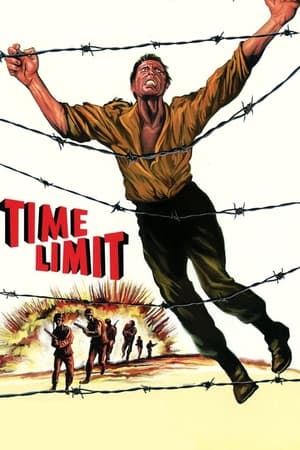
A U.S. Navy pilot and his squad are assigned to bomb a group of heavily defended bridges deep behind enemy lines during the Korean War.
With hopes of reuniting with her husband, who left for the Vietnam War without telling her, a young wife joins a traveling band as the lead singer.
The film portrays MacArthur's life from 1942, before the Battle of Bataan, to 1952, when he was removed from his Korean War command by President Truman for insubordination, and is recounted in flashback as he visits West Point.
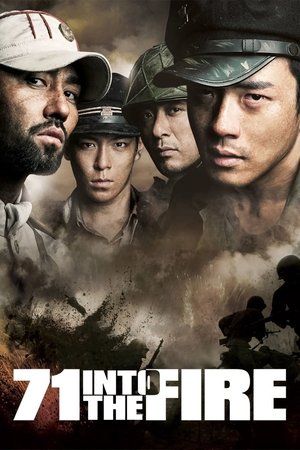
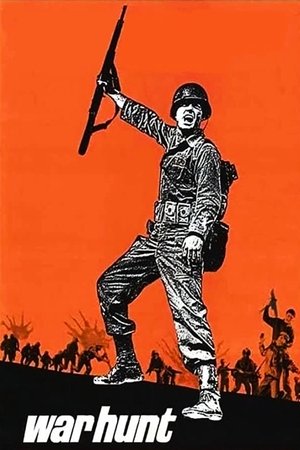
A brigade of five marines are sent on a dangerous mission to capture an enemy stronghold during the Korean War.
On 07 January 1972, the South Korean base in Nha-Trang, Vietnam, receives a radio transmission from a missing platoon presumed dead.
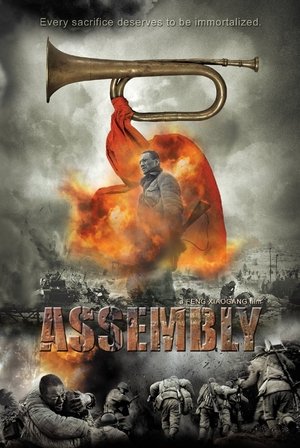
Follows a soldier trying to gain recognition for comrades who died in 1948, at a turning point in the civil war between the communists and the nationalist forces of the Kuomintang.
In July 1951, all the sides to the Korean War sought a ceasefire. For a ceasefire, the Allied and Communist forces began to hold talks at Naebongjang, located northeast of Kaesong. However, they only sharply opposed each other and didn't make progress in the negotiation. In October 1951, the two sides met again in the small village of Neolmun-ri below Gaeseong. They set up tents there to negotiate and named the place Panmunjom. The name Panmunjeom is a combination word of Panmun, meaning Neulmun-ri, and “Jom,” of an inn.
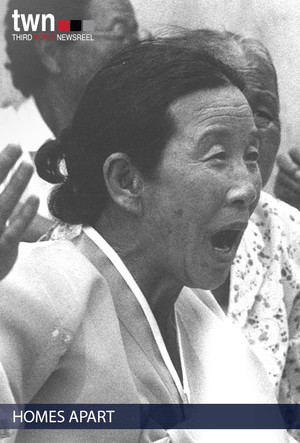
They speak the same language, share a similar culture and once belonged to a single nation. When the Korean War ended in 1953, ten million families were torn apart. By the early 90s, as the rest of the world celebrated the end of the Cold War, Koreans remain separated between North and South, fearing the threat of mutual destruction. Beginning with one man's journey to reunite with his sister in North Korea, filmmakers Takagi and Choy reveal the personal, social and political dimensions of one of the last divided nations on earth. The film was also the first US project to get permission to film in both South & North Korea.
Based on the long running play by Jang Jin, the story is set in Korea during the Korean War in 1950. Soldiers from both the North and South, as well as an American pilot, find themselves in a secluded and naively idealistic village, its residents unaware of the outside world, including the war.
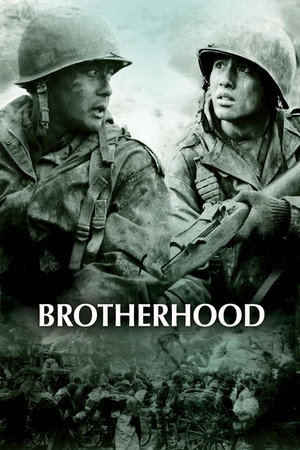
When two brothers are forced to fight in the Korean War, the elder decides to take the riskiest missions if it will help shield the younger from battle.