The chronological journey of the personal and professional life of this amazingly gifted sporting champion.
No rest for the elite of Grand Prix racing. Cutting edge R&D is the norm for Formula One teams and their drivers between the end of one season and the beginning of the next. In this groundbreaking documentary we follow the F1 McLaren team and its star driver Ayrton Senna from the Chequered Flag at end of the last race in 1990 in Adelaide for the Australian GP - to the Green Light start of the first race of 1991 in Phoenix, Arizona for the US Grand Prix. A unique behind-the-scenes look at F1, this video shows the state-of-the-art McLaren headquarters in Woking, England, rigorous testing in Estoril, Portugal, followed by Barcelona, Spain and finally Suzuka, Japan. Bonus footage includes a close up and personal look at Senna during his offseason in his homeland, Brazil, and finally to the US for the start of the new Grand Prix season.
Sky F1 documentary, Damon Hill returns to Imola with David Brabham, as they reflect on their respective teammates who sadly passed away at the 1994 San Marino Grand Prix.
A new perspective on Ayrton Senna through the lenses of his family. With exclusive interviews and never-before-seen footage, it reveals unknown aspects of the life of this global hero. Discover the touching story of his niece, who, at her grandmother's request—Ayrton's mother—created a work of art to immortalize the striking gaze of her uncle, the beloved son of Dona Neyde and an eternal idol of Brazil.
Dos Antigos aos Filhos do Amanhã
73 years after the birth of Israel and the “Nakba” (‘catastrophe’), Rothschild 16, where Israel’s declaration of independence took place, is still a popular location for different tour guides who highlight diverse narratives of the event.
Mishka is a boy of many faces – a petty criminal and a promising alpine skier who enjoys life to its fullest despite his physical disability and difficult living conditions. He is captured at a key moment when he enters adulthood and receives the last opportunity to take part in the Paralympics.
Mattis is different and was the target of bullies while growing up, while society looked the other way. His entire family was subjected to severe harassment by a gang of youths, and late one night in October 2007, his father took out his rifle and tragedy struck. One young boy was shot dead and another was seriously injured. Everyone was a loser, and Mattis and his best friend Stoffe were at the center of the drama. How could life go on?
Forty years after the bloodiest one-day encounter between Americans since the Civil War, the dead remain buried along with the truth. Until now. Based on interviews with eyewitnesses who just now are telling their stories, as well as access to newly discovered documents, the film sheds new light on exactly what happened at Attica between September 9-13, 1971. Criminal Injustice raises compelling new questions about the 39 deaths at Attica, White House involvement, and the corrupting influence of Nelson Rockefeller’s political aspirations before, during, and long after the deadly retaking of the prison. Former hostage Michael Smith said that “the cover up started as soon as the shooting stopped.” This film reveals that the truth actually may have been concealed long before that.
What does it mean to be a Jew in Poland now? Piotr Szczepański reveals another surprising piece of the cultural mosaic of Łódź in his documentary. The protagonists' lives prove that close ties with their religion and history do not exclude their relationship with counterculture and propensity for creative provocation. Thanks to people like them – open-minded and unconventional – the Jewish culture has a chance to last and thrive in our country. Besides, ‘@miriamfrompoland’ is a story, which presents a traditional, yet not quite typical, family with impressive observational virtuosity.
A beautifully illustrated story of a contemporary village and its unconventional dwellers who are of different age but have one thing in common – their strong attachment to folk culture. In this film, music is as important as images, since it accompanies the protagonists during key events in their lives.
The first Swedish film by photographer Ernest Florman. Kung Oscar II welcomes King Chulalonkorn of Siam, now Thailand, at Logårdstrappan. King Chulalonkorn visited Sweden in connection with Stockholmsutställningen 1897.
Compilation of actuality footage and short films capturing public and royal scenes from the life of King Oscar II of Sweden — including arrival at Expositions, jubilees, parades, naval activities, and official receptions. Serves as a visual tribute following his death.
A young filmmaker takes us on a walk through a rather peculiar neighborhood in the city of Maceió, where he meditates on his memories and the urban space from a sociological perspective.
A continually pendulating perspective of a tree on a sunny day.
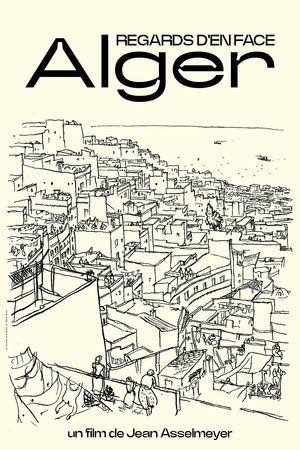
It is with the architect Jean-Jacques Deluz, that we visit Algiers, "his city" since 1960 and that he left only two years during the worst moments of terrorism. From the Casbah, in the 19th century center, including the cities of Fernand Pouillon and Bab El Oued to arrive at the new city of Maelma which he built today. Tender look, but without concessions at the same time architectural promenade and meetings with actors of art and culture: Djamel Allam, the singer Kabyle, Djamel Amrani, the poet, friend of Jean Sennac, Mohamed Ben Gettaf, Dramaturge and director of the theater of Algiers, Souad Delmi-Bourras, young designer Boudjemàa Kareche, director of the Algerian cinema, Amine Kouider, conductor, who relaunches the opera in Algeria, the painter Malek Salah, and others. A look at Algeria and the Algerians, far from the clichés of certain media, the bias being to seek signs of hope rather than "blood and tears".
This documentary will take us into the home of Doña Cristi, a 74-year-old woman who has run her grocery store in Ecatepec for more than three decades. We will learn about her life story and the daily difficulties of raising her children, five of them with multiple disabilities, who are her driving force to get up every morning and face all adversity.
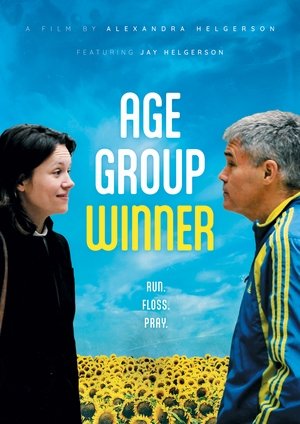
In 1980 Jay Helgerson shocked the world, becoming the first person to run a marathon a week for a year – each race completed in under three hours. For the last ten years, his daughter, filmmaker Alexandra Helgerson, followed him with a camera in order to understand the eccentric man who raised her. What she gets are his projected anxieties, his struggles with physical age and emotional distress, all while he endlessly trains for the Boston Marathon. But as Jay trains, the film is nearly derailed by Alexandra’s encounter with a life threatening illness. Ultimately, AGE GROUP WINNER is an affirmation of the will to live.
Inacreditável: A Batalha dos Aflitos
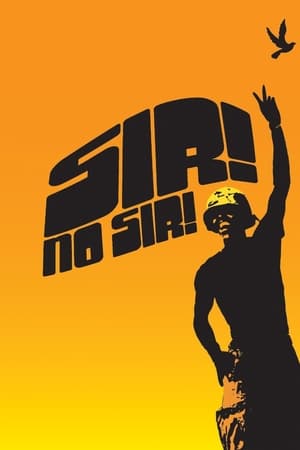
Sir! No Sir! is a documentary film about the anti-war movement within the ranks of the United States Military during the Vietnam War. It consists in part of interviews with Vietnam veterans explaining the reasons they protested the war or even defected. The film tells the story of how, from the very start of the war, there was resentment within the ranks over the difference between the conflict in Vietnam and the "good wars" that their fathers had fought. Over time, it became apparent that so many were opposed to the war that they could speak of a movement.