April, 1940. Manolo, 16 years old, and Jesus, who is just 8, are taken by their older brother Pepe, a lieutenant in the Army, to a sanatorium for children suffering from tuberculosis, situated on the border with Portugal. Once in the sanatorium, Manolo, surrounded by boys all much younger than he is, feels a bit like the cock of the walk since the only other man around is the handyman Emilio who looks after the gardens and does whatever needs to be done about the place. His wife, Rafaela, is the cook. Manolo meets Irene, a falangist who runs the sanatorium, and the school teacher, Miss Transito, a crabby spinster. He has his first sexual experience, albeit as a voyeur, with his nurse Vicenta. When she has to leave, her place is taken by a girl from the village, Maria Jesus, with whom Manolo falls hopelessly in love. A relationship grows up between them which will mark them both for ever.
A Russian flag bearer in World War II questions his will to fight. With a Russian flag as his weapon, he charges into machine guns. As war engulfs him, he must ask himself why he continues to wave his flag.
St. Louis florist Darien Burress launches her small business while preparing to compete at Art in Bloom, the St. Louis Art Museum's annual festival celebrating floral design and the fine arts.
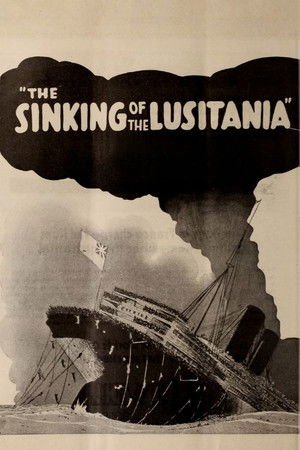
Winsor McCay recreates the sinking of the ocean liner Lusitania by a German U-boat in this propaganda piece designed to stir up anti-German sentiment during World War I.
The film tells the story of young musician Hakob Tutunjyan, who discovers what freedom truly means to him.
In Nazi-occupied Czechoslovakia, a doctor-turned-warehouse employee reluctantly agrees to treat a gravely wounded political fugitive, putting himself and everyone living in his building complex in danger.
What happens when man's reason is used as a weapon to slice through the accumulated detritus of ignorant and benighted ages and into the glorious new world of Enlightenment? The old is cleared away and the space is created for the new, but at what cost? Does reason itself have sufficient capacity to create a comprehensive world for man to exist as man, or does he become something else?
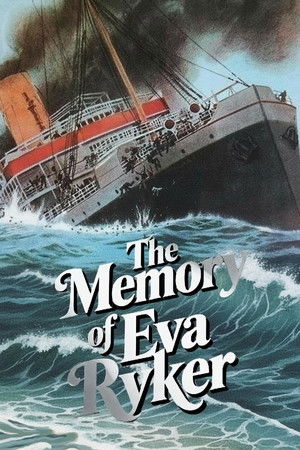
A young woman has spent her life tormented by the death of her mother, who was on a ship torpedoed during World War II. When her father hires an investigator to look into the circumstances of the mother's death 30 years prior, it triggers a new rash of emotional turmoil for the young woman and uncovers a heinous crime.
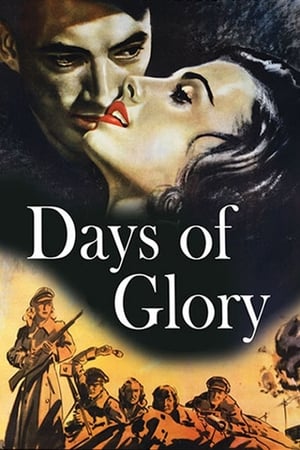
A heroic guerilla group fights back against impossible odds during the 1941 Nazi invasion of Russia.
A second version of Gance's Napoléon, with sound.
Jo Jones, a young defense plant worker whose husband is in the military during World War II, shares a house with three other women in the same situation.
The Stooges are repairmen who get a job fixing the doorbell in large house which is the secret headquarters of some Nazi spies. They manage to ruin most of the house while working on the wiring and then subdue the spies and sink an enemy submarine by remote control.
Re-enactment of World War 2 Battle of Arnhem using the survivors from the battle.
Plan for Destruction is a 1943 American short propaganda film directed by Edward Cahn. It looks at the Geopolitik ideas of the ex-World War I professor, General Karl Haushofer, who is portrayed as the head of a huge organization for gathering information of strategic value and the mastermind behind Adolf Hitler's wars and plans to enslave the world. The film was nominated for an Academy Award for Best Documentary Short.
A quiet village scene of pleasing restfulness, permitting us to see how the Swiss villagers maintain their reputation as regular Churchgoers. The old street and church are the only remains of the former village of Meiringen, which was destroyed by fire ten years ago.
1904, cinematography by Frank Ormiston-Smith.
This theatrical production tells the story of a family living through the reigns of four kings, starting from the end of King Chulalongkorn's reign in 1910 to the death of King Ananda Mahidol in 1946. The main character, "Ploy," is a woman from an old noble family who lived within the palace walls and was close to the royal court. After the Siamese revolution of 1932, she marries "Prem" and leaves the palace. Ploy's traditional values are challenged, leading to political conflicts among her three sons. The government later enacts laws to westernize lifestyles. During the war, their home is bombed, forcing them to move back to their ancestral home. Ploy falls gravely ill upon learning of her son's death and eventually passes away with the end of King Rama VIII's reign. This novel is considered influential in creating a positive image of the monarchy.
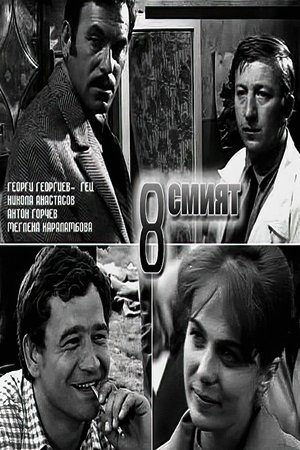
During World War II, a plane transfers Bulgarian antifascists from the USSR to Bulgaria. They jump with parachutes. The eighth paratrooper heads a guerilla group. In the group, there are doubts about the existence of a traitor. Initially, an innocent person is accused, but later the real traitor is caught and killed. Still, the most dangerous enemies of the guerillas are the colonel and the troops stationed in the nearby village. The battle between them and the guerillas is won by the latter who continue to fight for their cause.
Le défi fou de GUÉDELON, construire un CHÂTEAU en AUTONOMIE TOTALE sans PÉTROLE comme au MOYEN ÂGE