While working as a photographer in Benin, West Africa, a two-week trip will turn into a two months personal journey. Me dicen Yovo (I'm a Yovo) is a visual diary of that experience. A Peruvian traveller is an odd presence in Benin whose ethnic a cultural identities are constantly creating unique situations, and provoking original thoughts on what it means to be from the "third world".
In this tense and immersive tour de force, audiences are taken directly into the line of fire between powerful, opposing Peruvian leaders who will stop at nothing to keep their respective goals intact. On the one side is President Alan Garcia, who, eager to enter the world stage, begins aggressively extracting oil, minerals, and gas from untouched indigenous Amazonian land. He is quickly met with fierce opposition from indigenous leader Alberto Pizango, whose impassioned speeches against Garcia’s destructive actions prove a powerful rallying cry to throngs of his supporters. When Garcia continues to ignore their pleas, a tense war of words erupts into deadly violence.
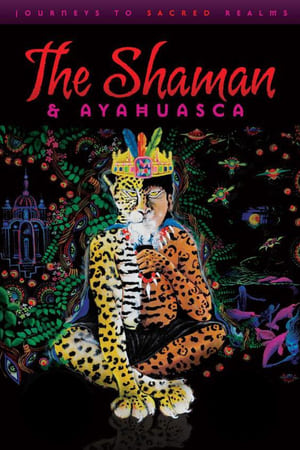
Benito Arévalo is an onaya: a traditional healer in a Shipibo-Konibo community in Peruvian Amazonia. He explains something of the onaya tradition, and how he came to drink the plant medicine ayahuasca under his father's tutelage. Arévalo leads an ayahuasca ceremony for Westerners, and shares with us something of his understanding of the plants and the onaya tradition.
Four Westerners with various ailments travel to Peruvian Amazonia to drink ayahuasca, a traditional medicine renowned for its healing powers.
A multi-billion-dollar mining project is launched by the American Newmont Mining Corporation and lays claim to the land belonging to Preuvian highlander Máxima Acuña.
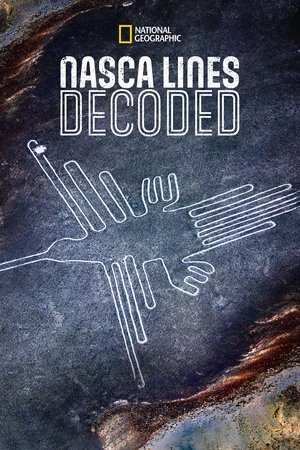
Join a team of archaeologists and the Discovery Channel in an investigation into the mysterious lines of the Nazca region in Peru. Created by the Nazcas, these huge sculptures are only visible from the sky and depict people, animal, geometric forms, and strange creatures. See a premier exhibition of pottery and textiles, musical instruments, and mummies from this long-forgotten, pre-Columbian civilization and visit Cahuachi, a buried city of pyramids and ceremonial buildings which may have once been the religious capital of the Nazca people
Short film about "Yuyanapaq", the photo exhibition of the armed conflict in Peru, at Casa Riva Agüero, Chorrillos, Lima-Peru.
A trip through the diversity of black and native Peruvian music. Character-driven film, one where the characters are integral to the nation itself. This movie delves into music and musicians, yet it's not strictly a musical; rather, it's a tapestry of seemingly disparate personal narratives woven together in a country also striving to define itself and sketch its identity
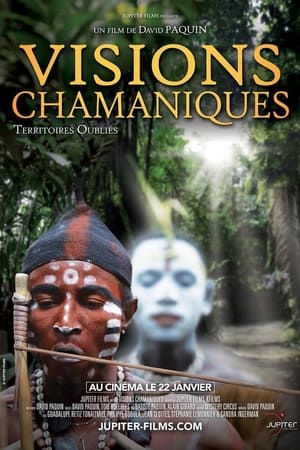
This film is an initiatory journey among the Fangs of Gabon and the Shipibos of Peru. With the sound of traditional instruments like the mogongo (arc in the mouth), the holy harp, and the Icaros, we discover the traditional peoples’ wisdom.
The Shipibo-Konibo people of Peruvian Amazon decorate their pottery, jewelry, textiles, and body art with complex geometric patterns called kené. These patterns also have corresponding songs, called icaros, which are integral to the Shipibo way of life. This documentary explores these unique art forms, and one Shipibo family's efforts to safeguard the tradition.
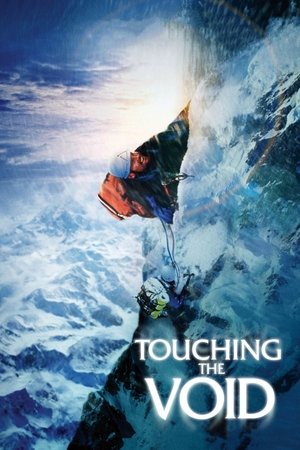
The true story of Joe Simpson and Simon Yates' disastrous and nearly-fatal mountain climb of 6,344m Siula Grande in the Cordillera Huayhuash in the Peruvian Andes in 1985.
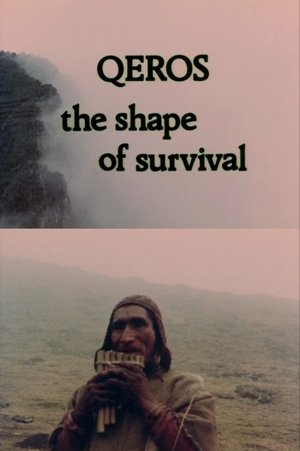
Exploration of the way of life of the Q’eros Indians of Peru, who have lived in the Andes for more than 3,000 years.
Join Dance Moms stars, Kendall Vertes, Chloe Lukasiak, and Kalani Hilliker as they perform on The Irreplaceables Tour. Watch along as the girls tour around Peru and perform their world-famous dances for eager fans.
Don Emilio is a humble, 63-year-old man who lives in the Amazon rainforest, seven miles from the city of Iquitos, Peru. For all of his adult life he has worked as a curandero and vegetalista, a traditional healer. He estimates that in his career he has treated more than 2,500 clients. Through the camera lens of anthropologist Luis Eduardo Luna, Don Emilio tells us about his practice, his beliefs, his community, and his life. He shows us how he prepares ayahuasca and other herbal medicines. Finally, we see Don Emilio treat a man who has come to him for help, and hear from a poor woman who has brought her infant son for medical care.
Heddy Honigmann returns to her birthplace of Lima, Peru to reacquaint herself with a place and people dear to her heart. It is about a forgotten city, a forgotten history and a forgotten people. With irony as their loved weapon for survival, they have to forget as well, in order not to give way to cynicism, hatred and grief. It is about remembering the old days when life - despite class differences, corruption and violence - was still good: waiters, bartenders and shopkeepers who are fighting a losing battle and have lost everything. It is also about the children who manage to survive by mastering the art of street life and who reveal the country in it's true colours. Just like the dogs they share the streets with, they have no good memories to forget.
This documentary is an offbeat "road movie" in which acclaimed documentarian Heddy Honigmann travels with, and thereby discovers the stories of, taxi drivers in Lima. In the early 1990s, in response to Peru's inflationary economy and a government destabilized by corruption and Shining Path terrorism, many middle-class professionals used their own cars to moonlight as taxi drivers in order to weather the financial crisis.
This Traveltalk series short brings us to Lima, Peru where we see a modern city.
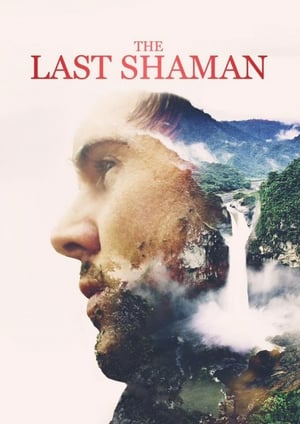
James, giving himself 12 months before he has "a license to kill himself," sets off to the Amazon rainforest with hopes of finding a shaman who can save his life.
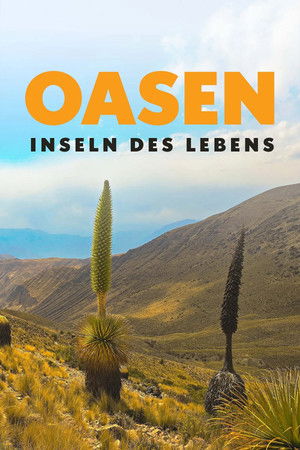
Peru is a country steeped in cultural traditions that stretch back more than 1,000 years. But it's also a land of surprising natural riches.
They are striking works of art by any standard: but what purpose did they serve? Some of the theories put forward suggest that the lines were ancient running tracks, runways for aliens, and even a giant astronomical calculator. But after decades of misunderstanding, modern archaeology may finally have an answer to the puzzle of the Nasca lines.