Kim Dae-jung's Days
South Korean cinema is in the throes of a creative explosion where mavericks are encouraged and masters are venerated. But from where has this phenomenon emerged? What is the culture that has yielded this range of filmmakers? With The Nine Lives of Korean Cinema, French critic, writer and documentarian Hubert Niogret provides a broad overview but, nevertheless, an excellent entry point into this unique type of national cinema that still remains a mystery for many people. The product of a troubled social and political history, Korean cinema sports an identity that is unique in much modern film. Niogret's documentary tells of the country's cinematic history - the ups along with the downs - and gives further voice to the artists striving to express their concerns, fears and aspirations.
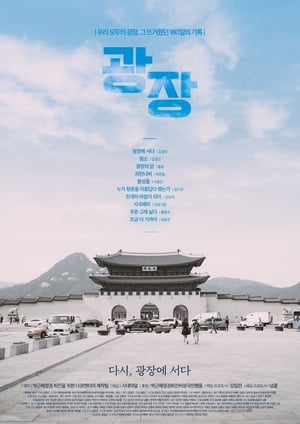
Light A Candle, Write A History - Candlelight Revolution
All day candles
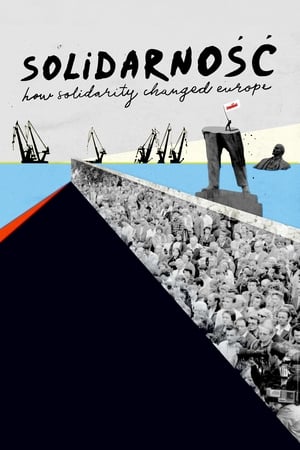
Gdańsk, Poland, September 1980. Lech Wałęsa and other Lenin shipyard workers found Solidarność (Solidarity), the first independent trade union behind the Iron Curtain. The long and hard battle to bring down communist dictatorship has begun.
The film traces PARK Geun-hye's life back to the 1970s, when the leader-follower relationship began between PARK, who became the first lady of the Yushin regime, and CHOI Taemin, the leader of a pseudo-religion. It then examines the Sewol ferry incident, CHOI Soonsil Gate, candlelight rallies, and finally the impeachment.
Project 1 _ Hong Hyung-sook The children who are enthusiastically painting and cutting a doll. What stories will be told at the Square? - Project 10 _ Kim Jeong-geun The janitorial worker from the Busan Subway Station, Kim Young-ja talks about how she hopes to see a clean world, just like how she cleans everywhere in the subway.
According to a survey by the U.S. military government in 1946, 78% of the South Korean people wanted socialism and only 14% capitalism. By appointing the pro-Japanese collaborators and the rightists, Rhee Syngman, who had not received the people's support, massacred those groups and civilians that were political stumbling blocks. In dealing with the Jeju 4.3 uprising in 1947 and the Yeosun incident in 1948 and The Korean War having broken out, massive civilian massacre became regularized.
PyeongChang 2018 Olympic Opening Ceremony: Peace in Motion
The Grand Canal project was one of the key pledges of the former President Lee. He first said that he was carrying out a project to save the four rivers but it was a lie. He eventually proceeded the project which was a hotbed of all kinds of irregularities. After ten years, now the river is dying. Some people collaborated to the past regime, and some resisted it. On whom will we stand?
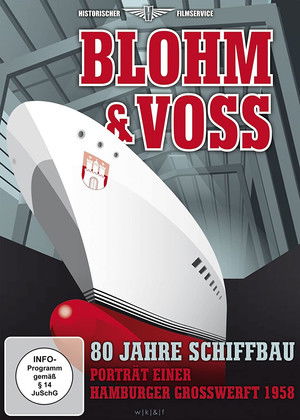
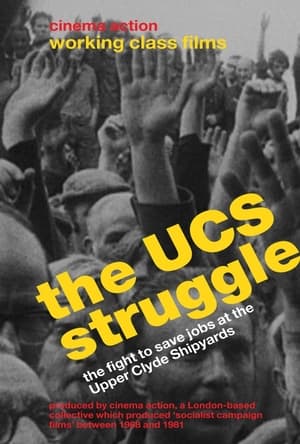
This first co-production between the GDR and Great Britain is intended to contribute to an understanding of the situation and attitudes of millions of working people in opposing social orders. Using the example of shipyard workers, fishermen, the brigade and family of a trade union active cook and unemployed person of various ages and professions in Newcastle on the one hand and a brigade of crane operators of the Warnowwerft and fishermen of the Warnemünde cooperative on the other hand, insights into the way of life and attitudes of people of our time are to be conveyed.
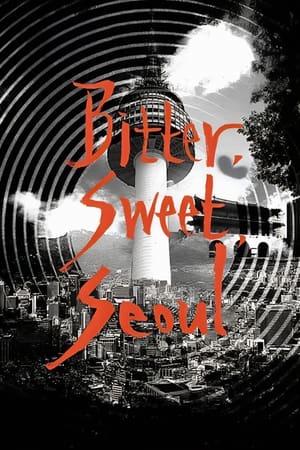
Over 98 days from August 20th to November 25th 2013, 2821 people from around the world sent 11,852 video featuring many different faces of Seoul. 154 were selected, edited, and made into a movie.
A documentary about the 8-day sit-in struggle by GANG Cheolmin, a 22 year-old private in the South Korean army who declared his objection to military service on November 21, 2003 in order to stop the South Korean government from sending troops to Iraq, and the peace groups supporting him.
YouTube musician and Korean American adoptee Dan Matthews travels to South Korea to perform and reunite with his biological family, including a long lost twin he never knew he had.
Poland, 1970. When popular protests erupt in the streets due to rising prices, the communist government organizes a crisis team. Soon after, the police use their truncheons and then their firearms. The story of a rebellion from the point of view of the oppressors.
An investigative reporter seeks to expose the whereabouts of a slush fund belonging to the former president of South Korea, Lee Myung-bak.
Interpreting an event of ROKS Cheonan corvette, torpedoed and sunken by North Korea, this documentary rebuilds the event with a different insight. No one can tell if the investigation of Cheonan has reached compelling conclusion. But the film tells and reveals how unreasonable Korean society is.
The public yearns for a hero who will solve the economic crisis, and MB bursts onto the scene. However, what made voters excited now makes them disappointed. How the then voters were seen from the MB’s perspective? A political documentary that makes people laugh and cry.
Cheonggyecheon is a small industrial area in the city of Seoul where small metal workshops are located. Cheonggyecheon had played a key role in the industrialization of South Korea from the remnants of colonialism and war. Following the liberation of the country from Japanese rule in 1945, many industrial complexes became abandoned, resulting in a flood of scavenged machine parts on the market.. In the 1960s, Vietnam War veterans brought many machines into Cheonggyecheon, initiating small-scale production and what’s now considered “copy” production unique to the economies of developing nations. In the past five years, the business on Cheonggyecheon has declined as the surrounding neighborhood is in the process of renovation and gentrification, as part of a beautification initiative by the Seoul Metropolitan Government.
A story about 4 gay men who try to lead a normal life in Korea, the conservative and harsh country for LGBT in Asia. In the middle of making a queer film Jun-moon, a director, loses his self-confidence due to social scrutiny regarding his sexual orientation. Byung-gwon, a gay rights activist, has been participating in movements to establish equal rights for homosexual laborers. Young-soo, a chef who moved from the countryside 15 years ago, lived a lonely life but he finds happiness after joining a gay choir. Yol, who works for a major company, dreams of the day him and his partner, can have a legal wedding with overcoming the prejudice against people living with HIV/AIDS.